High-quality 3D assets at affordable prices — trusted by designers, engineers, and creators worldwide. Made with care to be versatile, accessible, and ready for your pipeline.
Included File Formats
This model is provided in 7 widely supported formats, ensuring maximum compatibility:
• – FBX (.fbx) – Standard format for most 3D software and pipelines
• – OBJ + MTL (.obj, .mtl) – Wavefront format, widely used and compatible
• – STL (.stl) – Exported mesh geometry; may be suitable for 3D printing with adjustments
• – STEP (.step, .stp) – CAD format using NURBS surfaces
• – 3ds Max (.max) – Provided for 3ds Max users
• – Blender (.blend) – Provided for Blender users
• – SketchUp (.skp) – Compatible with all SketchUp versions
Model Info
• – All files are checked and tested for integrity and correct content
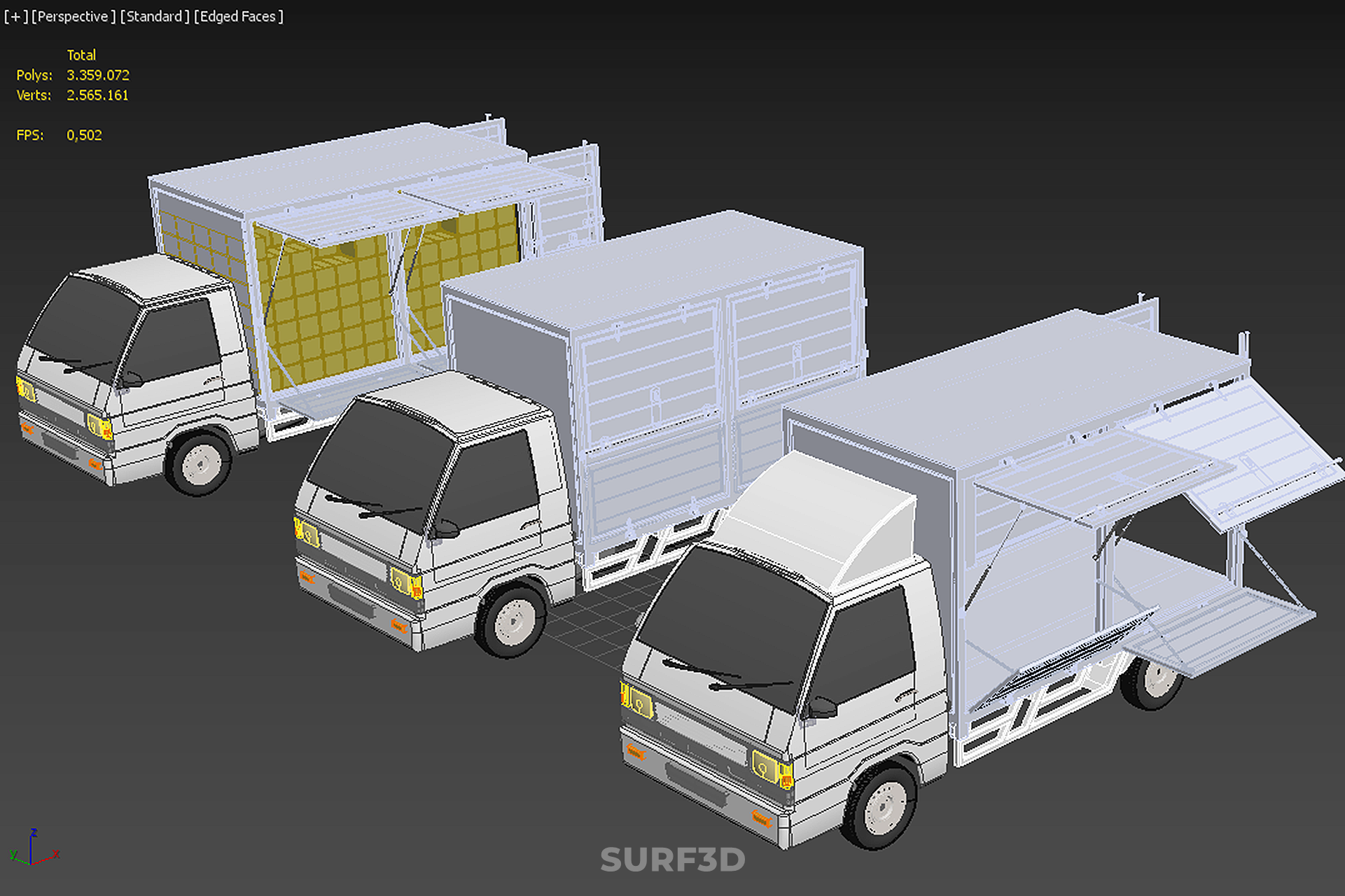
• – Geometry uses real-world scale; model resolution varies depending on the product (high or low poly)
• • – Scene setup and mesh structure may vary depending on model complexity
• – Rendered using Luxion KeyShot
• – Affordable price with professional detailing
Buy with confidence. Quality and compatibility guaranteed.
If you have any questions about the file formats, feel free to send us a message — we’re happy to assist you!
Sincerely,
SURF3D
Trusted source for professional and affordable 3D models.
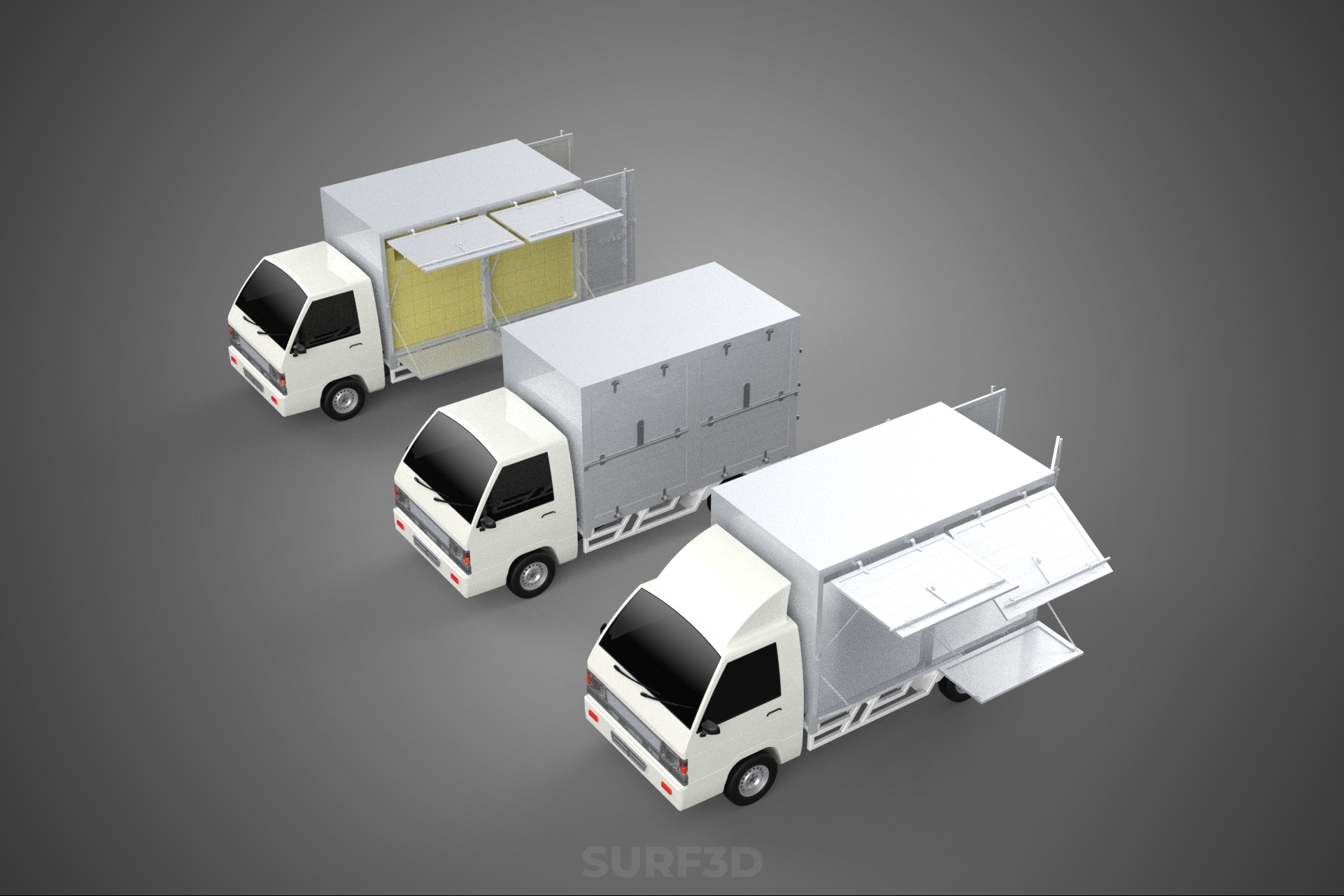
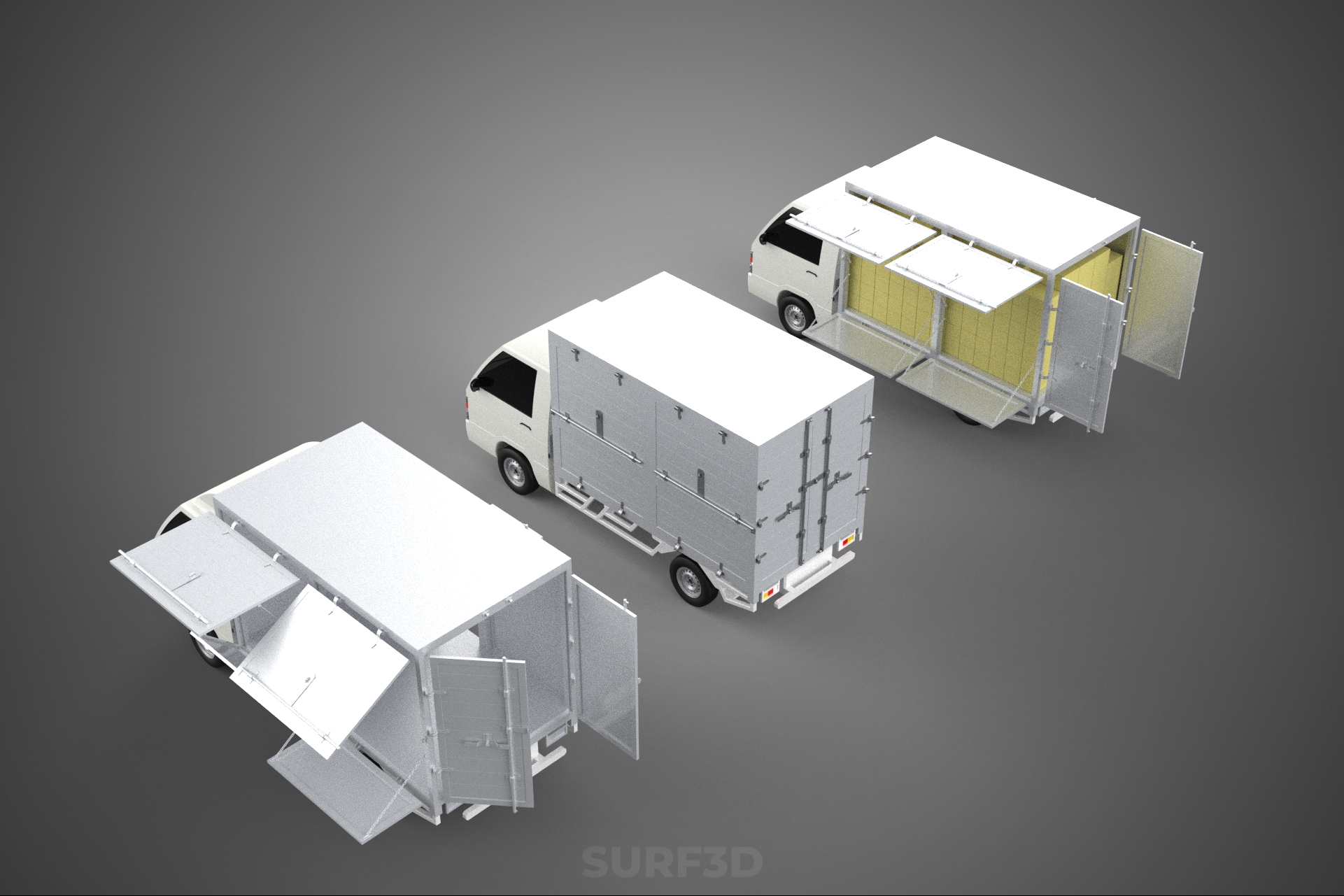
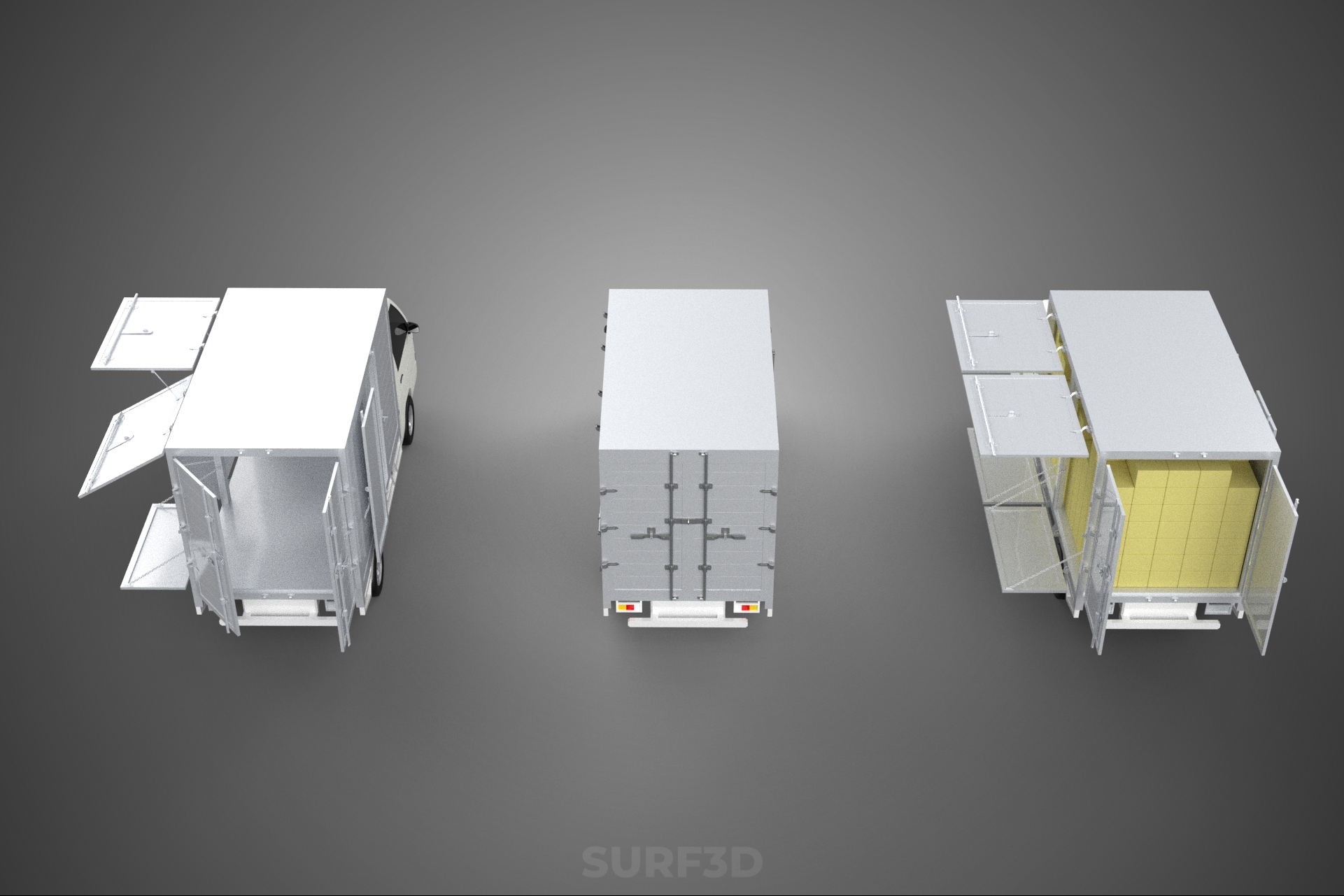
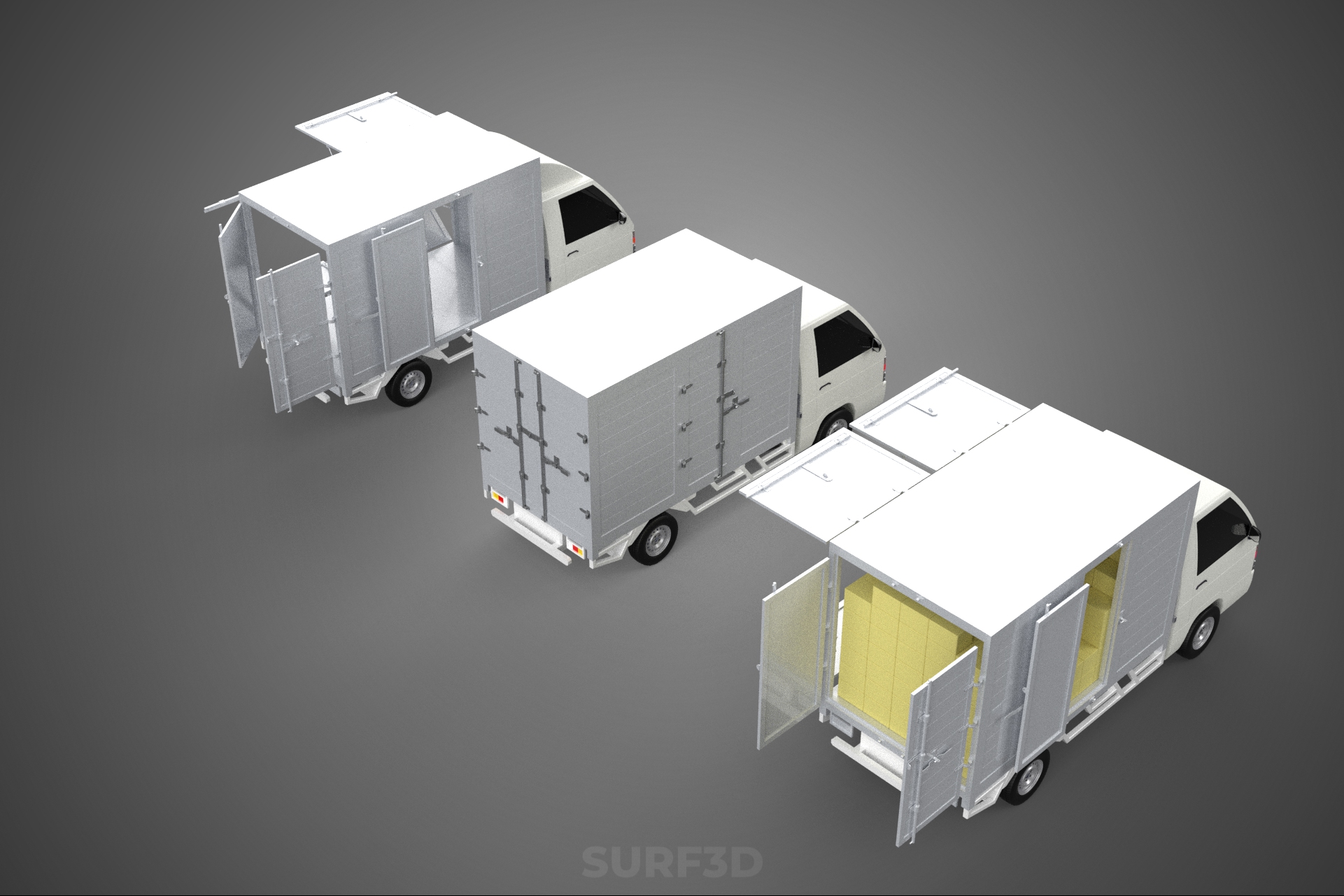
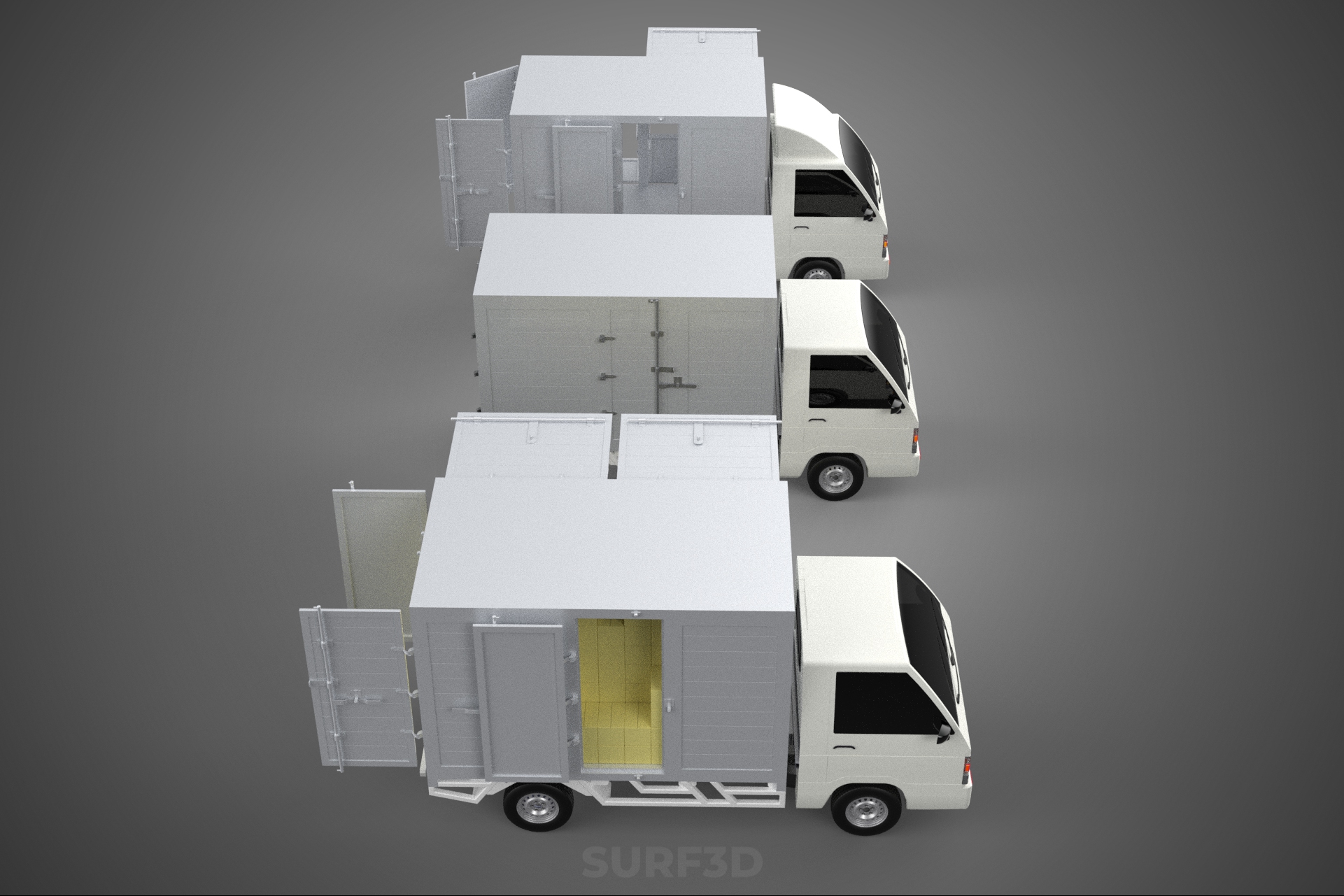
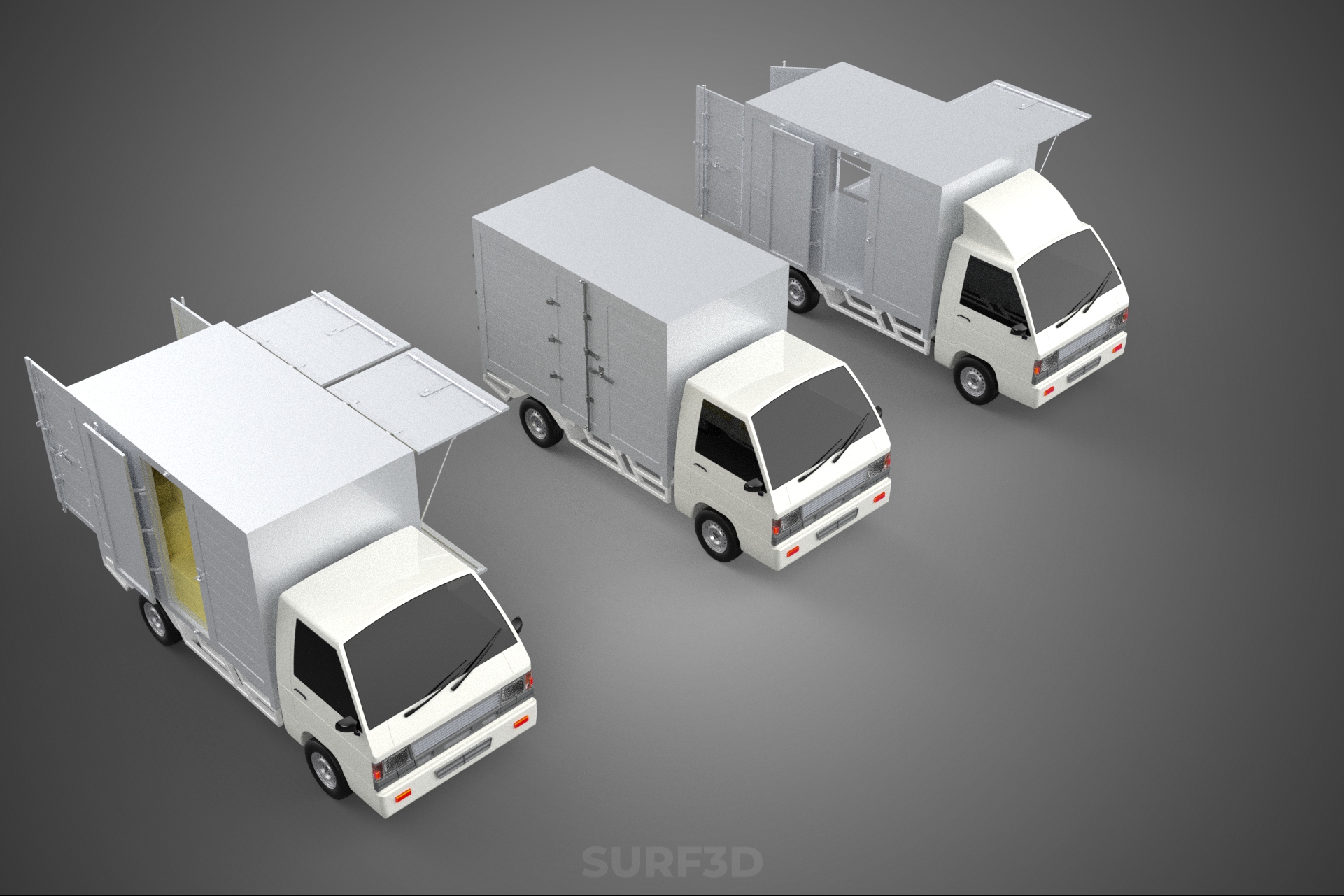
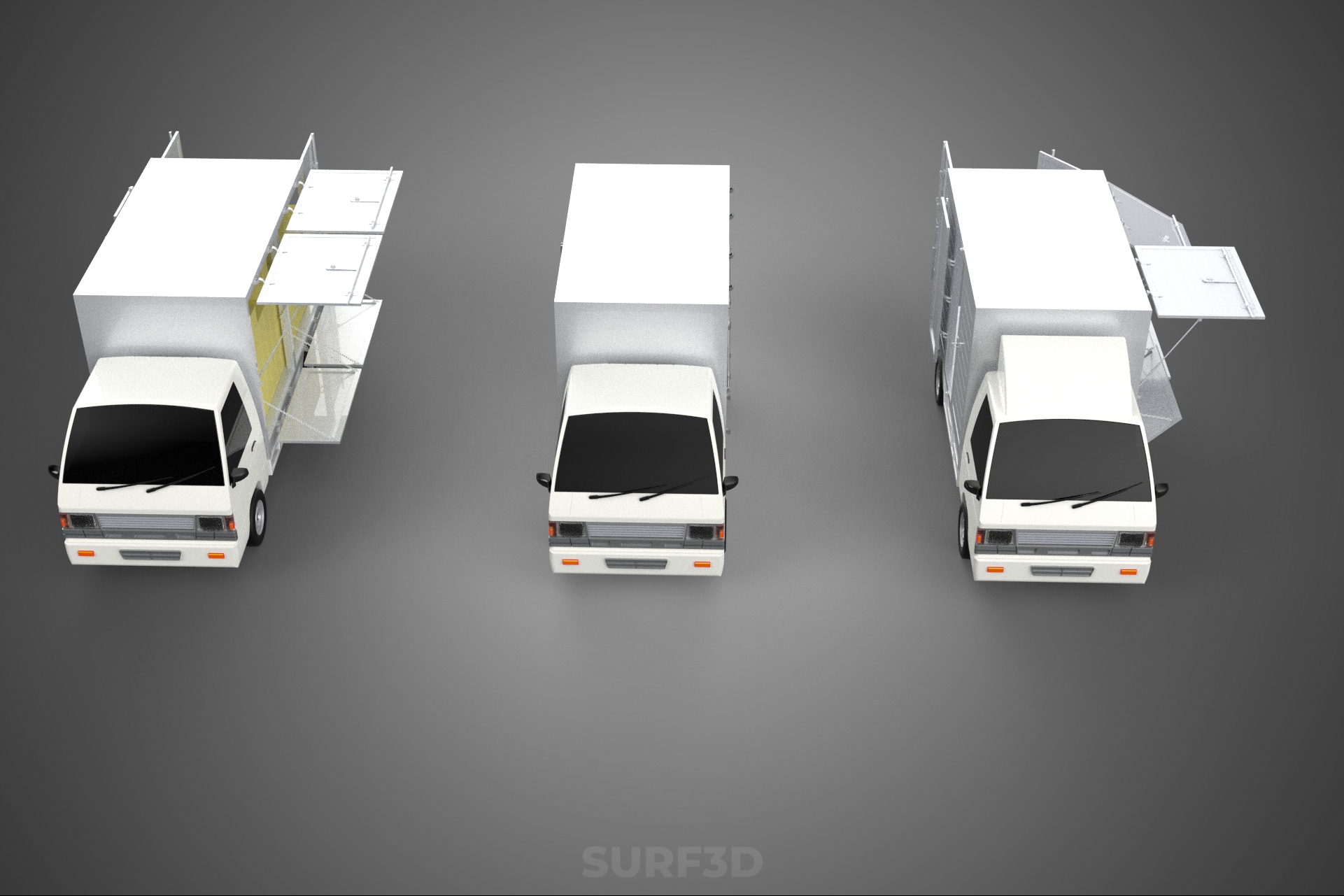
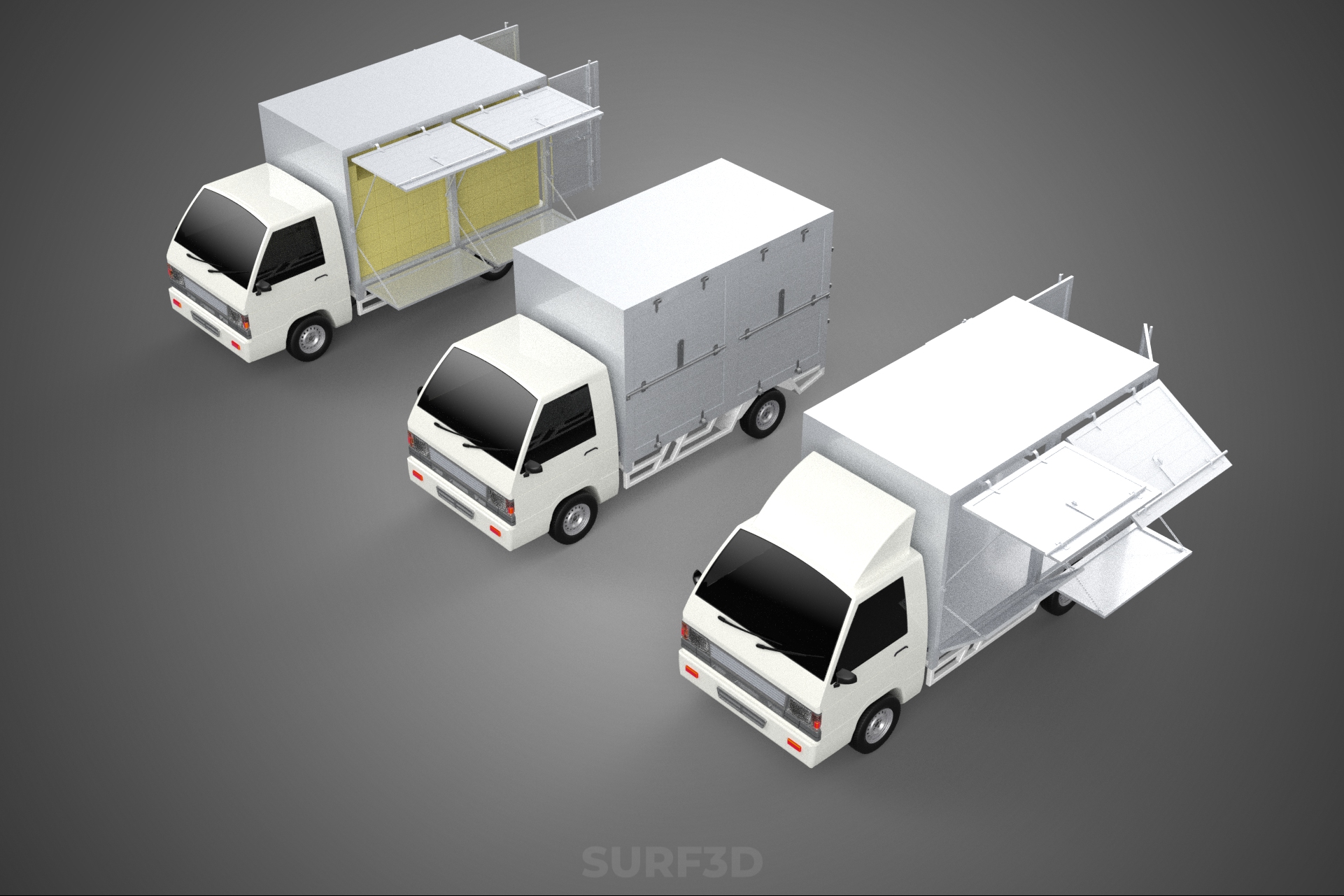
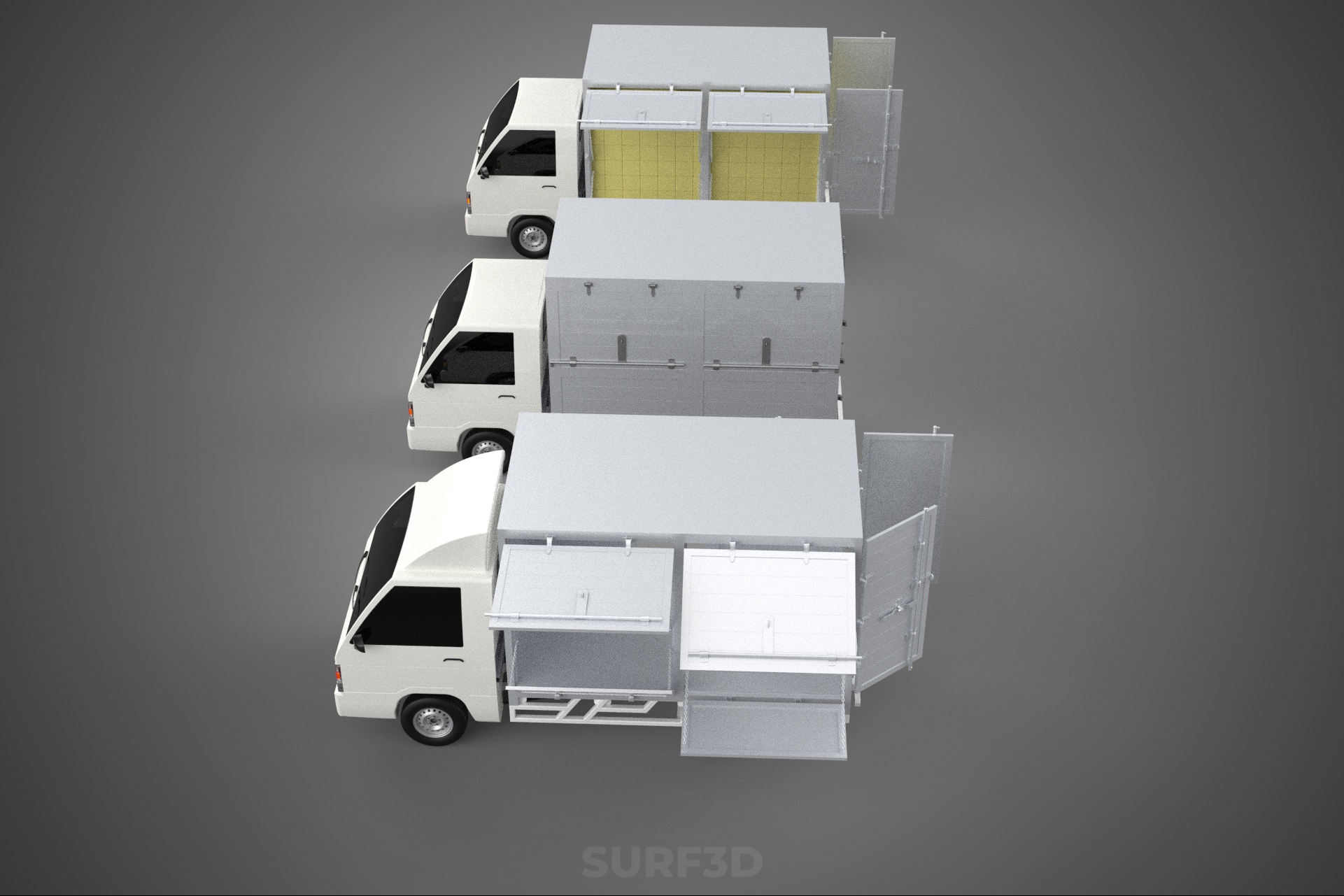
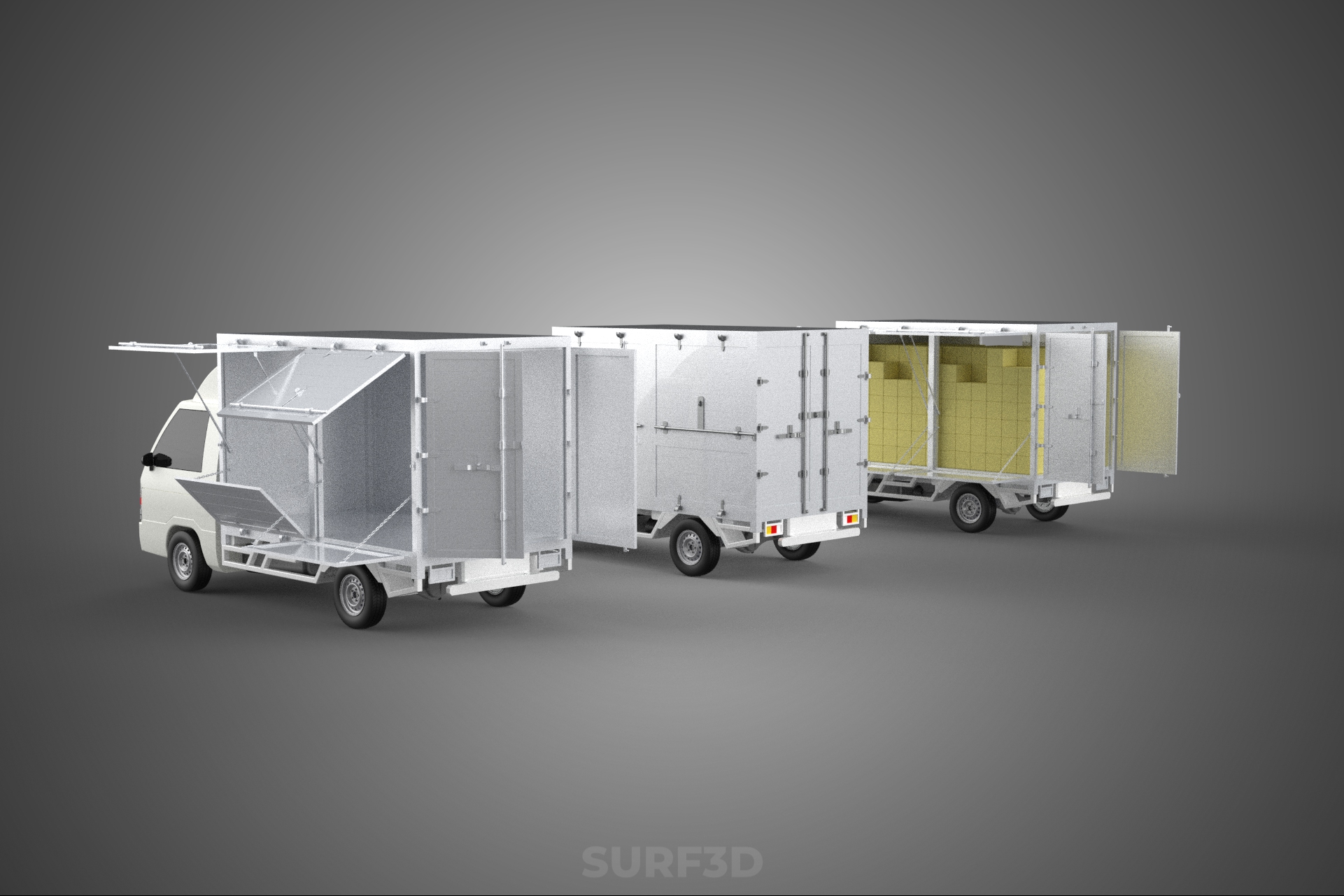
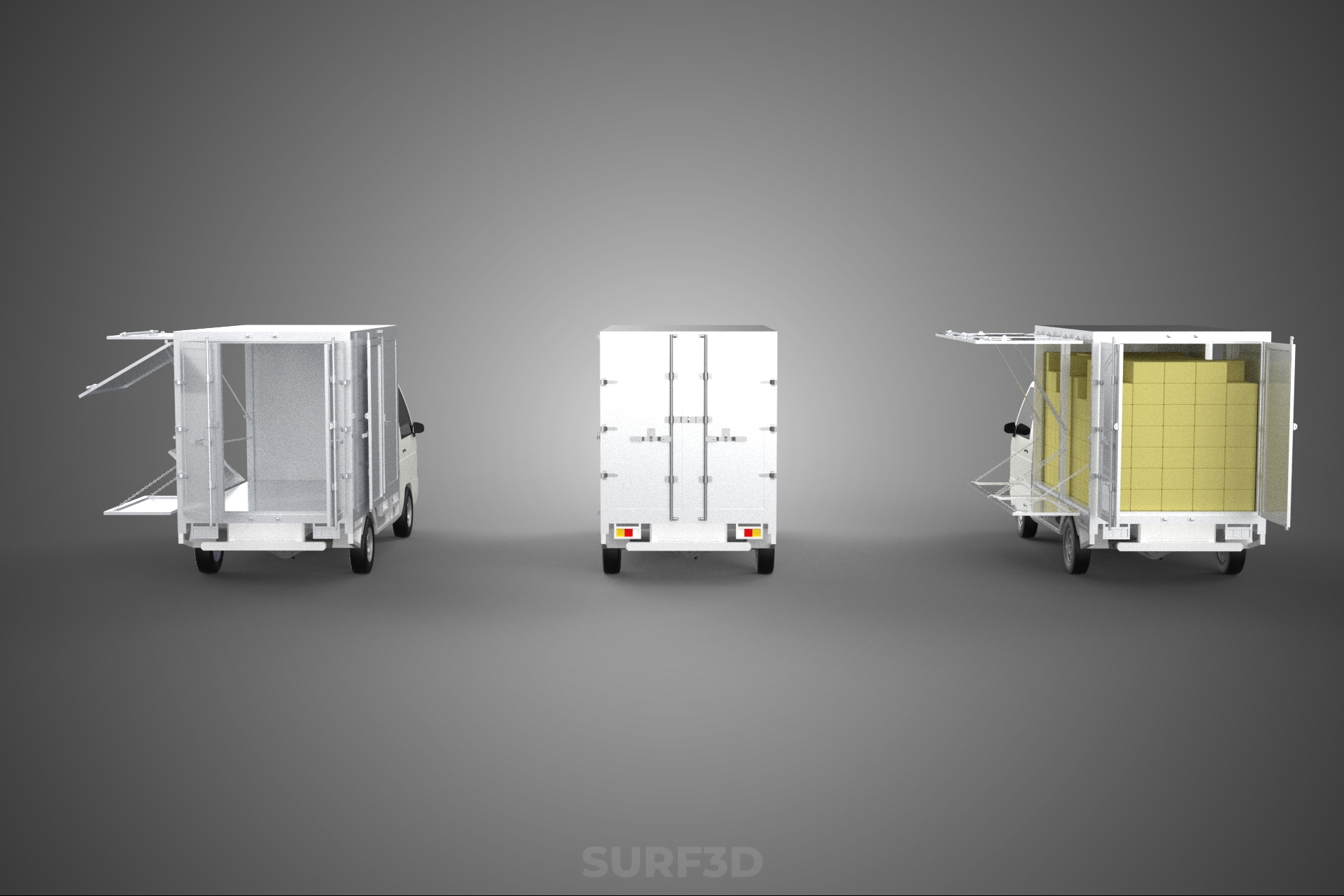
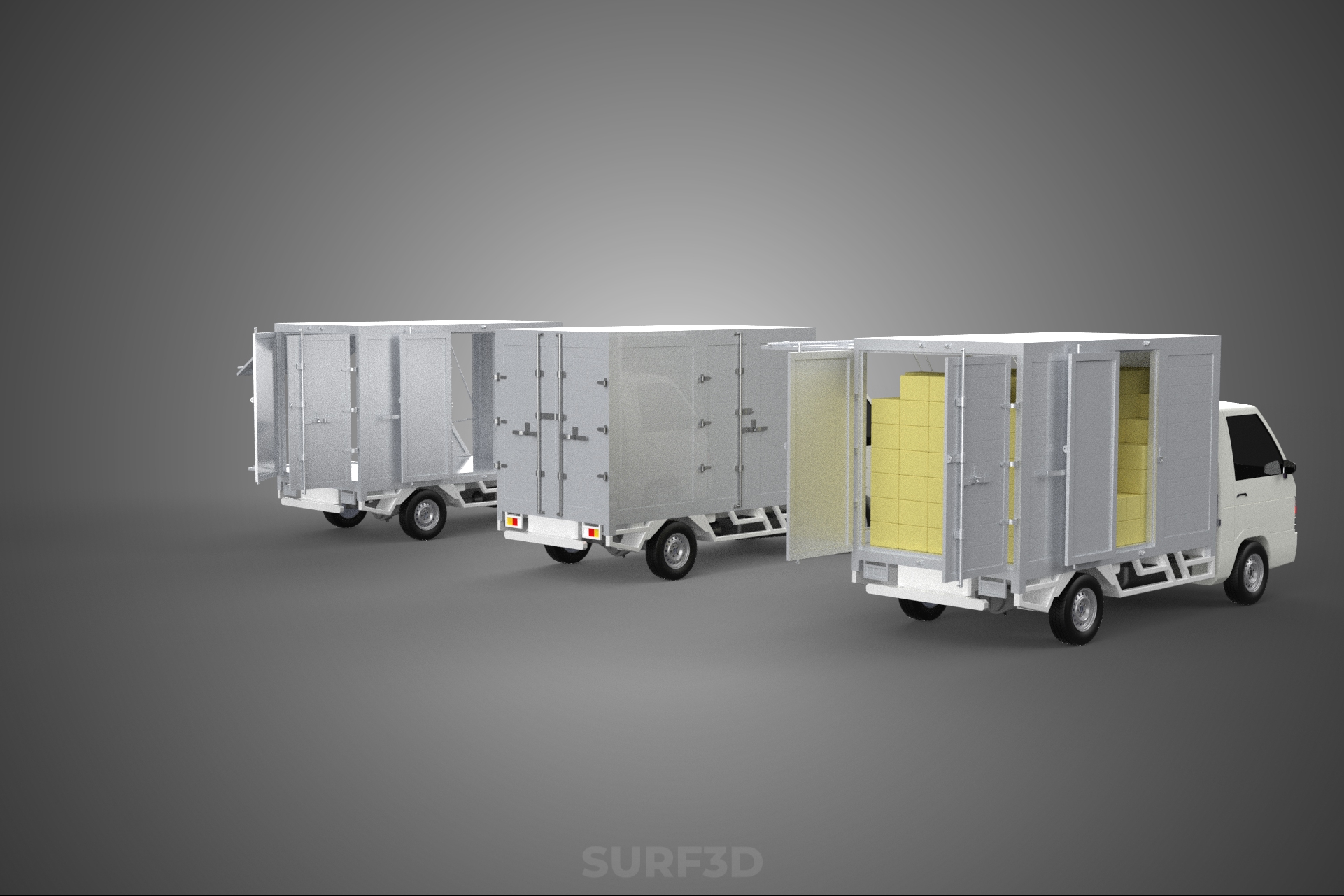
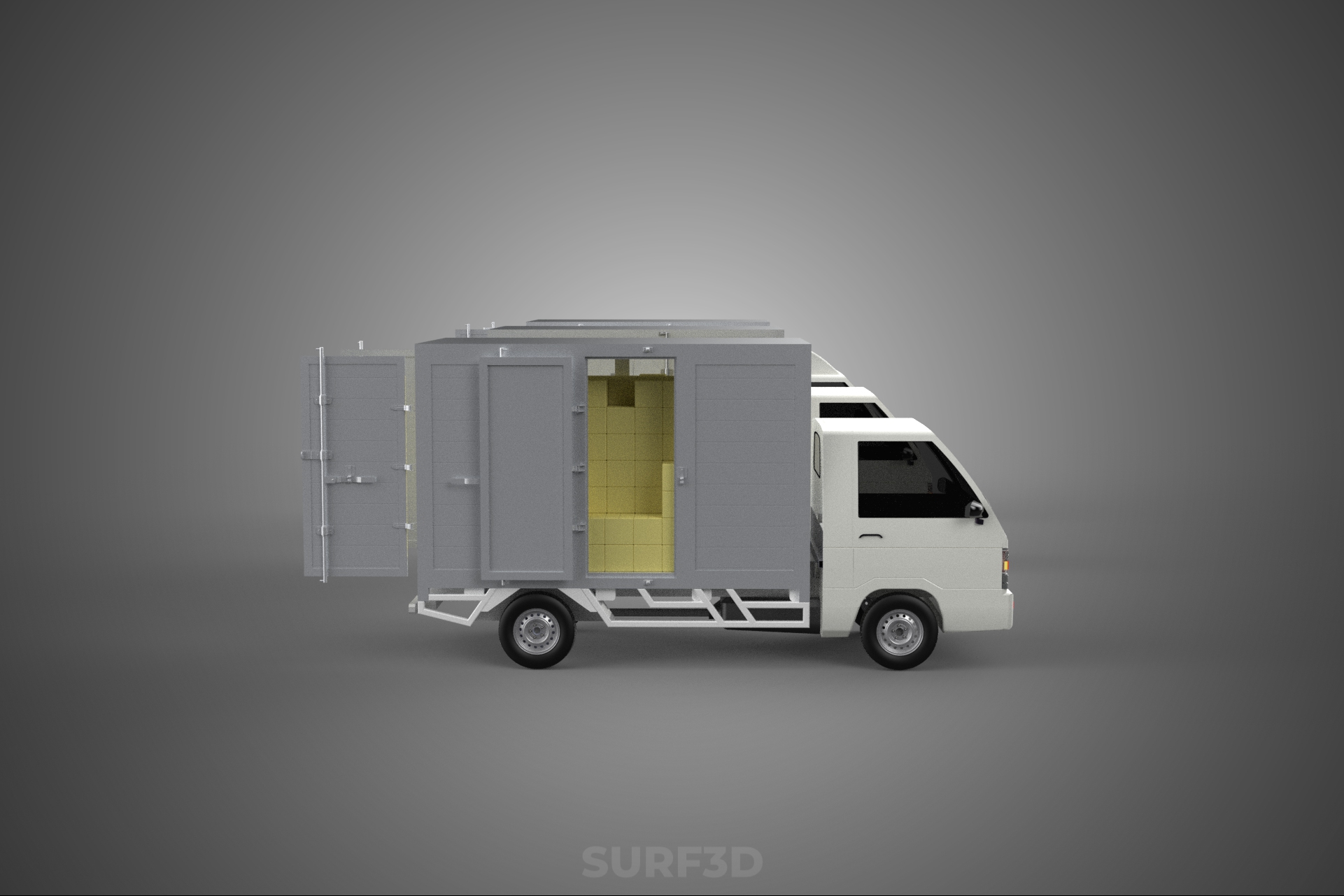
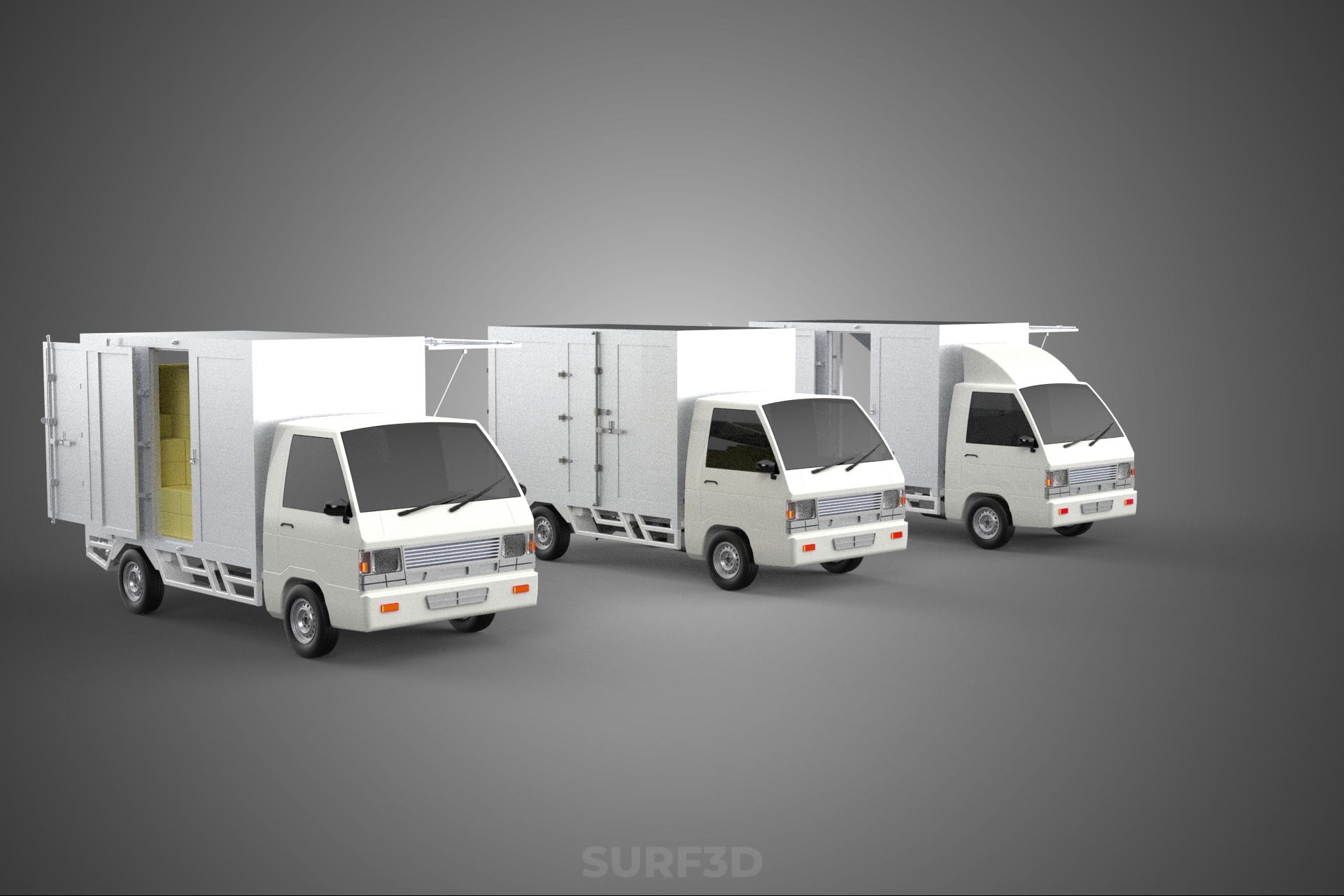
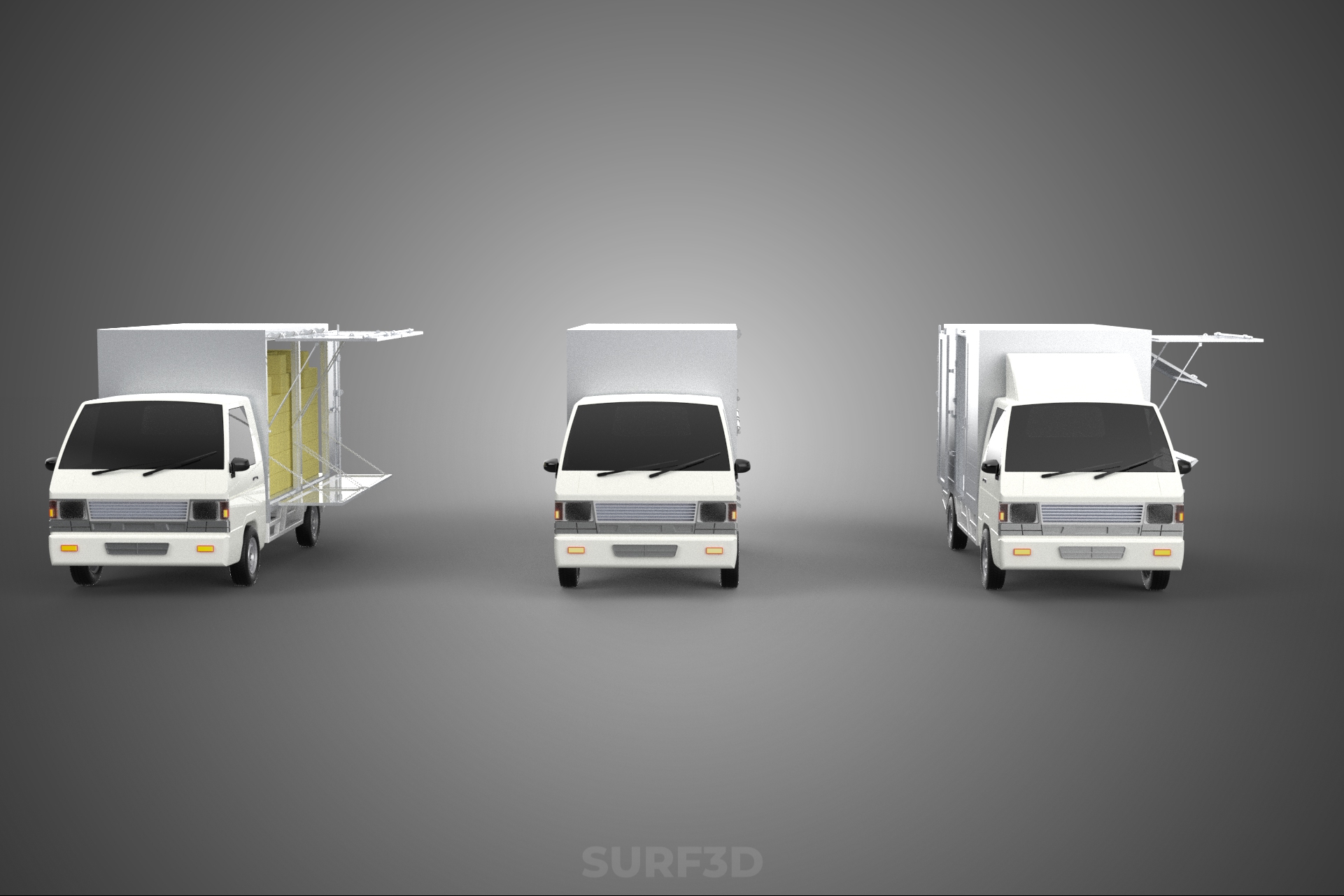
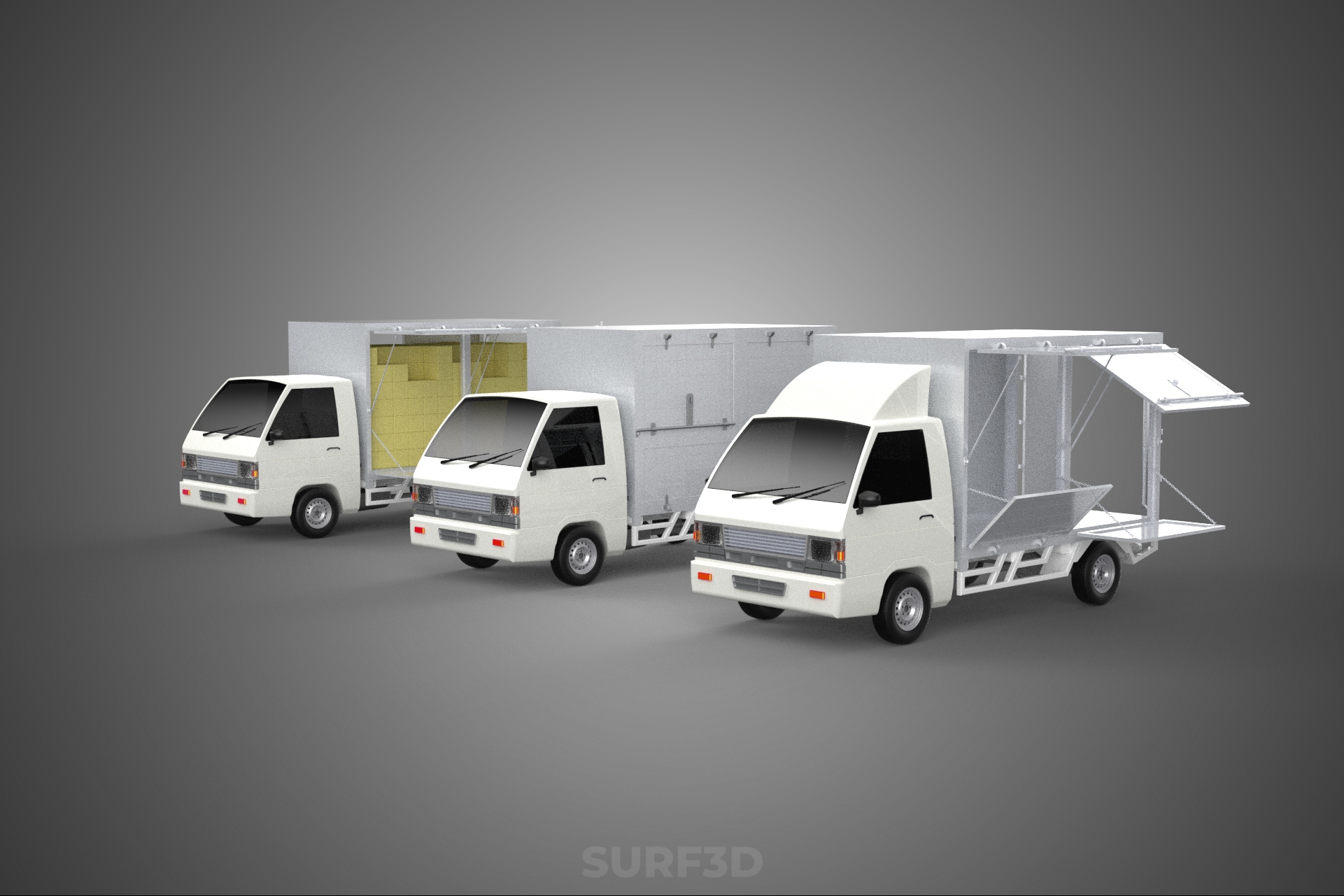
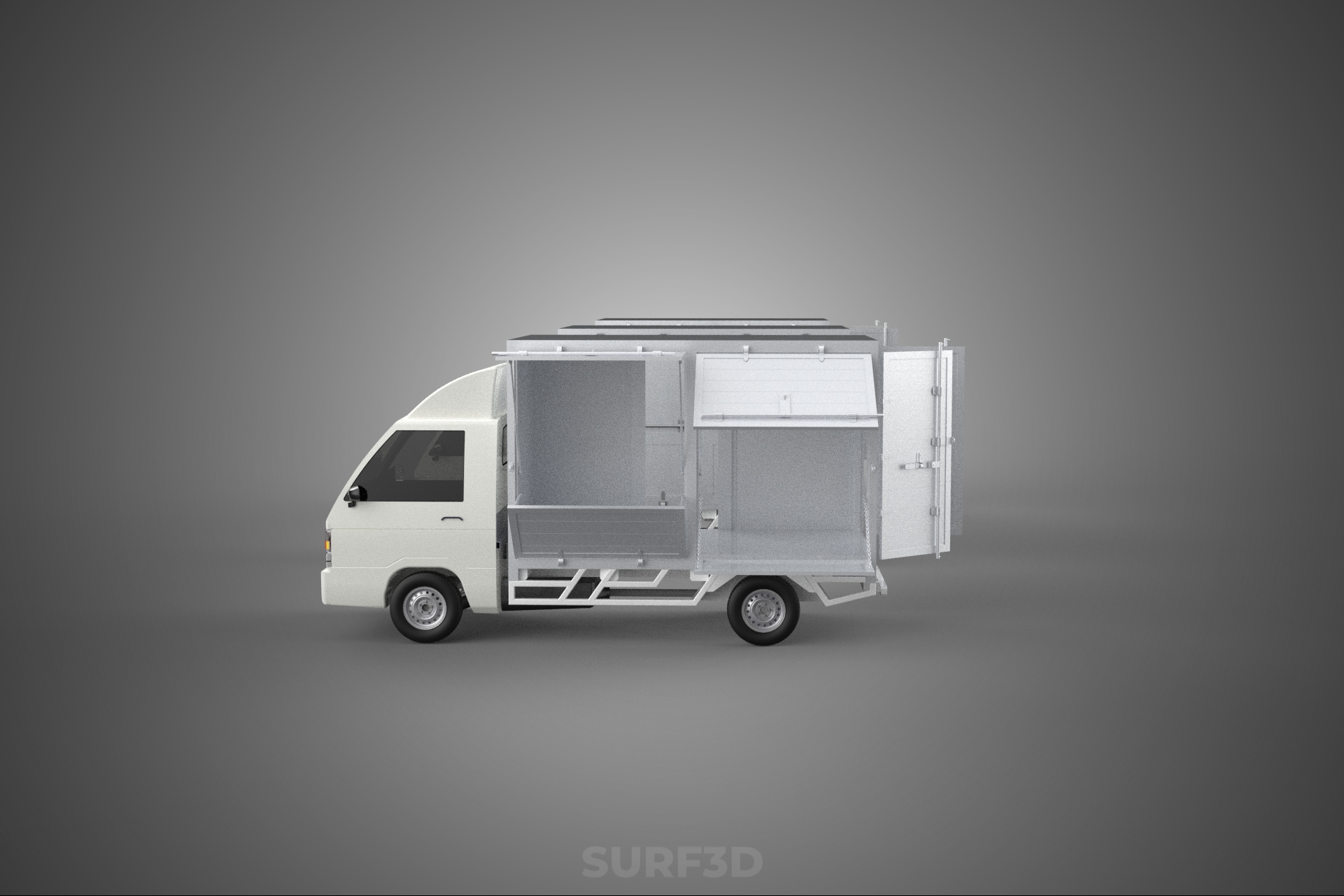
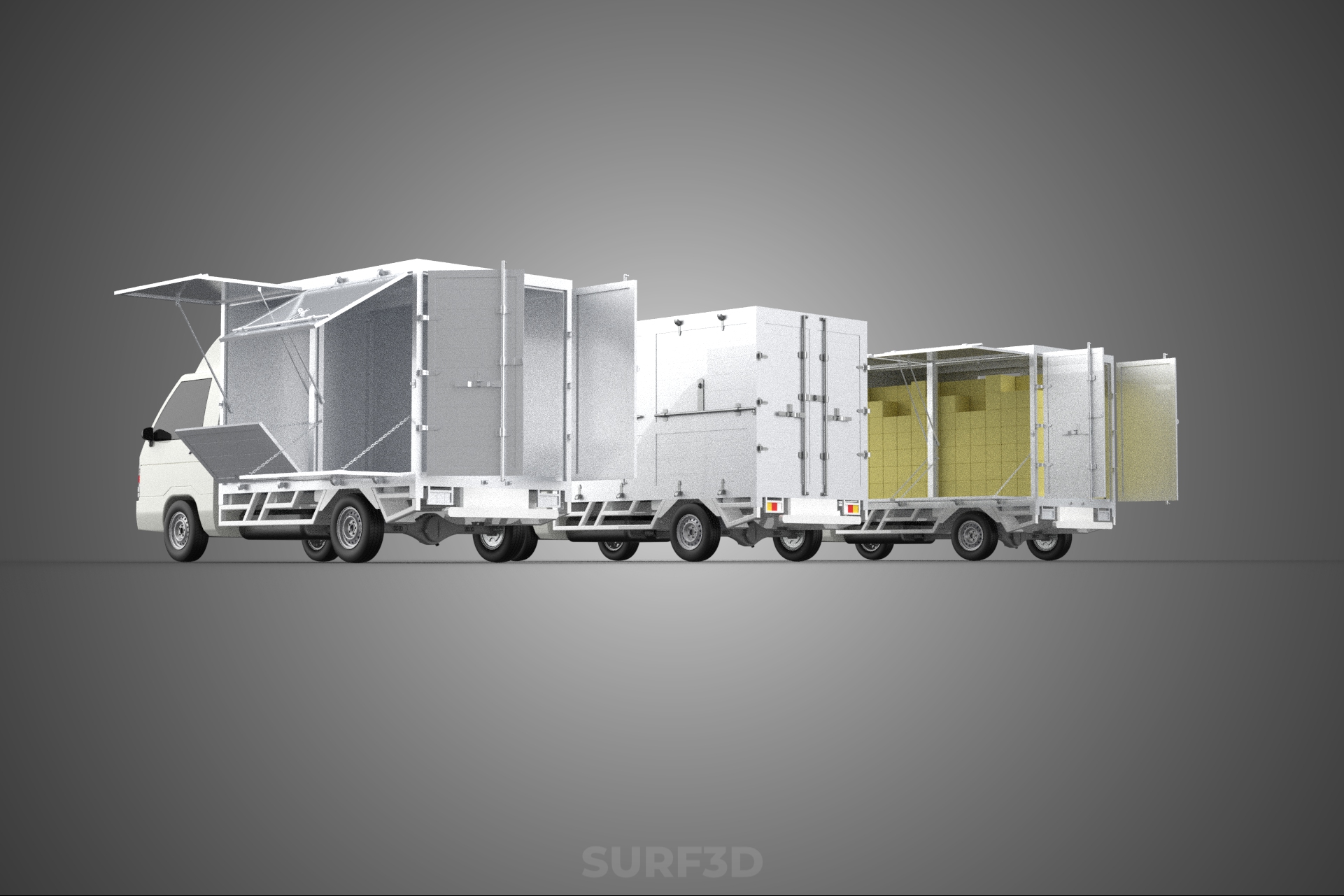
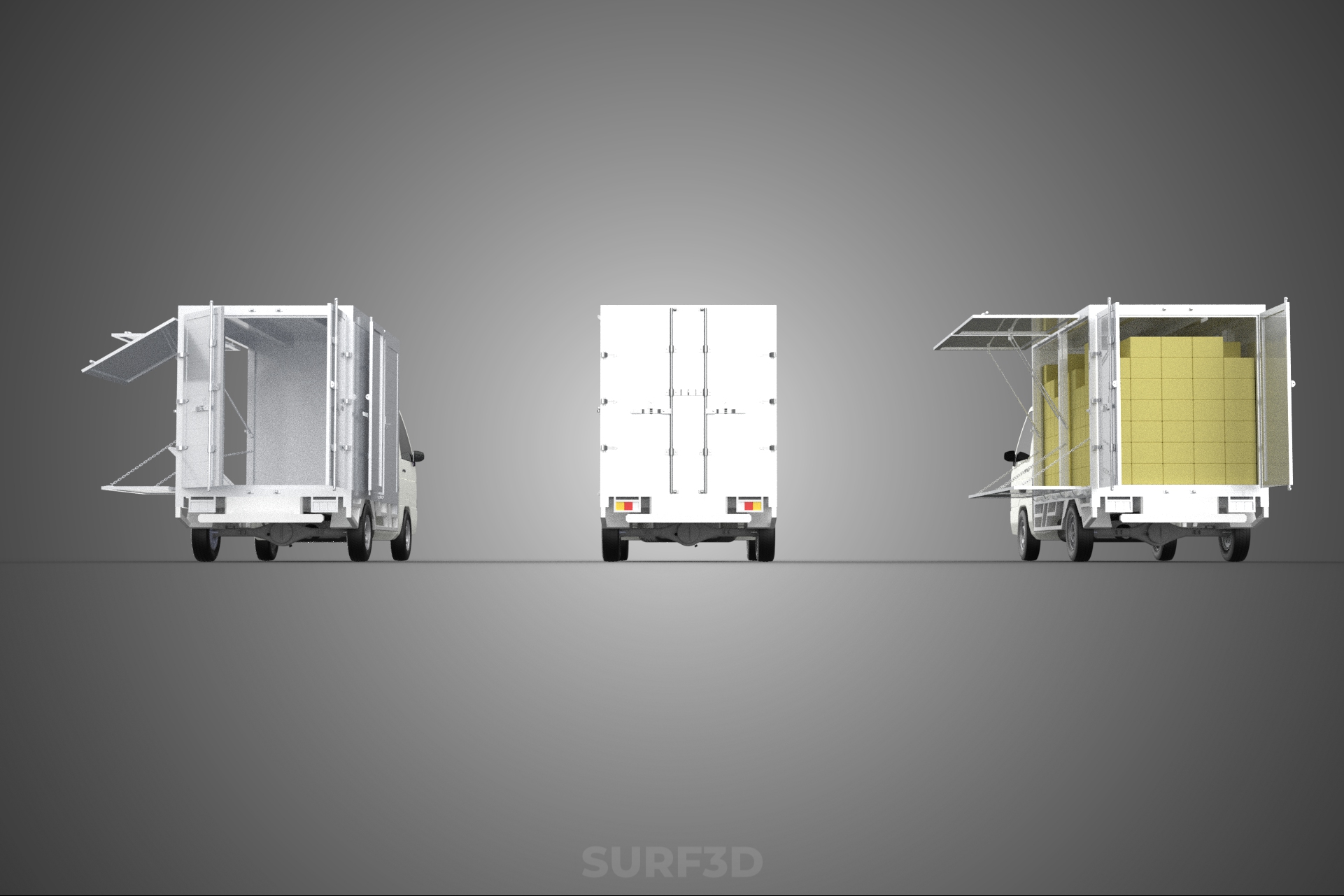
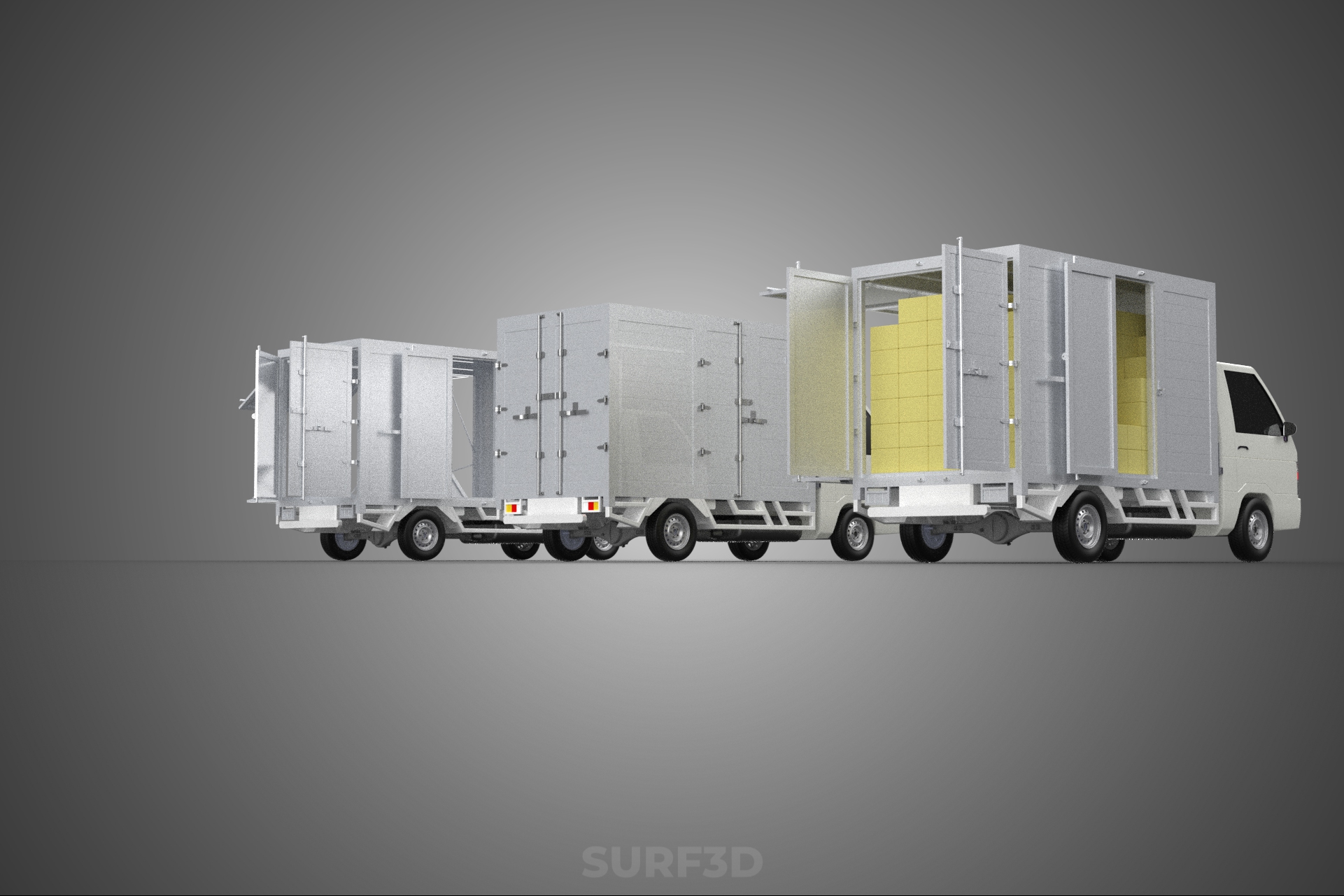
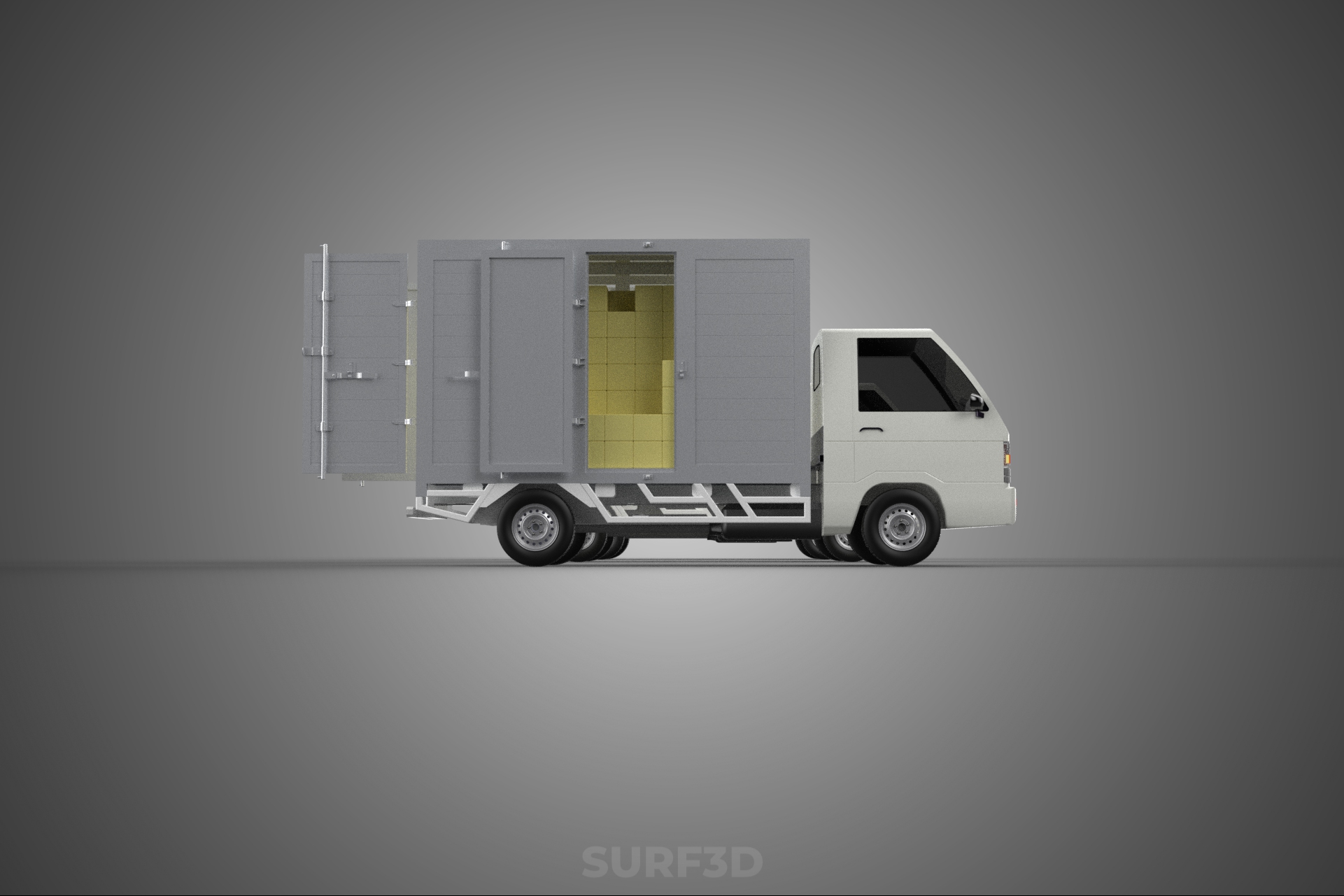
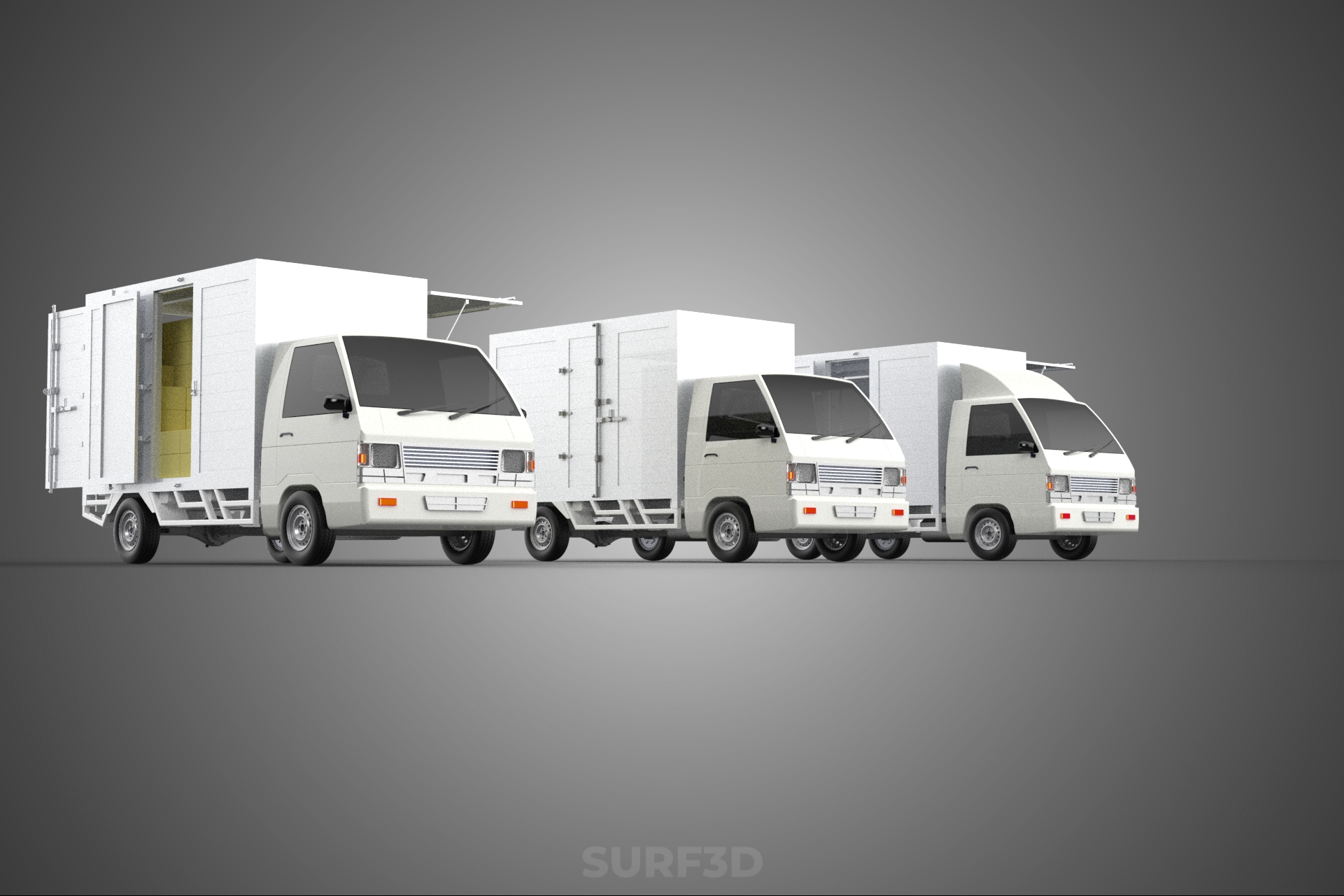
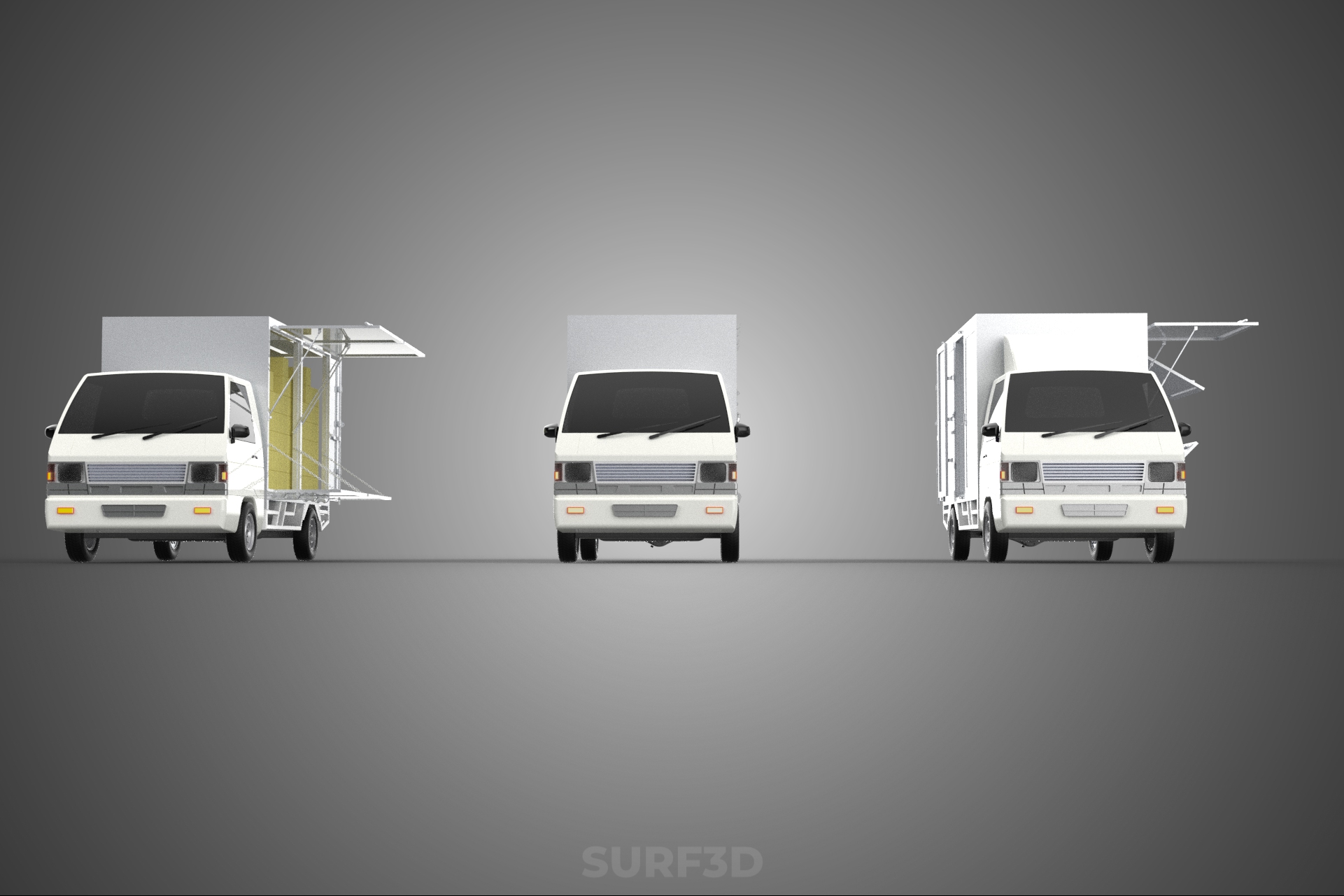
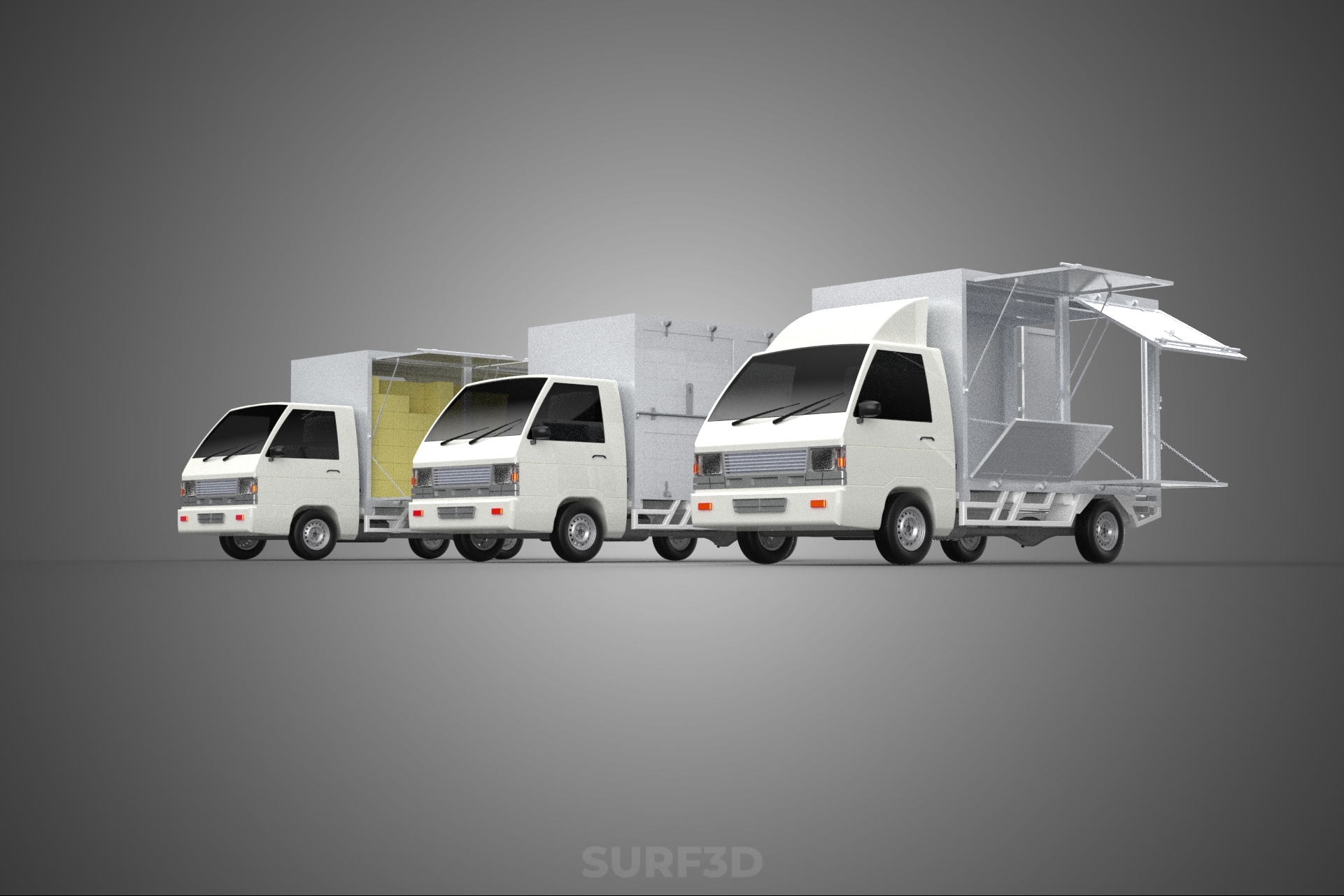
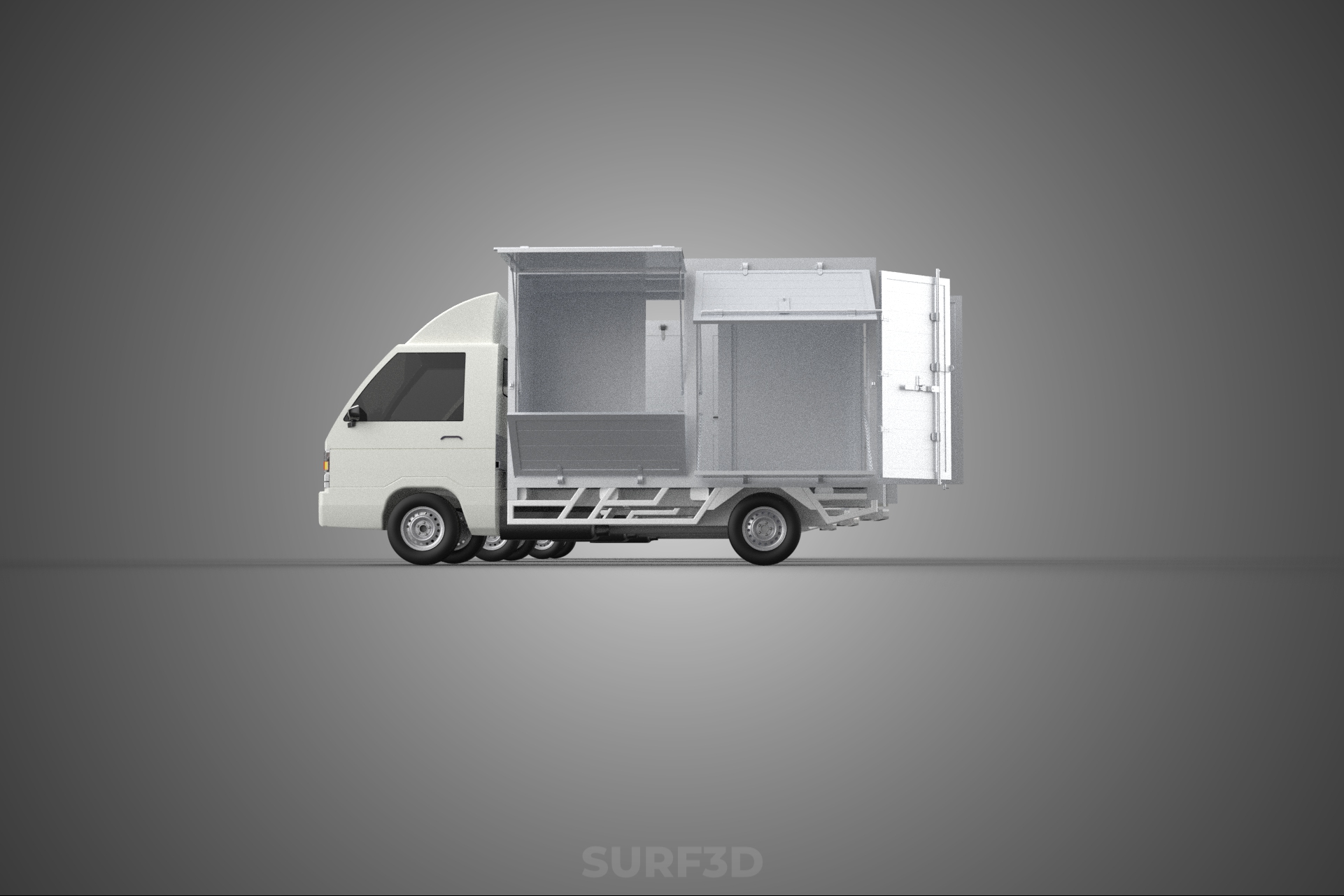
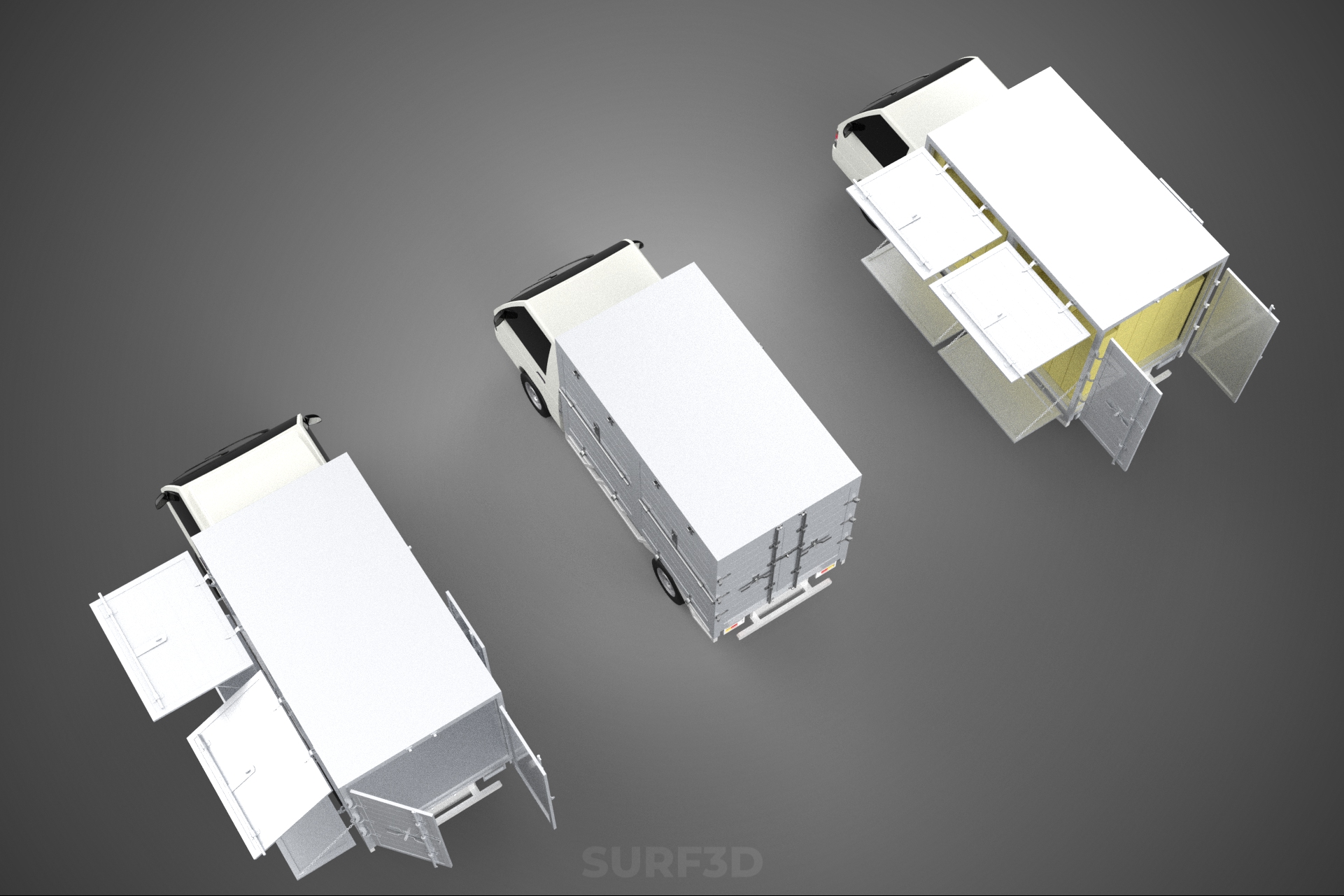
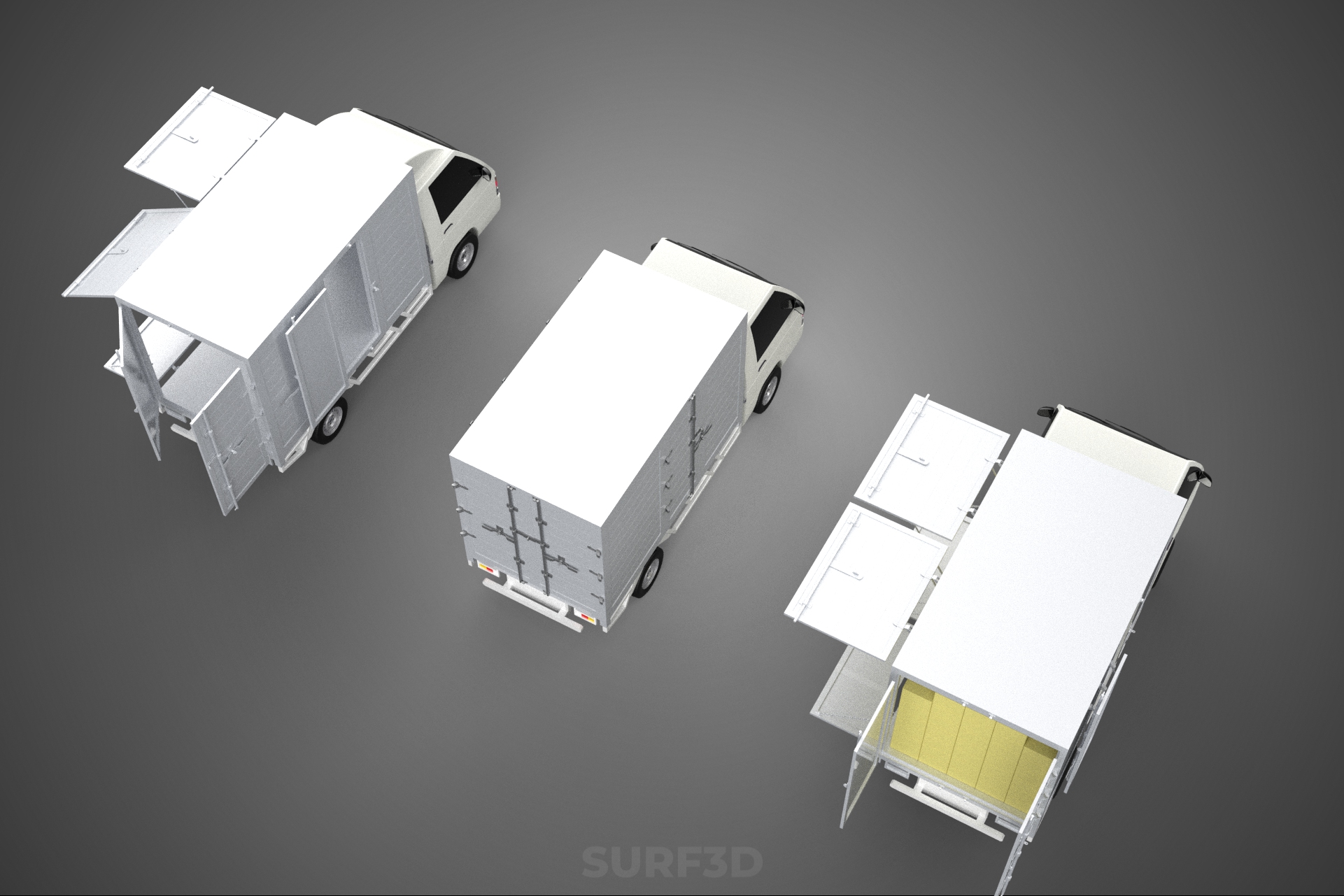
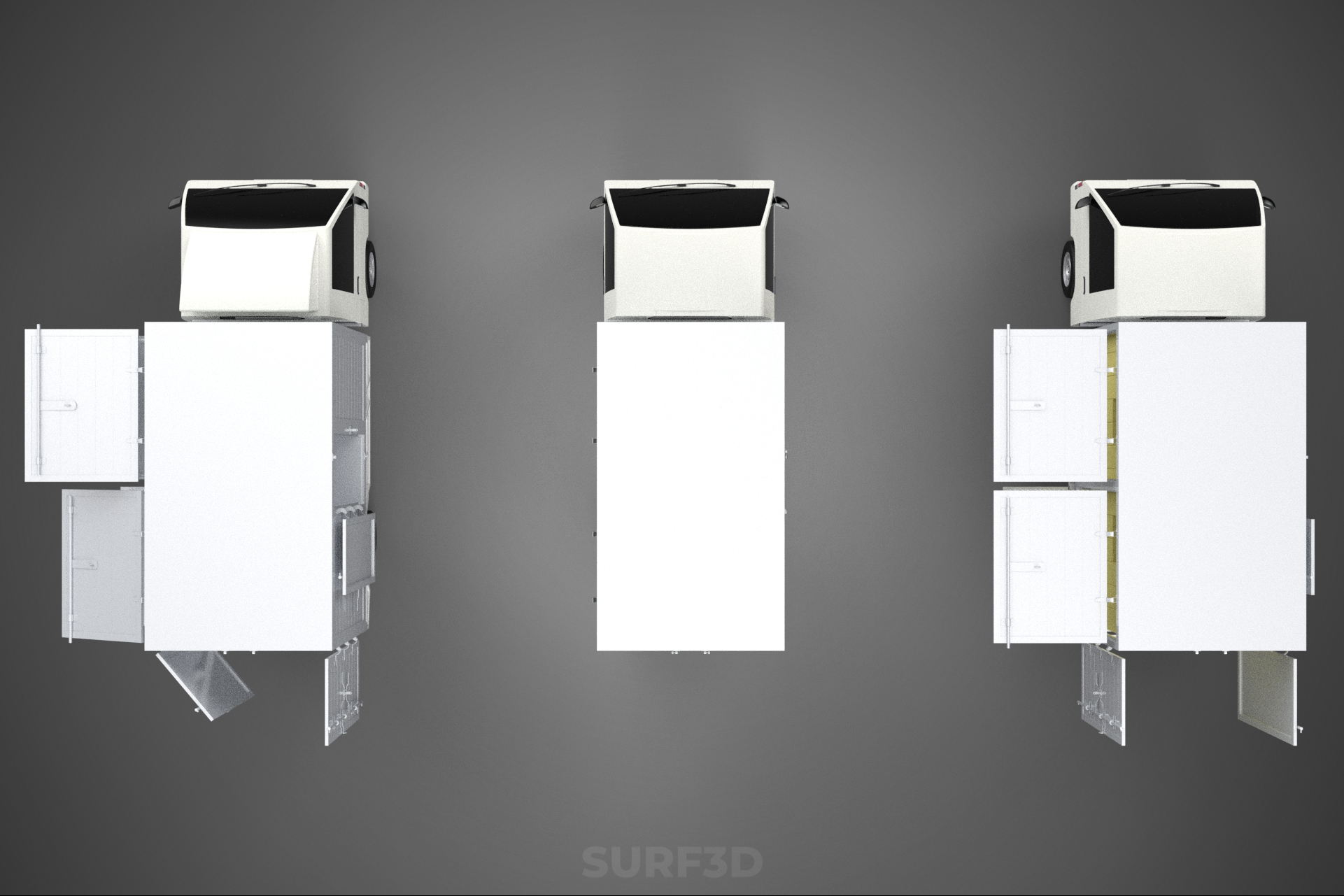
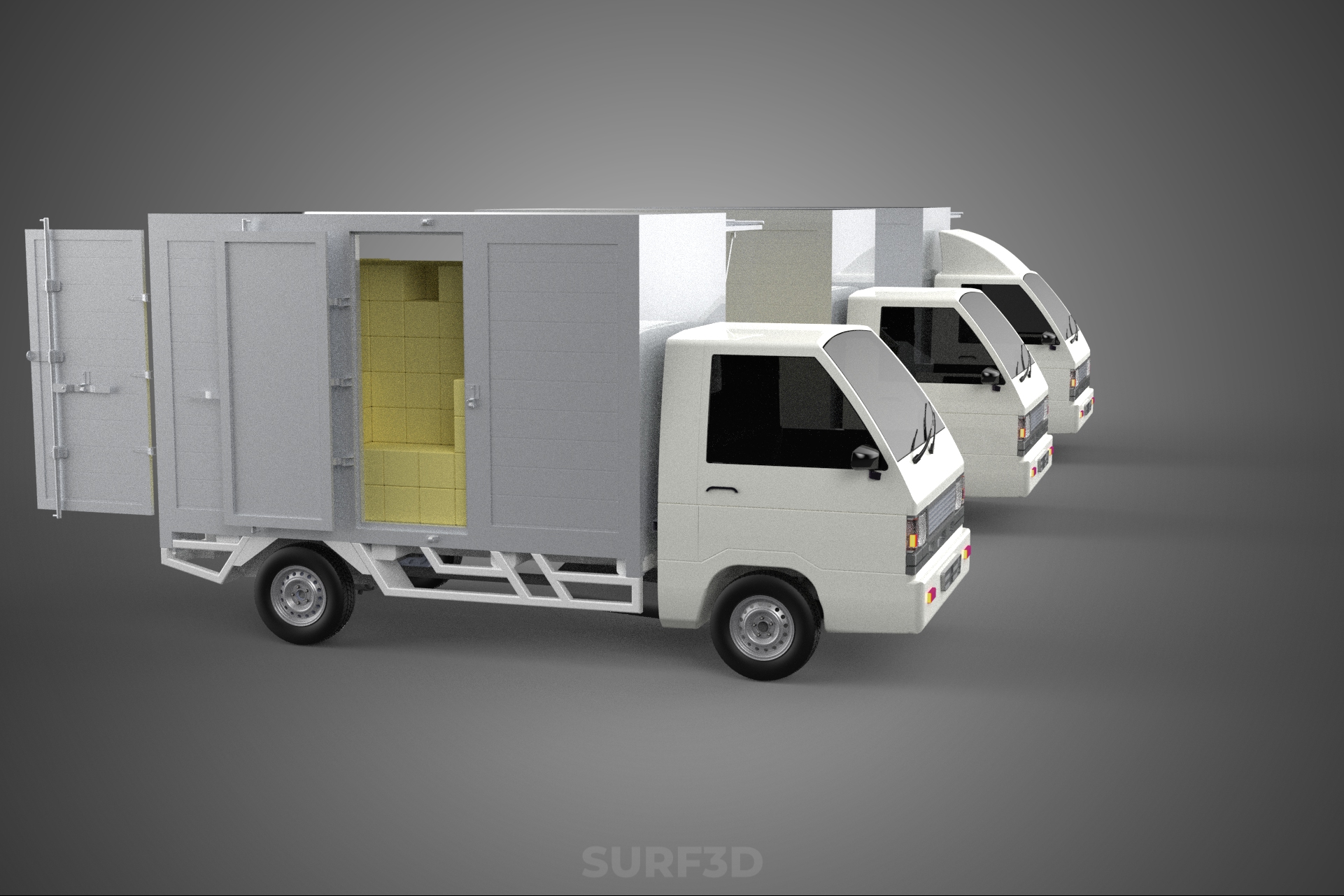
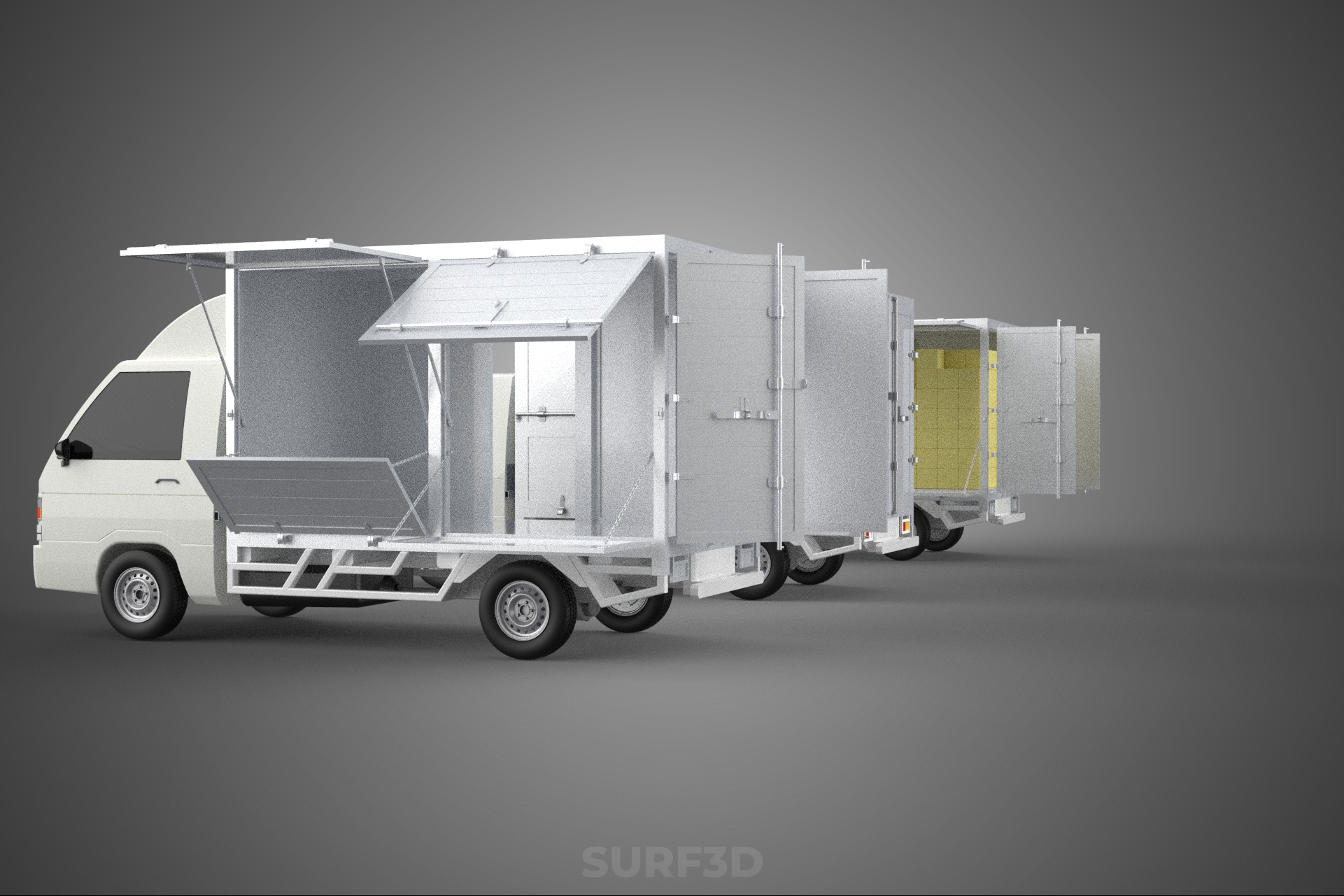
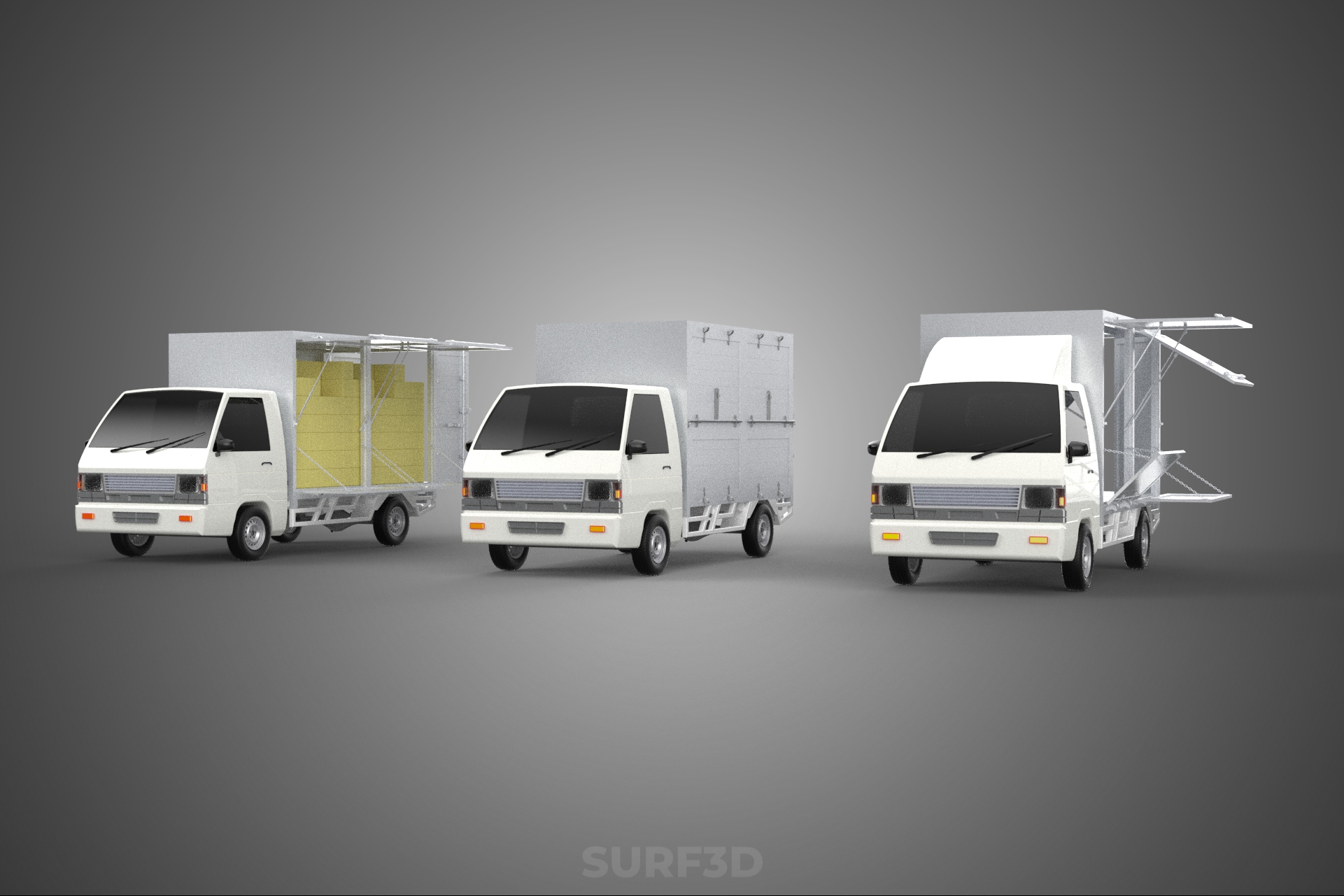
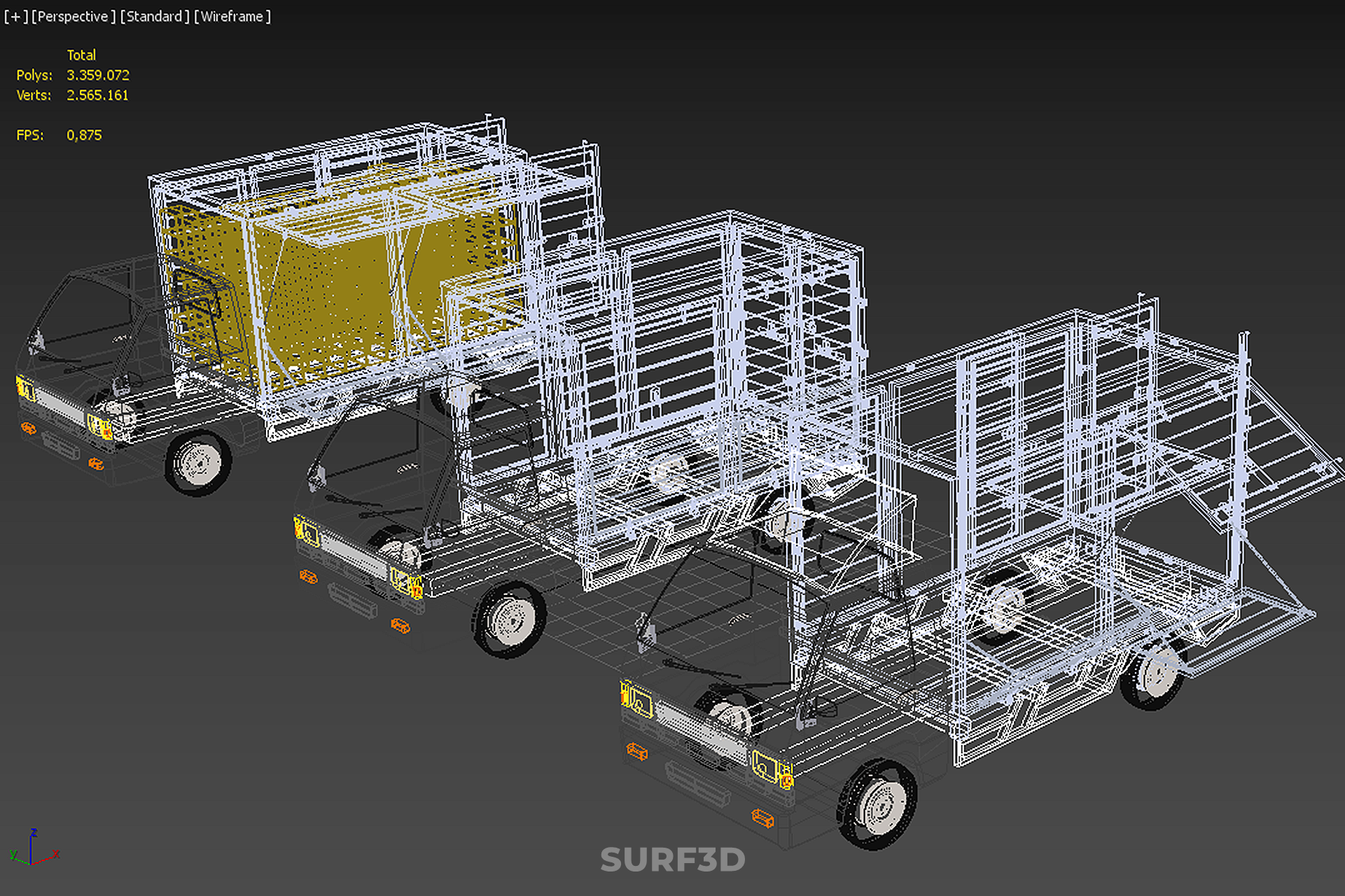
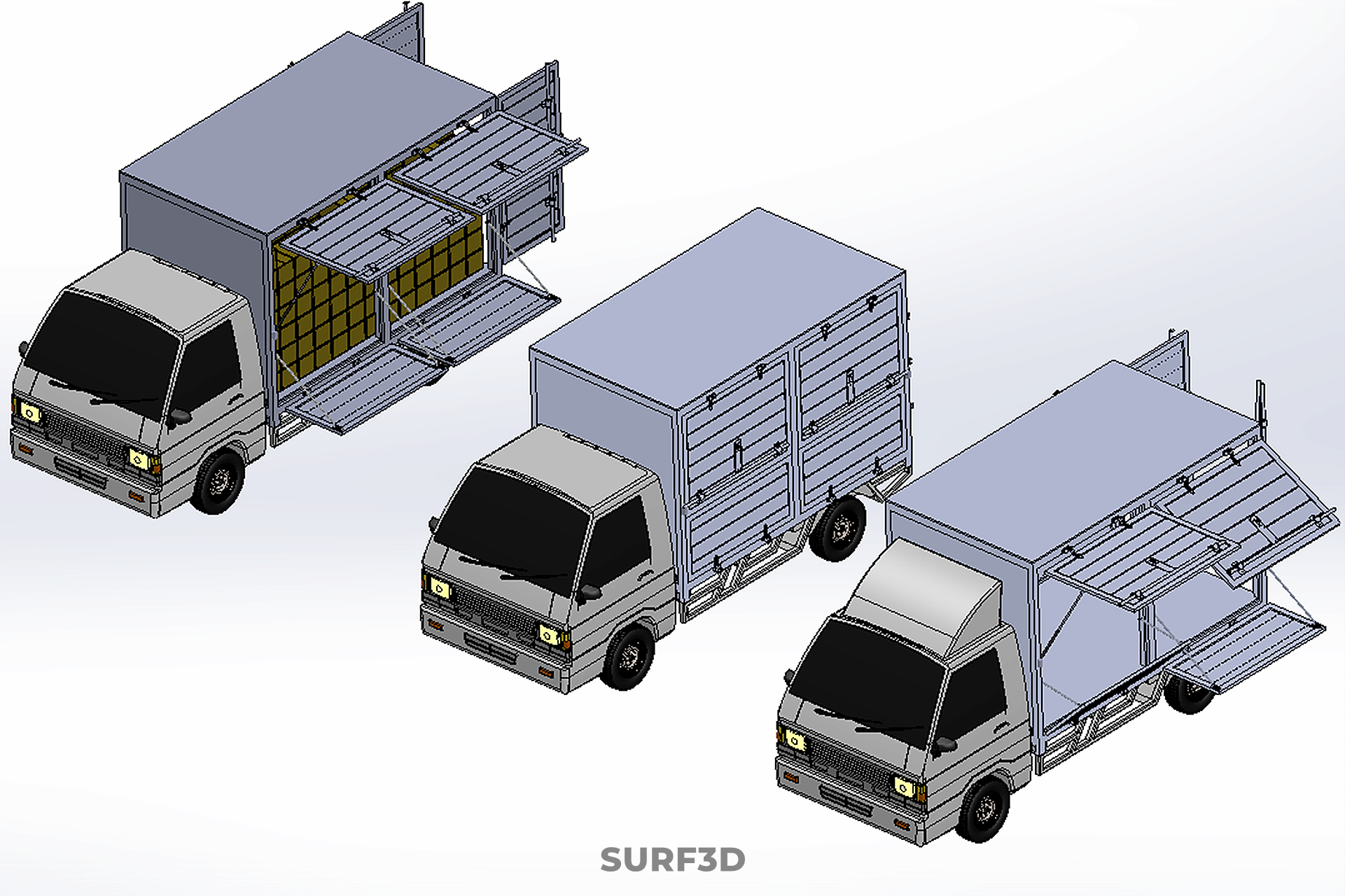
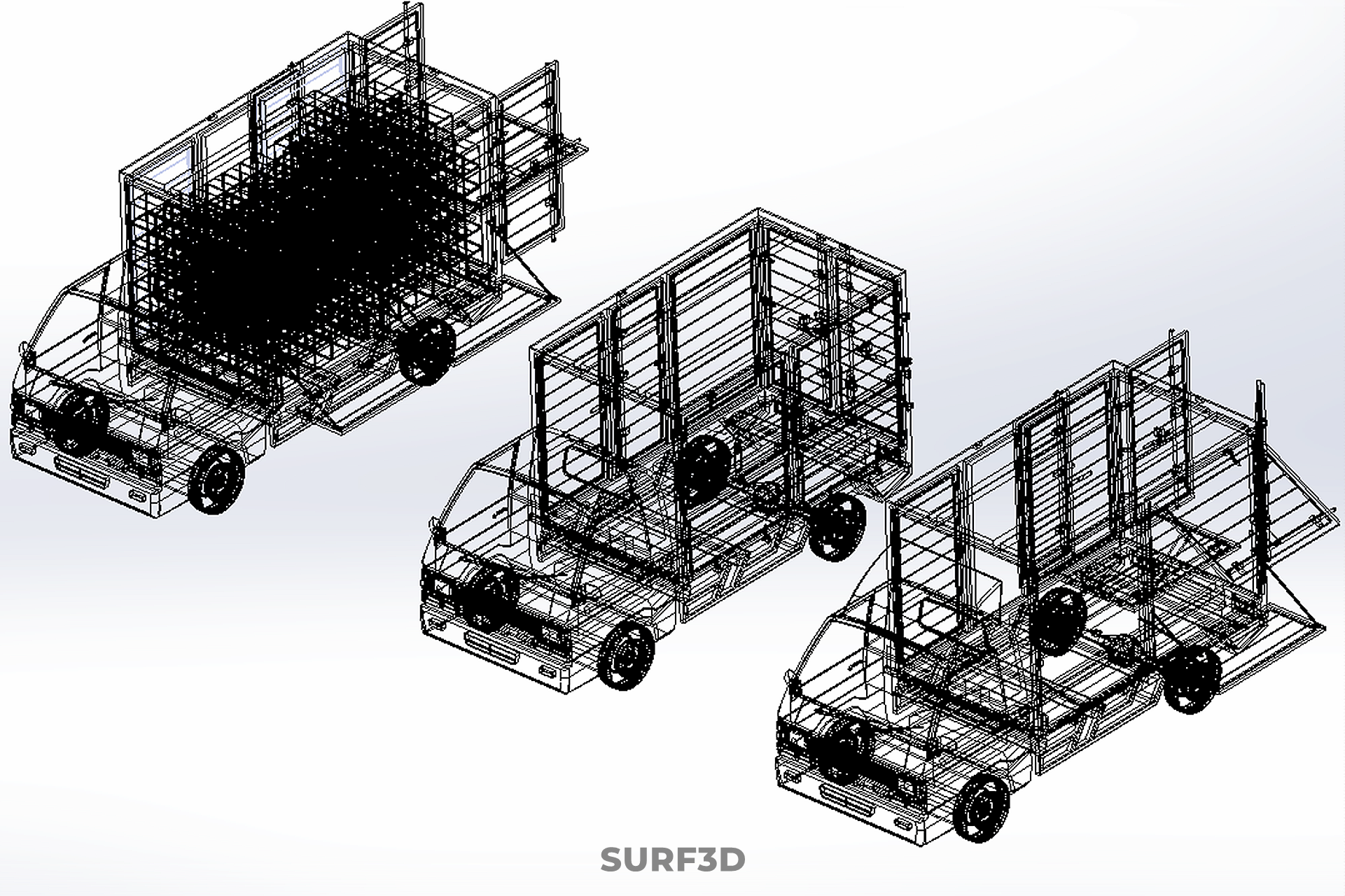
A Collection Box Truck Delivery Cargo Pickup Freight Cube Van Car represents a versatile category of light-to-medium duty commercial vehicles specifically engineered for the efficient collection, transport, and distribution of various goods. While the nomenclature is a composite of several related terms, it collectively describes a vehicle typology central to modern logistics, particularly within urban and suburban environments.
Nomenclature and Typology:
The core of this designation refers to a “box truck” or “cube van”, which are essentially synonyms for a commercial vehicle featuring a separate, enclosed cargo area built directly onto a chassis cab. Unlike a standard cargo van where the cargo area is integral to the vehicle body, a box truck typically consists of a truck or van chassis (often a “cutaway van” chassis) to which a box-shaped body is permanently affixed behind the driver’s cabin. The term “straight truck” is also used to differentiate it from an articulated truck (tractor-trailer). The inclusion of “car” in this composite title, while potentially ambiguous, generally refers to the vehicle’s classification as a light commercial vehicle or its derivation from a van or light truck chassis, rather than a passenger automobile.
Primary Functions and Applications:
The functionality implied by “collection,” “delivery,” and “pickup” underscores the vehicle’s role in the full cycle of goods movement. These vehicles are primarily utilized for:
1. Last-Mile Delivery: The final leg of the supply chain, delivering goods directly to residential or commercial customers from a distribution center. This includes parcel delivery, e-commerce fulfillment, and courier services.
2. Cargo/Freight Transport: Carrying general merchandise, consumer goods, industrial components, or specialized cargo. The terms “cargo” and “freight” denote the goods being transported, often in a Less-Than-Truckload (LTL) capacity where multiple consignments are consolidated.
3. Collection Services: Picking up goods from suppliers, retailers, or private individuals for consolidation at a depot or onward transport. This is common for returns, recycling, or specialized collection routes.
4. Local Distribution: Moving goods between warehouses, retail outlets, or manufacturing facilities within a confined geographic area.
Design and Features:
Box trucks and cube vans are characterized by their rigid, fully enclosed cargo compartments, which offer protection from weather and theft. Access to the cargo area is typically via a large rear door, which can be a roll-up (overhead) door or swing-out doors. Many are equipped with hydraulic liftgates to facilitate the loading and unloading of heavy or bulky items, reducing manual labor and enhancing efficiency. Their size ranges from light-duty models, often based on commercial van chassis (e.g., Ford Transit Cutaway, Mercedes-Benz Sprinter chassis cab), suitable for navigating urban streets, to medium-duty versions capable of carrying heavier payloads. The design prioritizes cargo volume and ease of access over sheer payload capacity when compared to heavy-duty trucks.
Operational Significance:
These vehicles are indispensable to a wide array of industries, including retail, e-commerce, food service, construction, and moving and storage. Their maneuverability, combined with significant cargo capacity relative to their footprint, makes them ideal for navigating congested urban areas where larger articulated lorries are impractical. They serve as a critical link in the supply chain, bridging the gap between large-scale freight operations and individual delivery points, thereby ensuring the flow of goods necessary for economic activity.
KEYWORDS: Box truck, Cube van, Delivery truck, Collection vehicle, Freight transport, Cargo pickup, Last-mile delivery, Commercial vehicle, Straight truck, Parcel delivery, Urban logistics, Medium-duty truck, Light-duty truck, Enclosed cargo, Cutaway chassis, Liftgate, Roll-up door, Supply chain, Distribution vehicle, General freight, LTL transport, Courier service, Merchandise transport, Utility vehicle, Industrial vehicle, Local delivery, Transportation, Goods movement, Vehicle logistics, Commercial transport