High-quality 3D assets at affordable prices — trusted by designers, engineers, and creators worldwide. Made with care to be versatile, accessible, and ready for your pipeline.
Included File Formats
This model is provided in 14 widely supported formats, ensuring maximum compatibility:
• – FBX (.fbx) – Standard format for most 3D software and pipelines
• – OBJ + MTL (.obj, .mtl) – Wavefront format, widely used and compatible
• – STL (.stl) – Exported mesh geometry; may be suitable for 3D printing with adjustments
• – STEP (.step, .stp) – CAD format using NURBS surfaces
• – IGES (.iges, .igs) – Common format for CAD/CAM and engineering workflows (NURBS)
• – SAT (.sat) – ACIS solid model format (NURBS)
• – DAE (.dae) – Collada format for 3D applications and animations
• – glTF (.glb) – Modern, lightweight format for web, AR, and real-time engines
• – 3DS (.3ds) – Legacy format with broad software support
• – 3ds Max (.max) – Provided for 3ds Max users
• – Blender (.blend) – Provided for Blender users
• – SketchUp (.skp) – Compatible with all SketchUp versions
• – AutoCAD (.dwg) – Suitable for technical and architectural workflows
• – Rhino (.3dm) – Provided for Rhino users
Model Info
• – All files are checked and tested for integrity and correct content
• – Geometry uses real-world scale; model resolution varies depending on the product (high or low poly)
• • – Scene setup and mesh structure may vary depending on model complexity
• – Rendered using Luxion KeyShot
• – Affordable price with professional detailing
Buy with confidence. Quality and compatibility guaranteed.
If you have any questions about the file formats, feel free to send us a message — we’re happy to assist you!
Sincerely,
SURF3D
Trusted source for professional and affordable 3D models.
More Information About 3D Model :
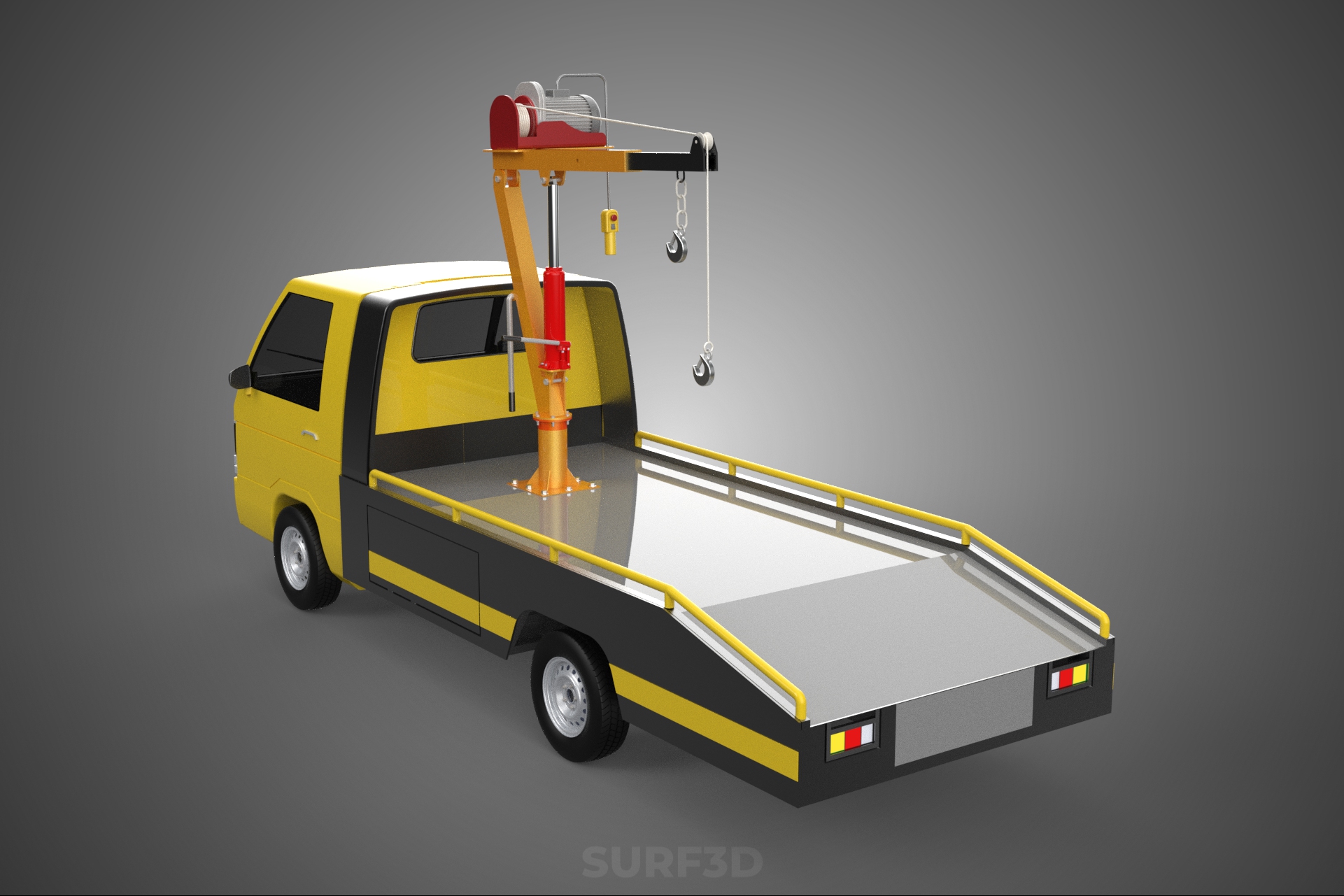
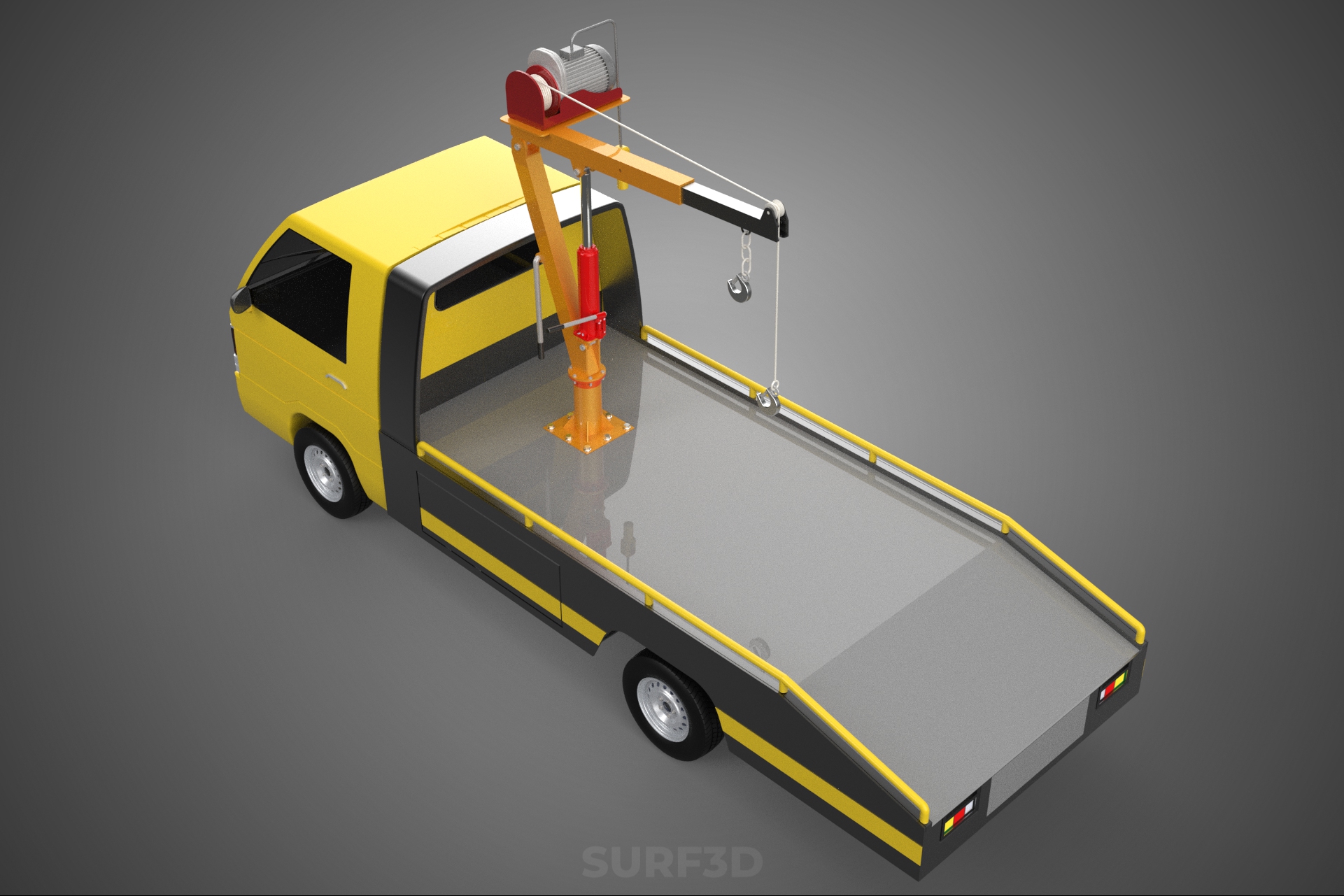
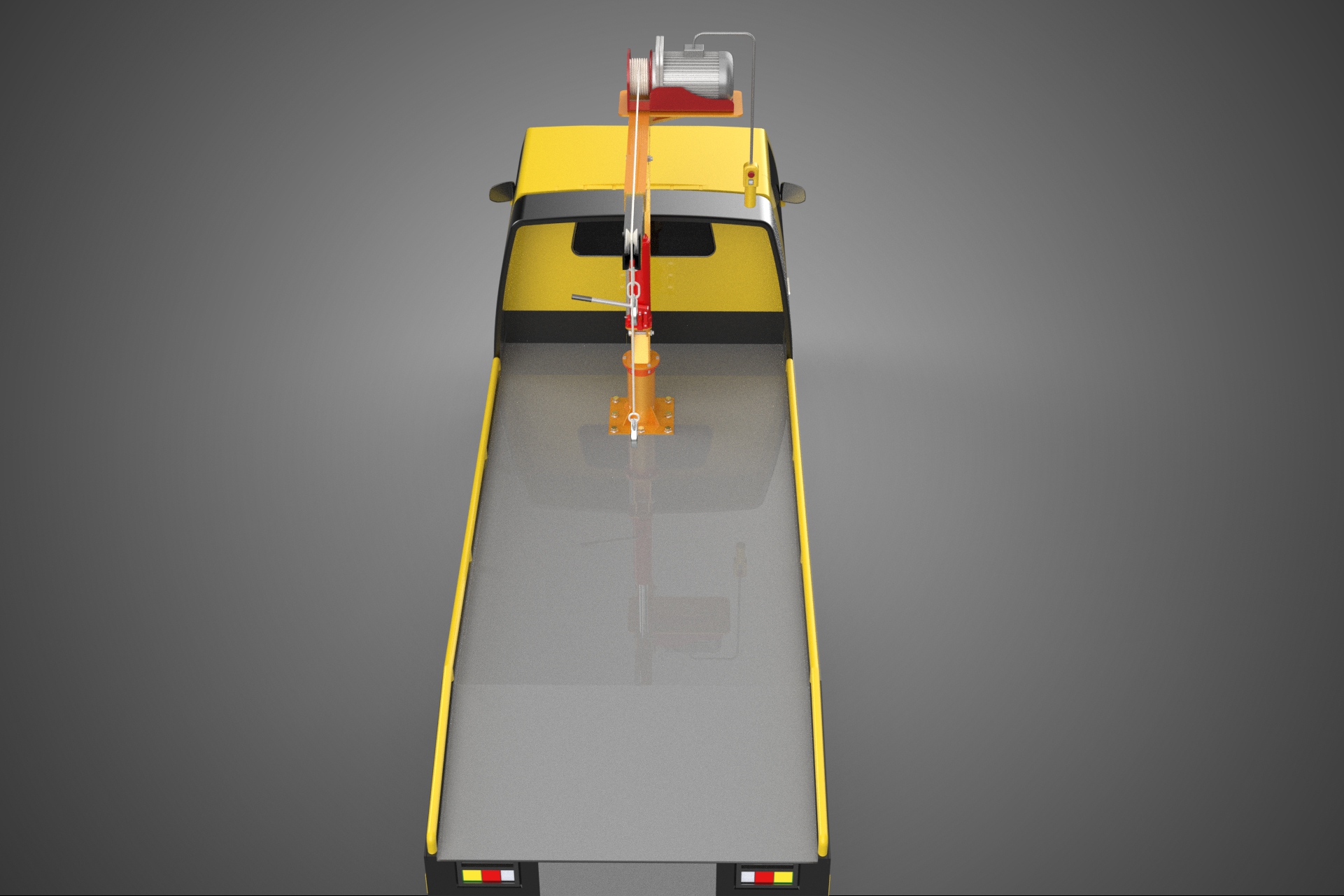
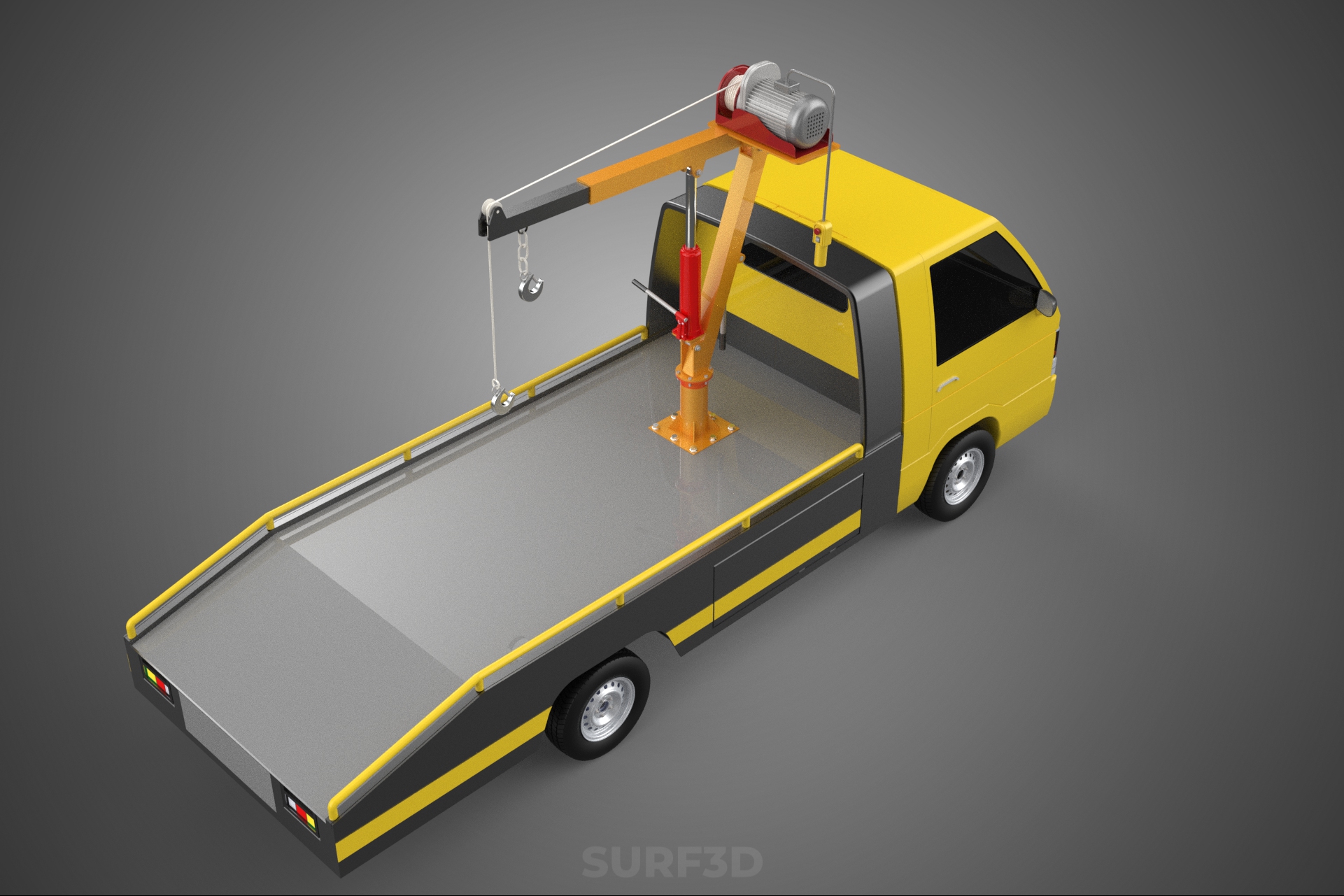
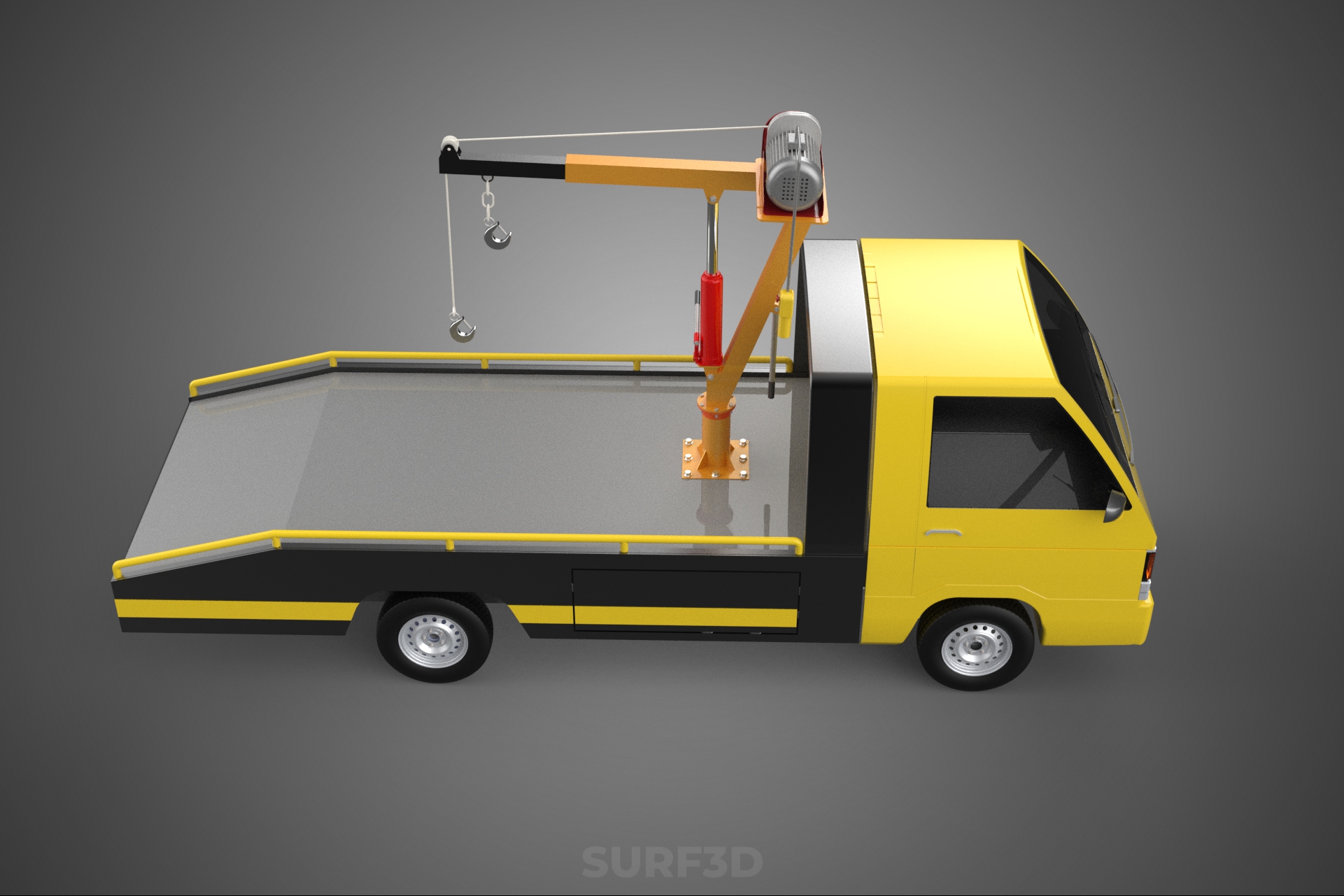
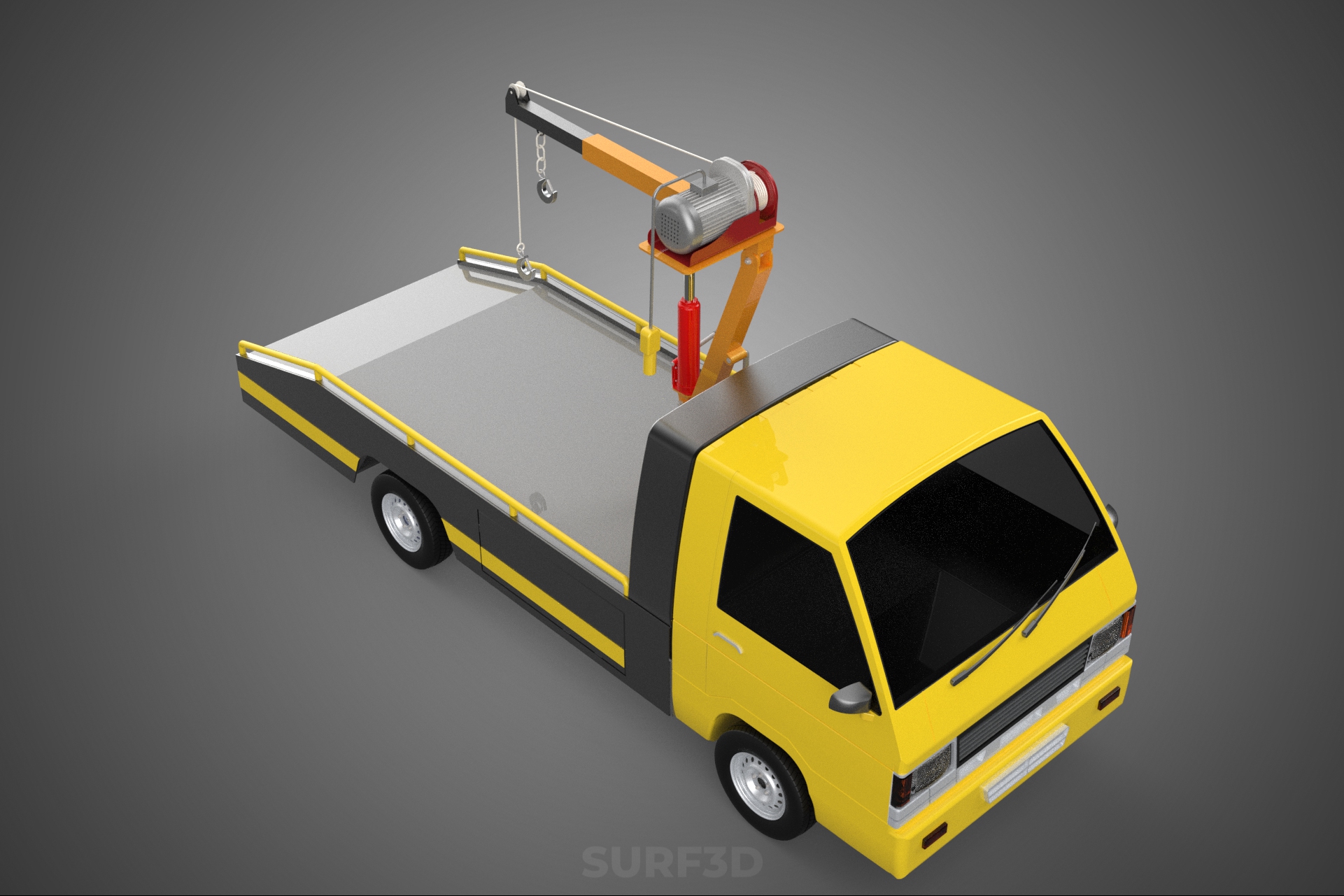
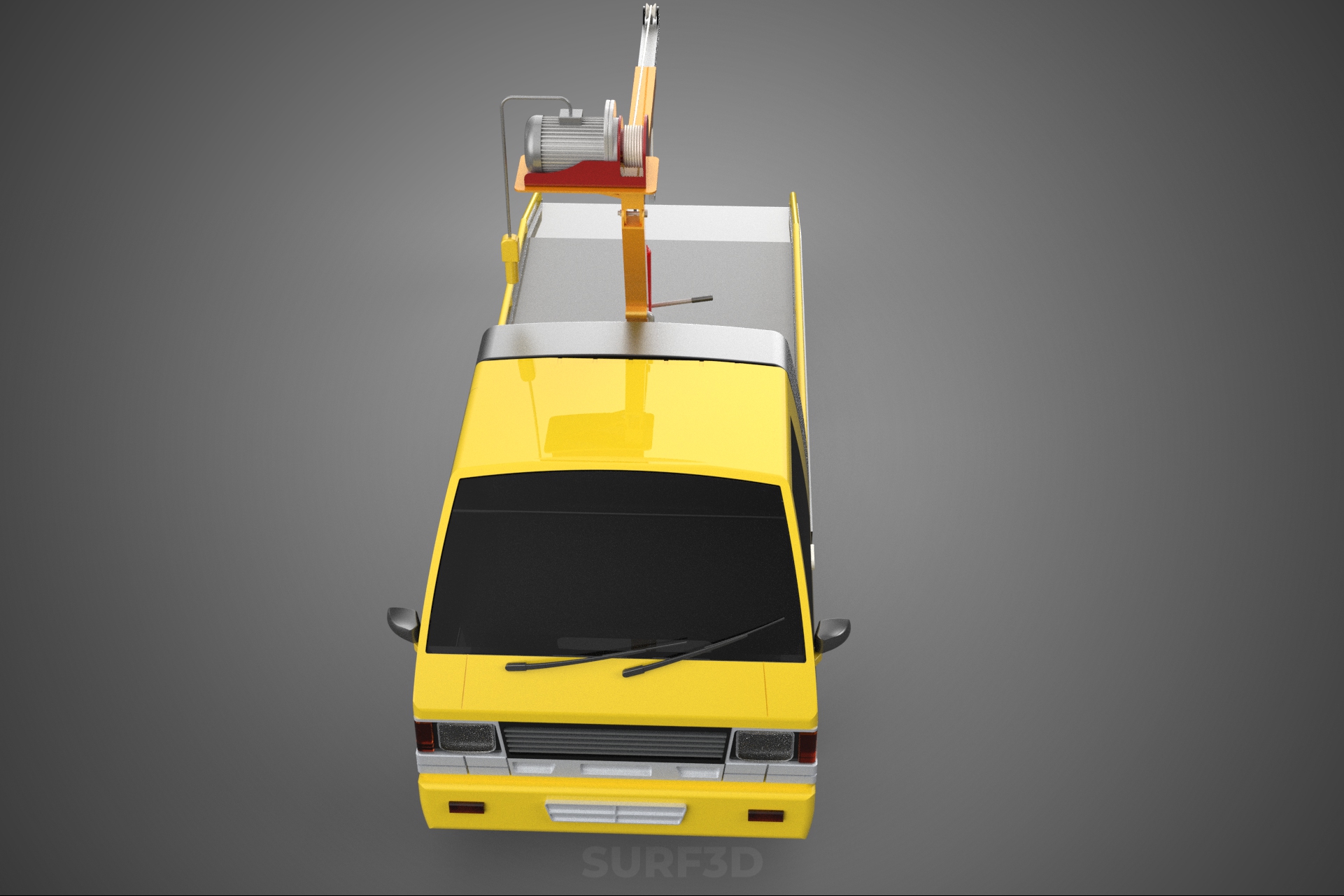
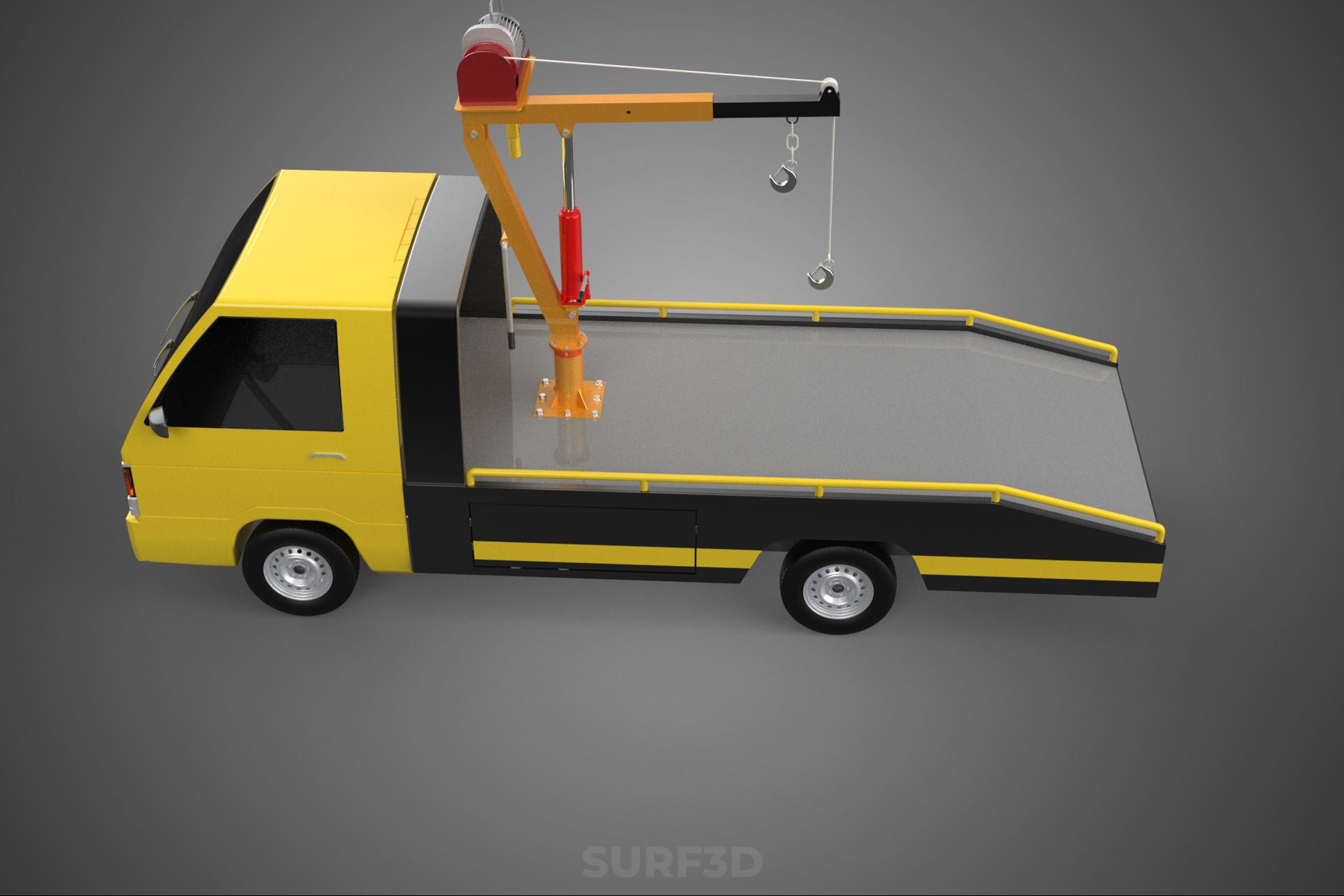
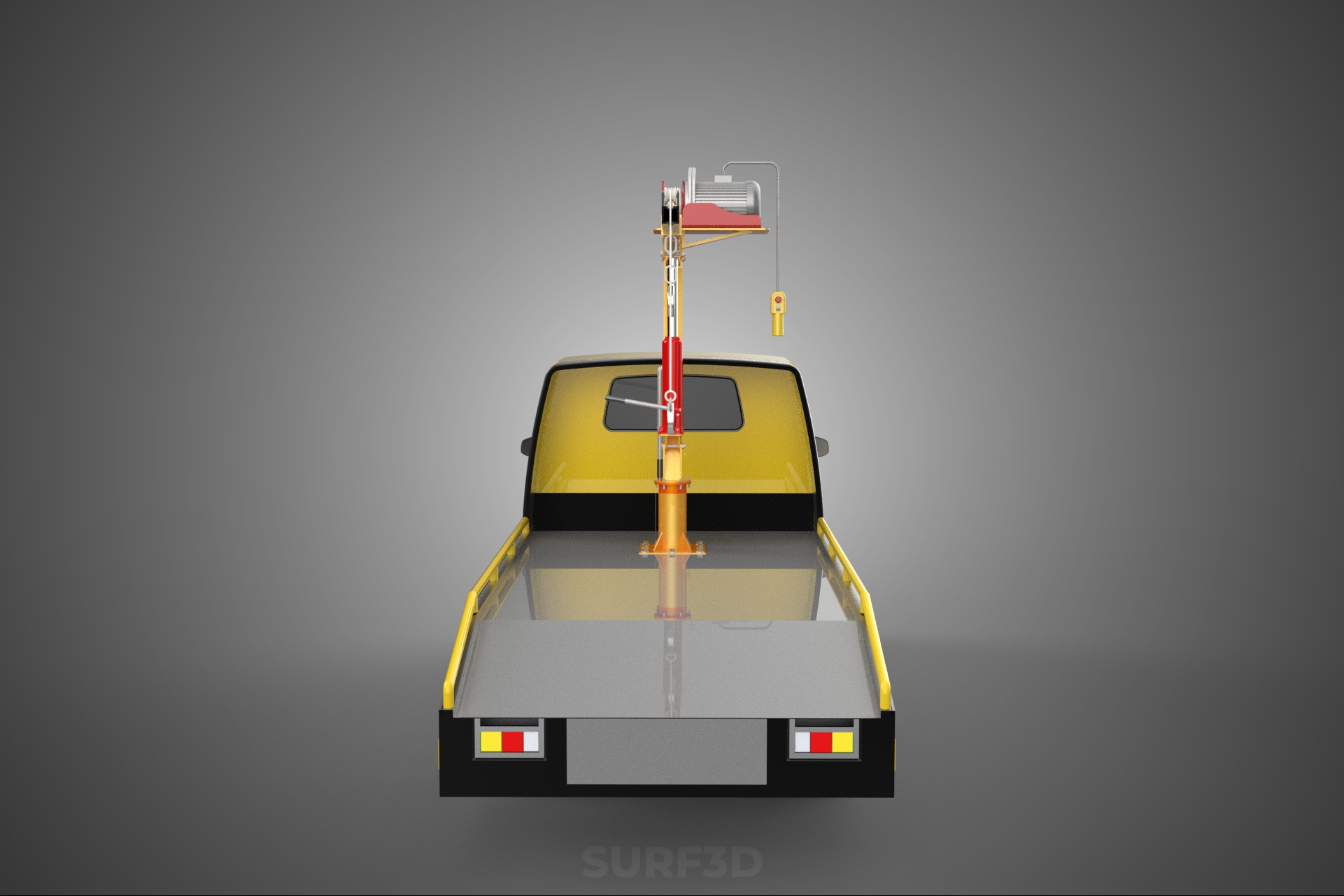
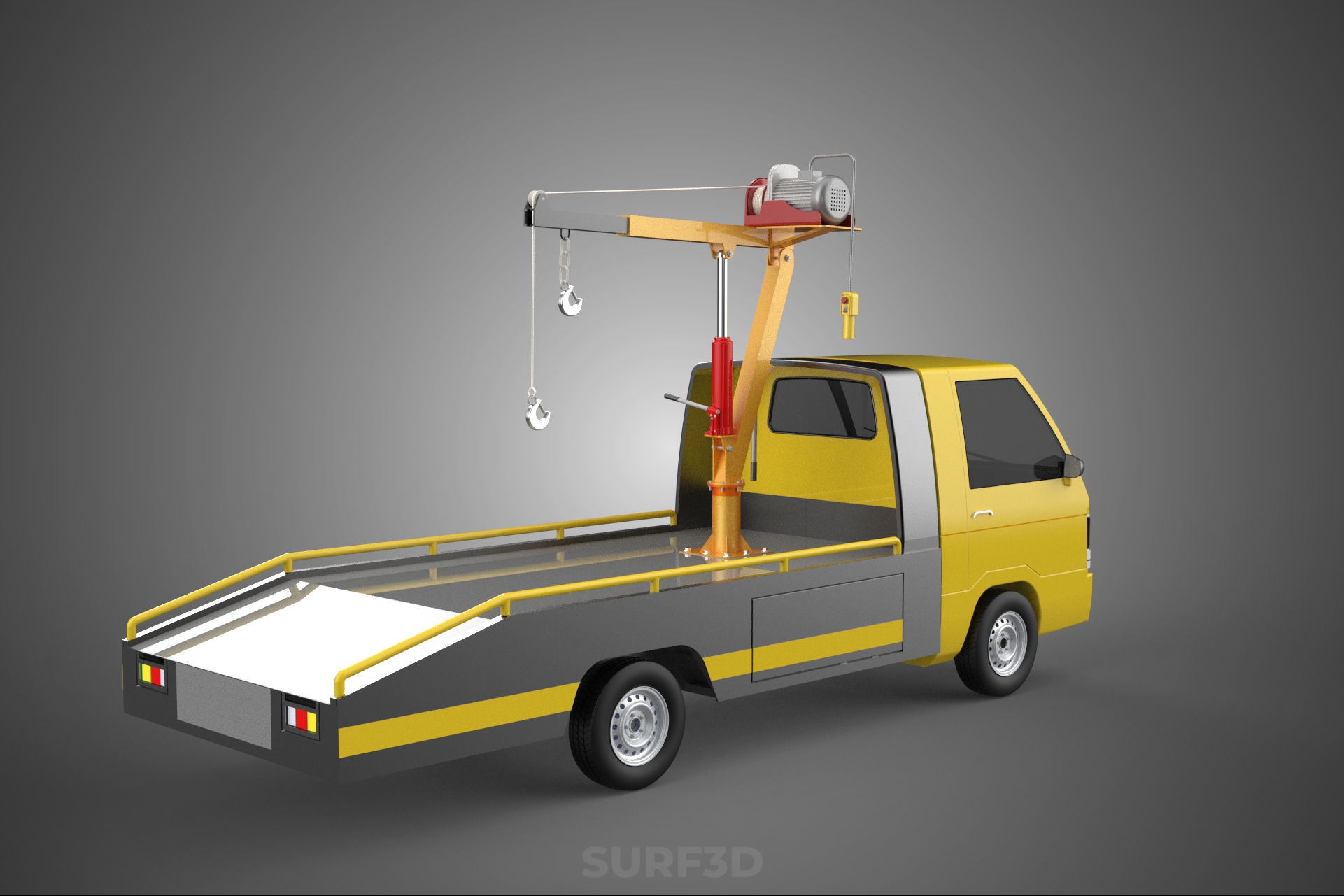
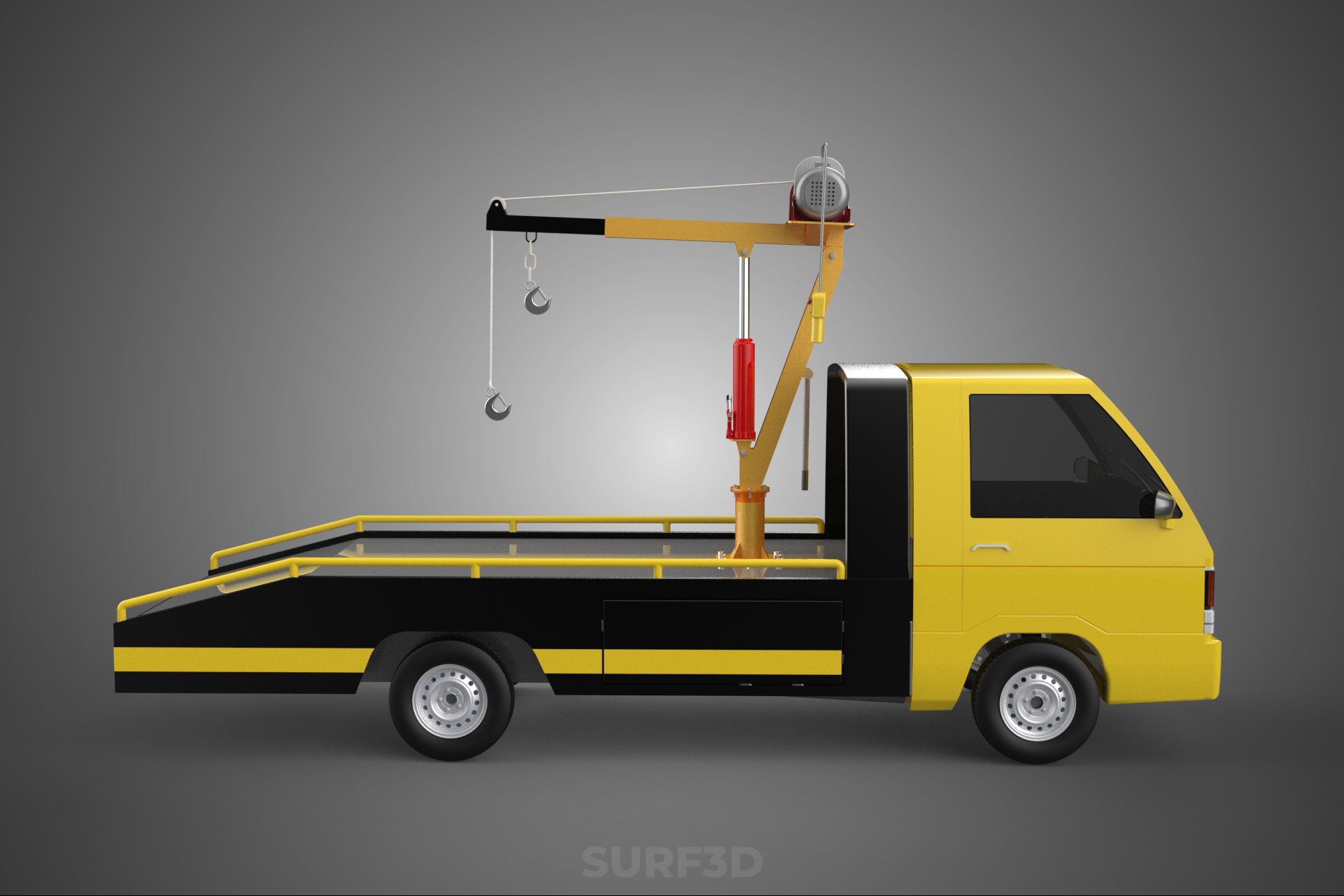
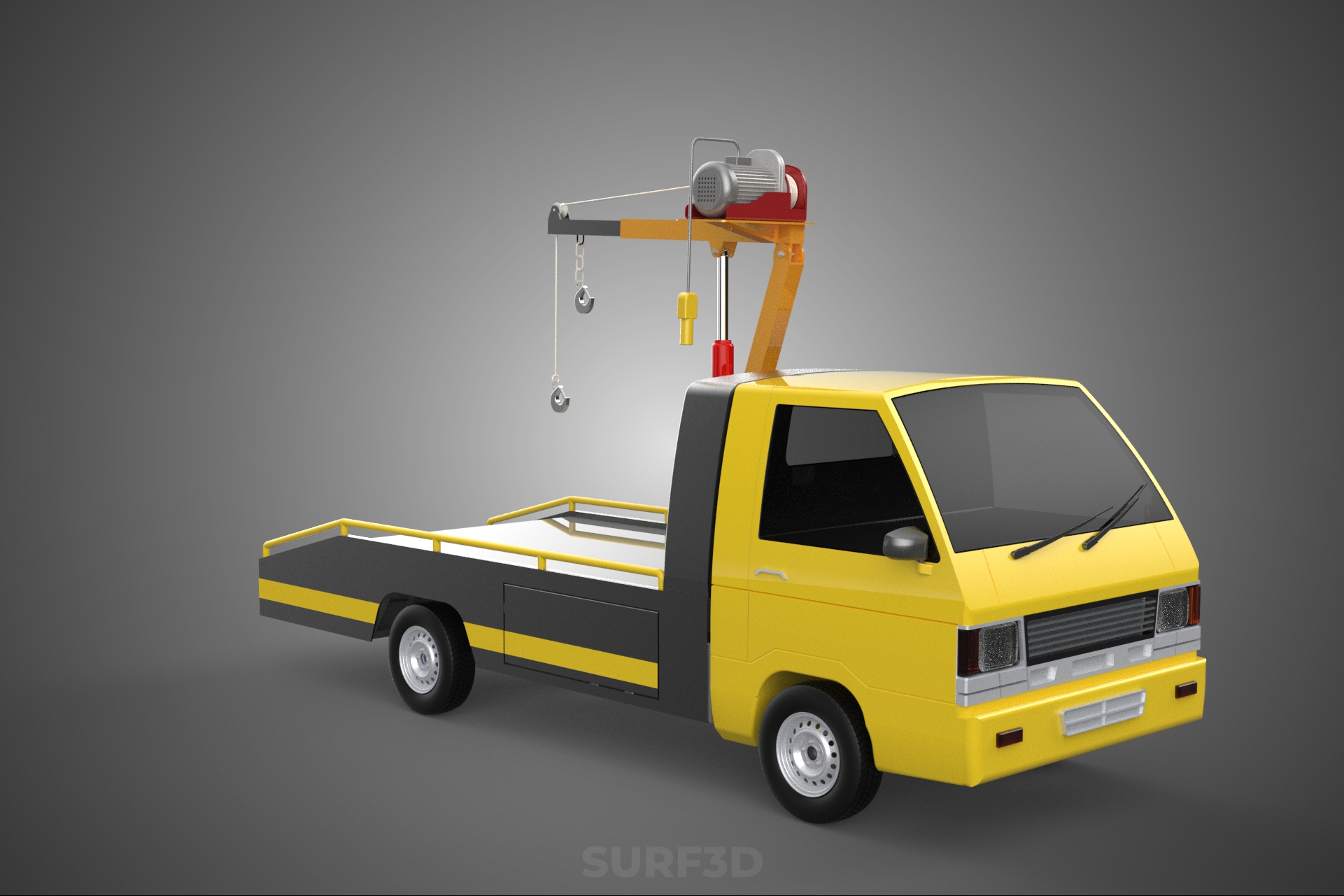
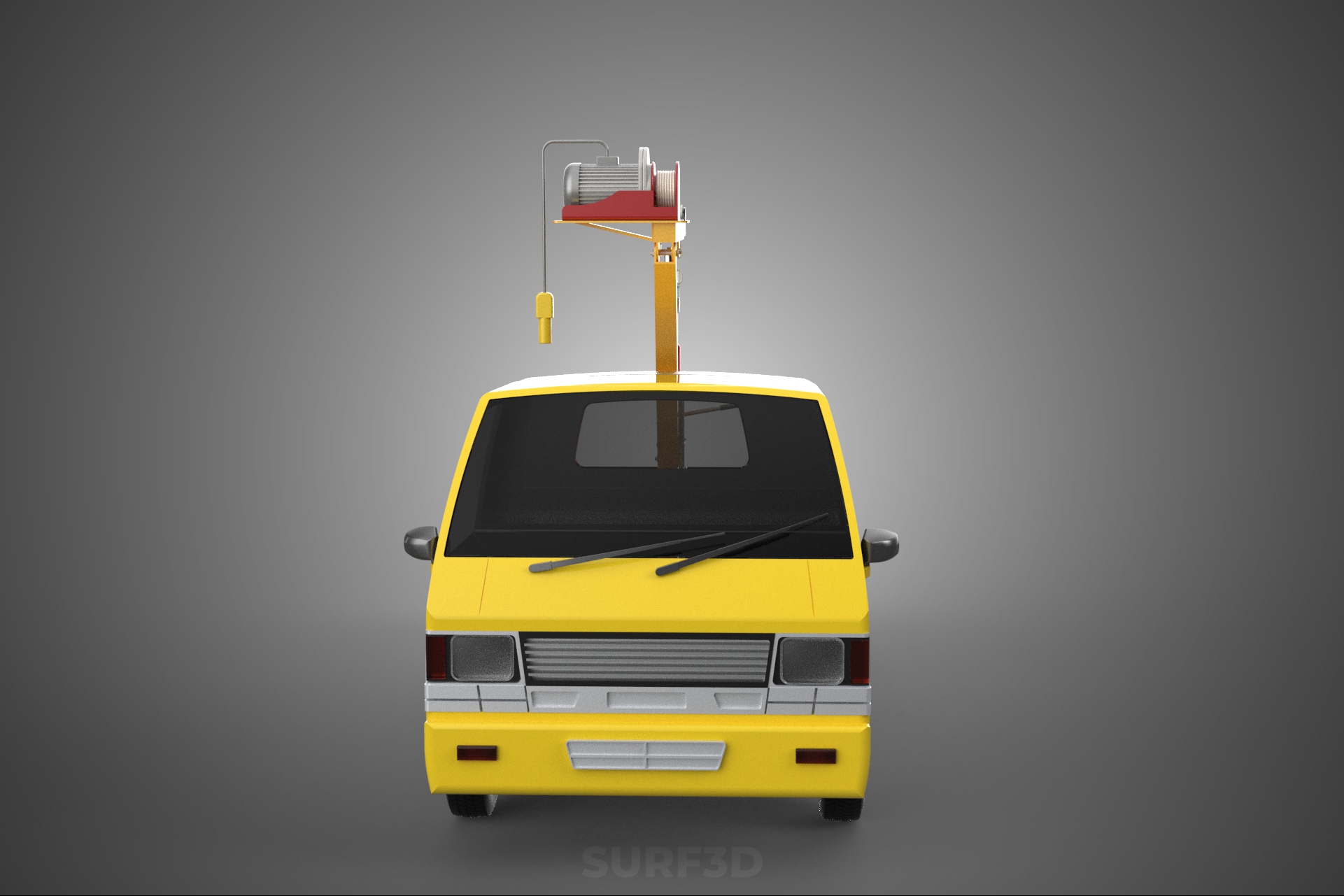
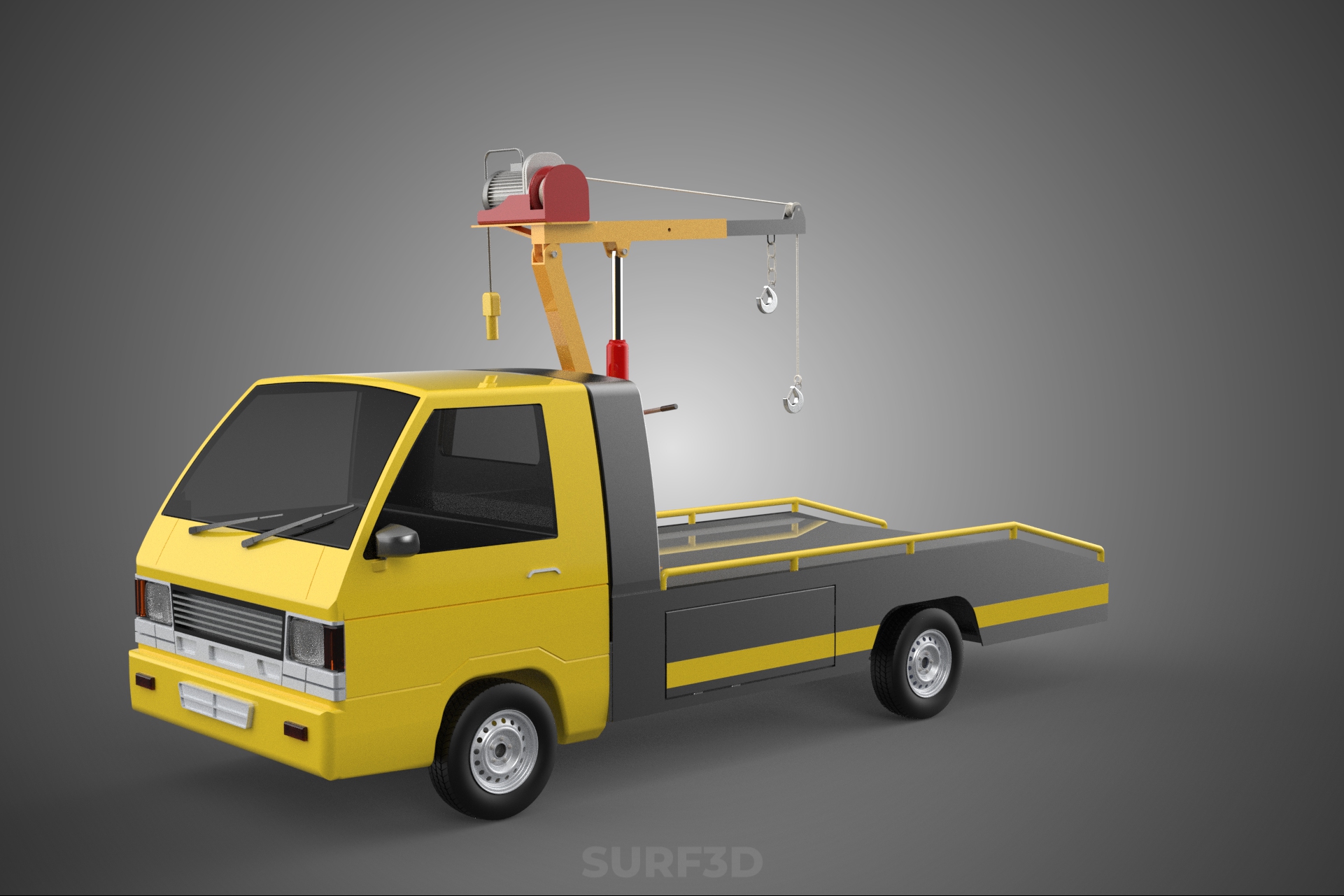
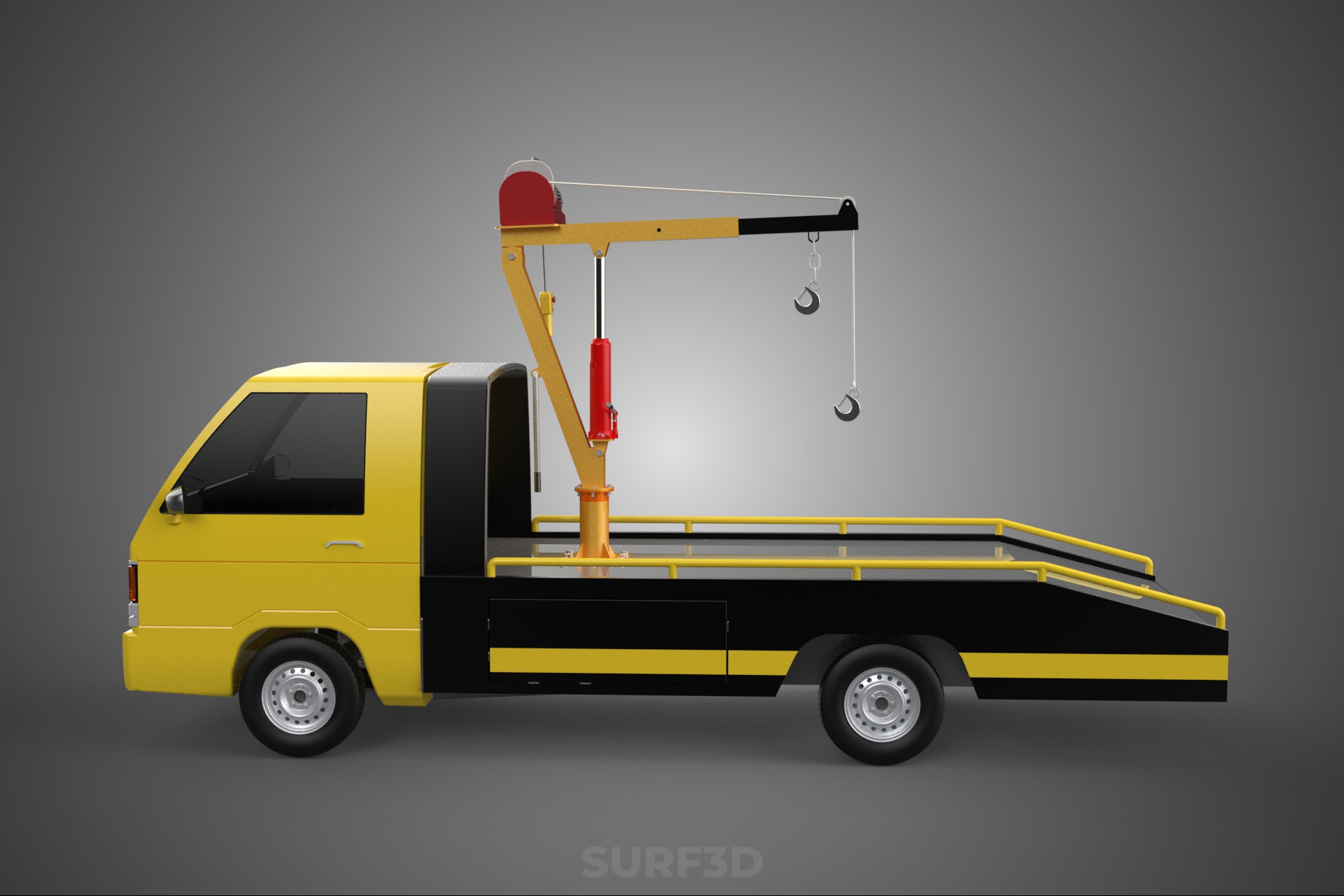
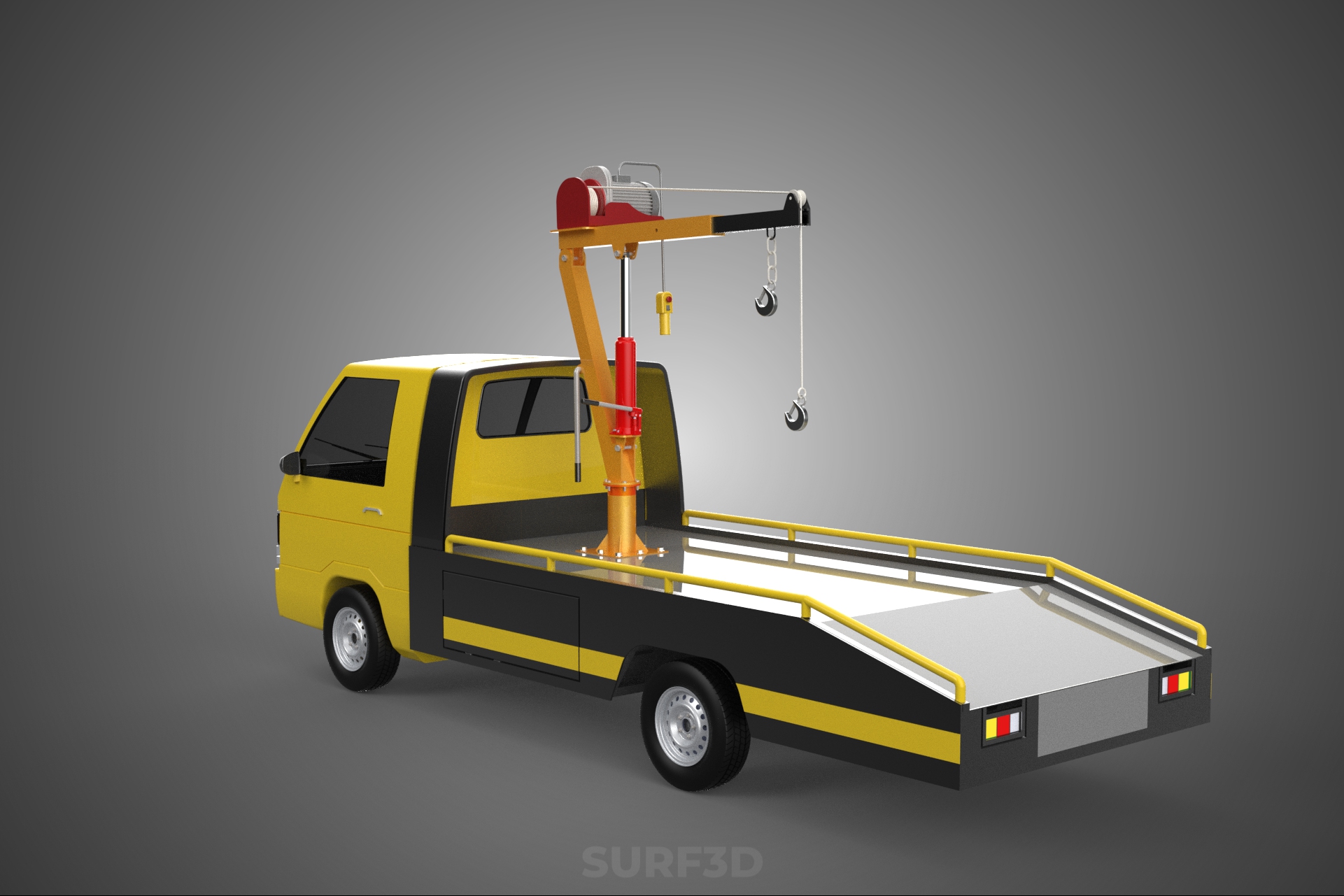
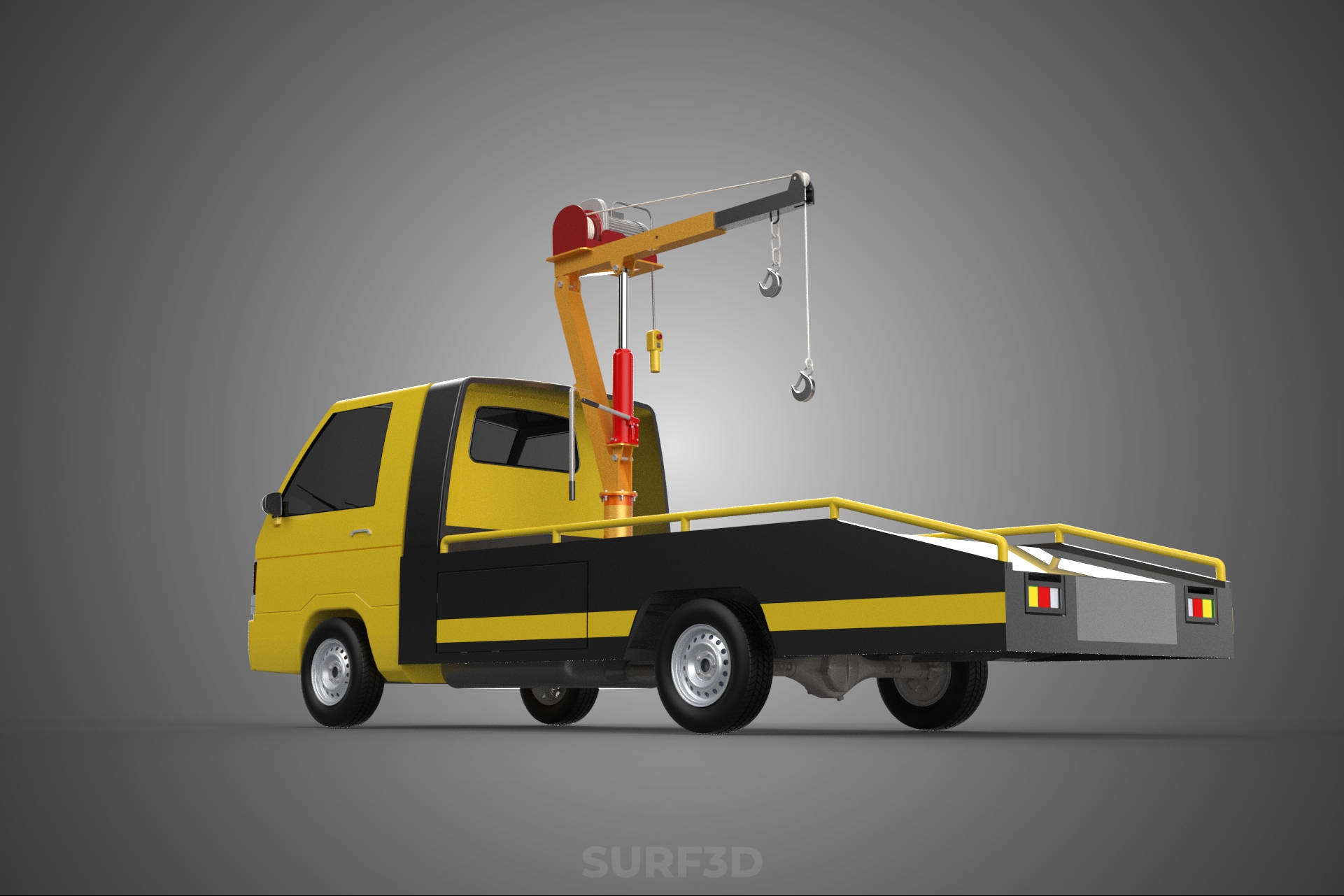
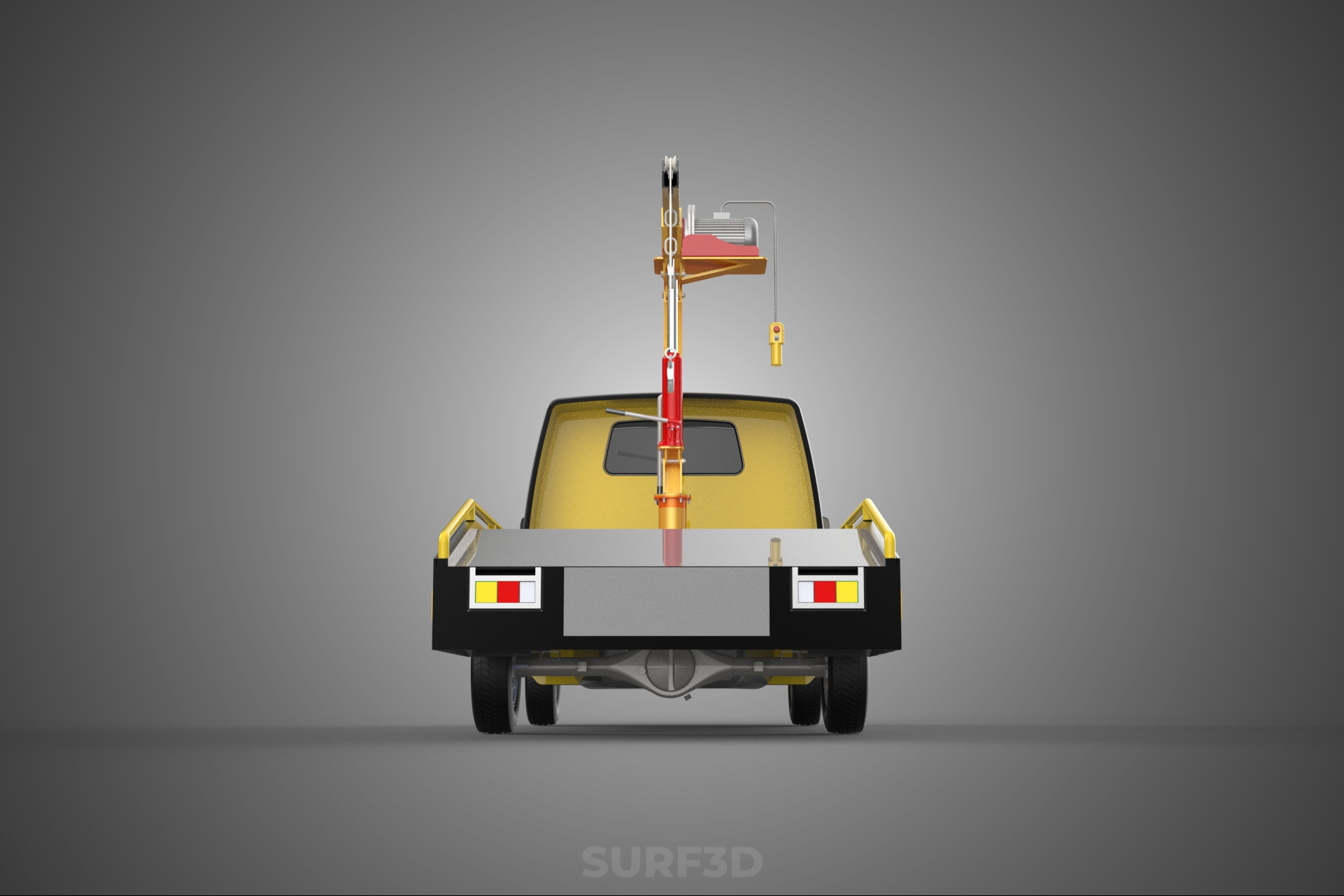
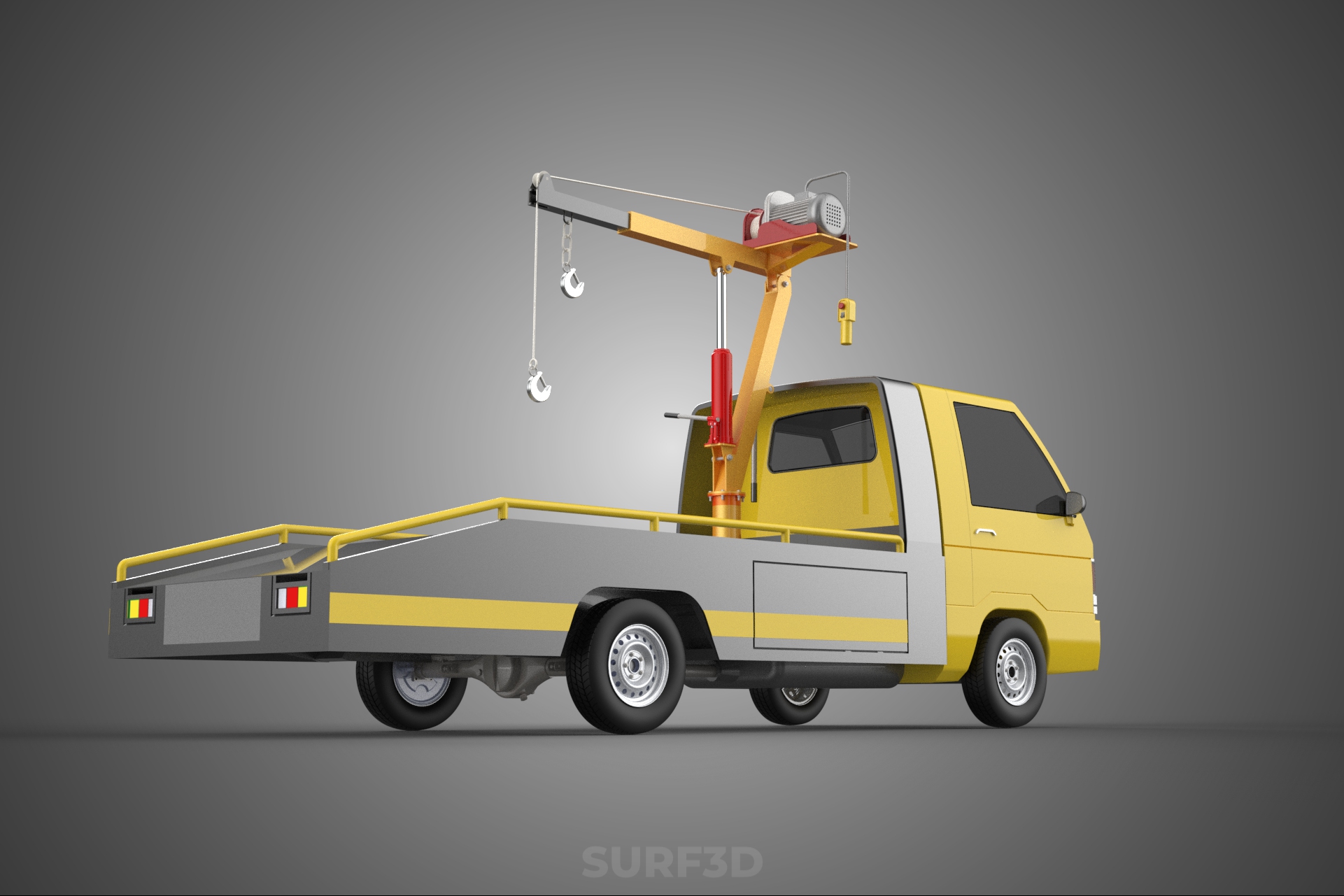
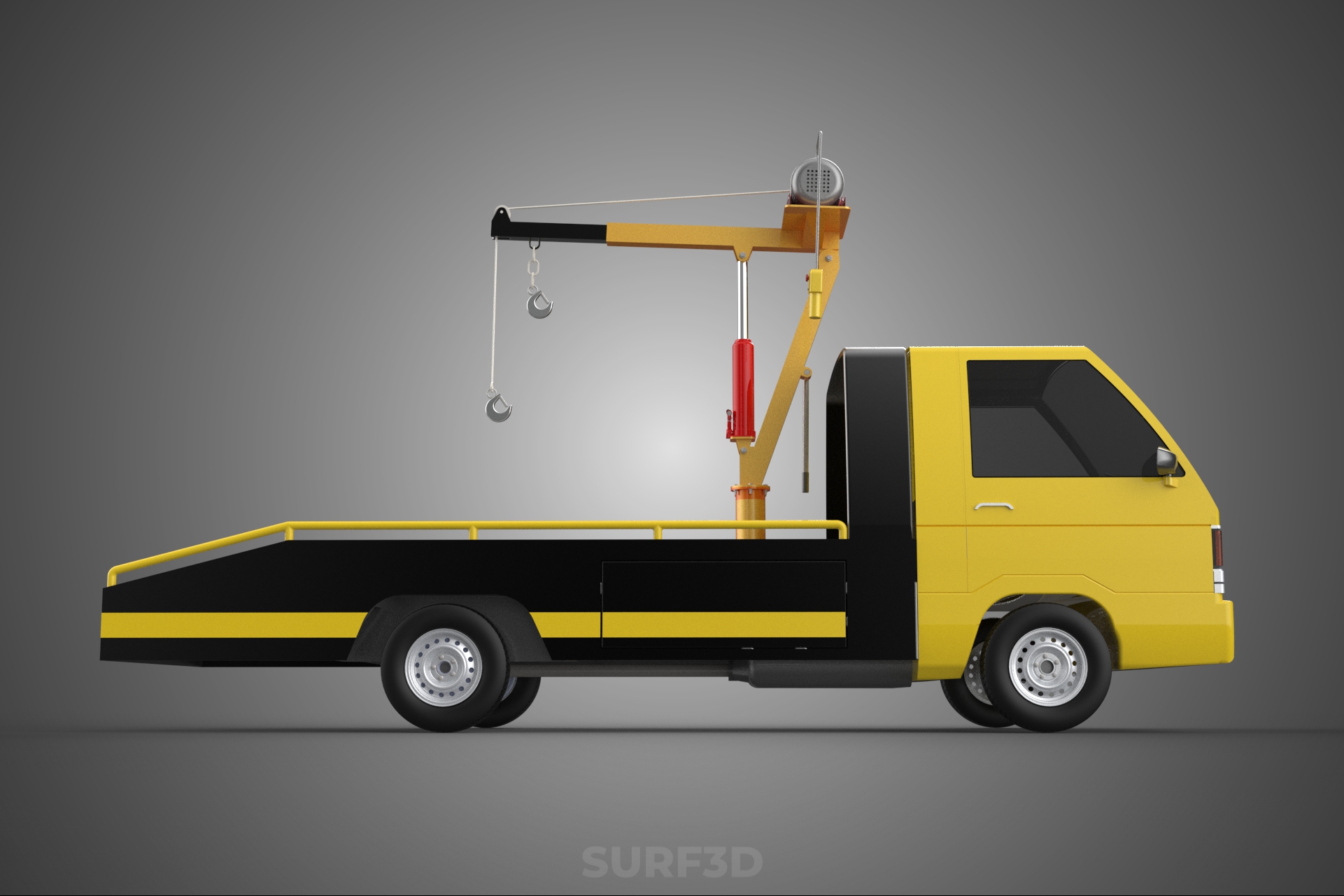
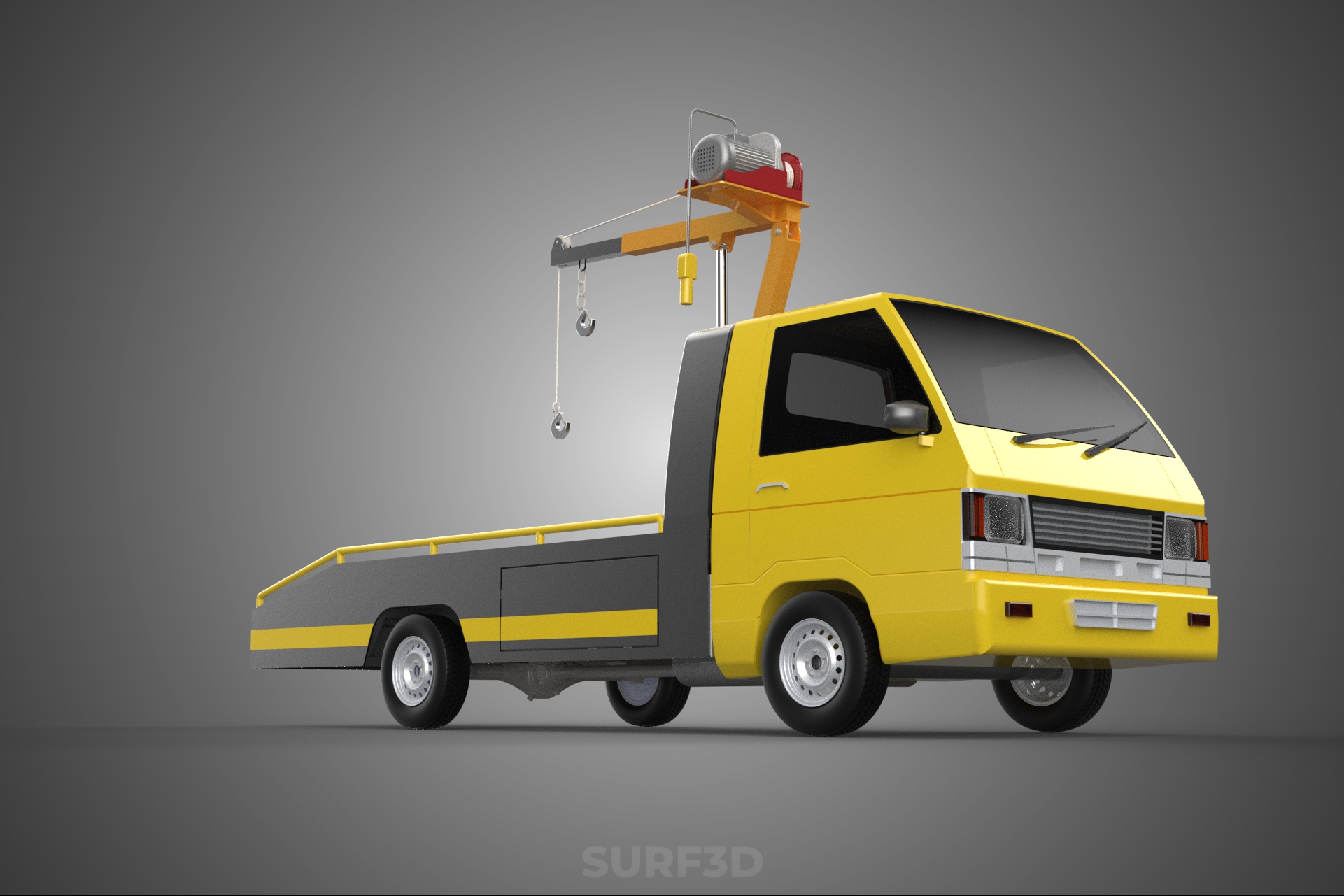
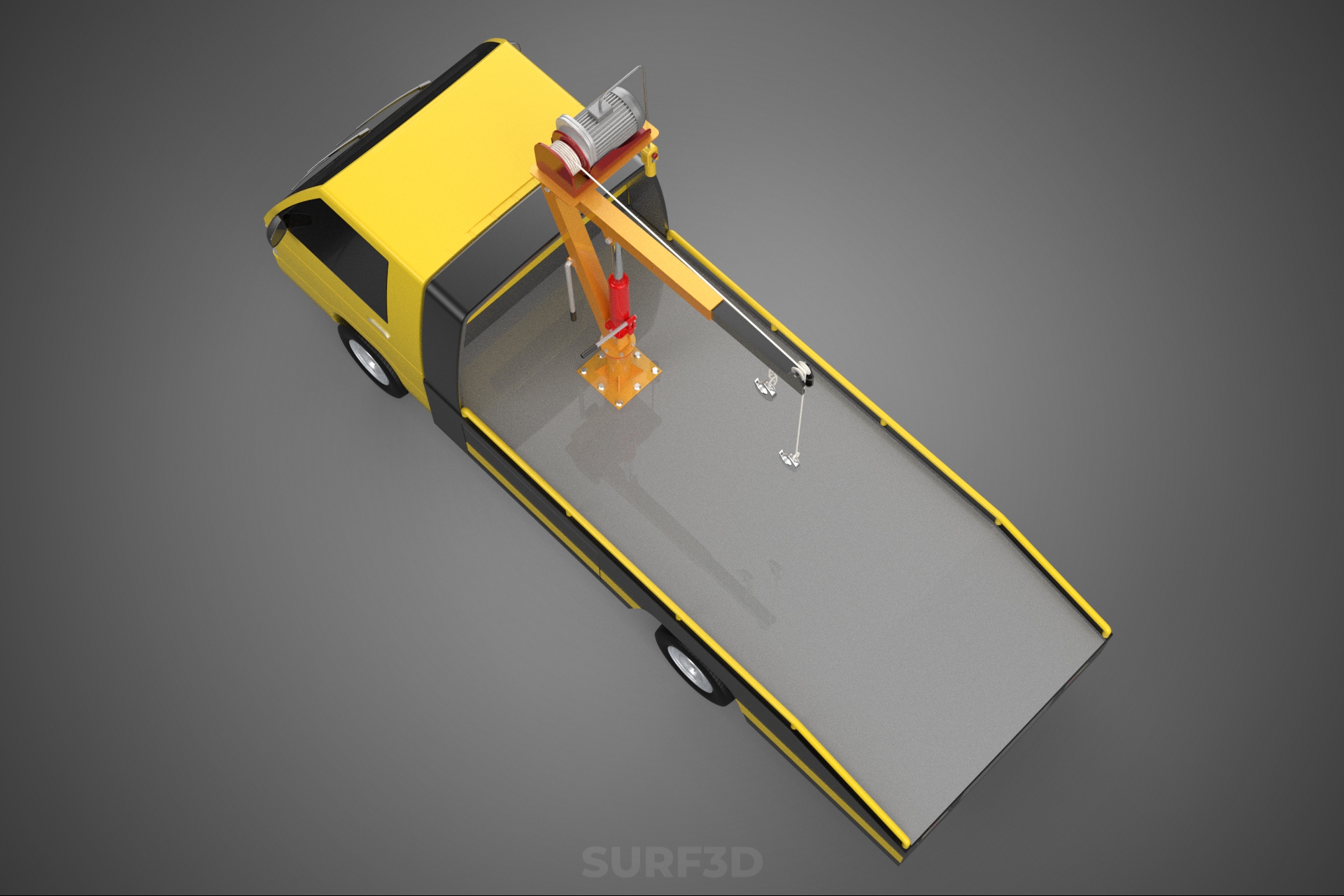
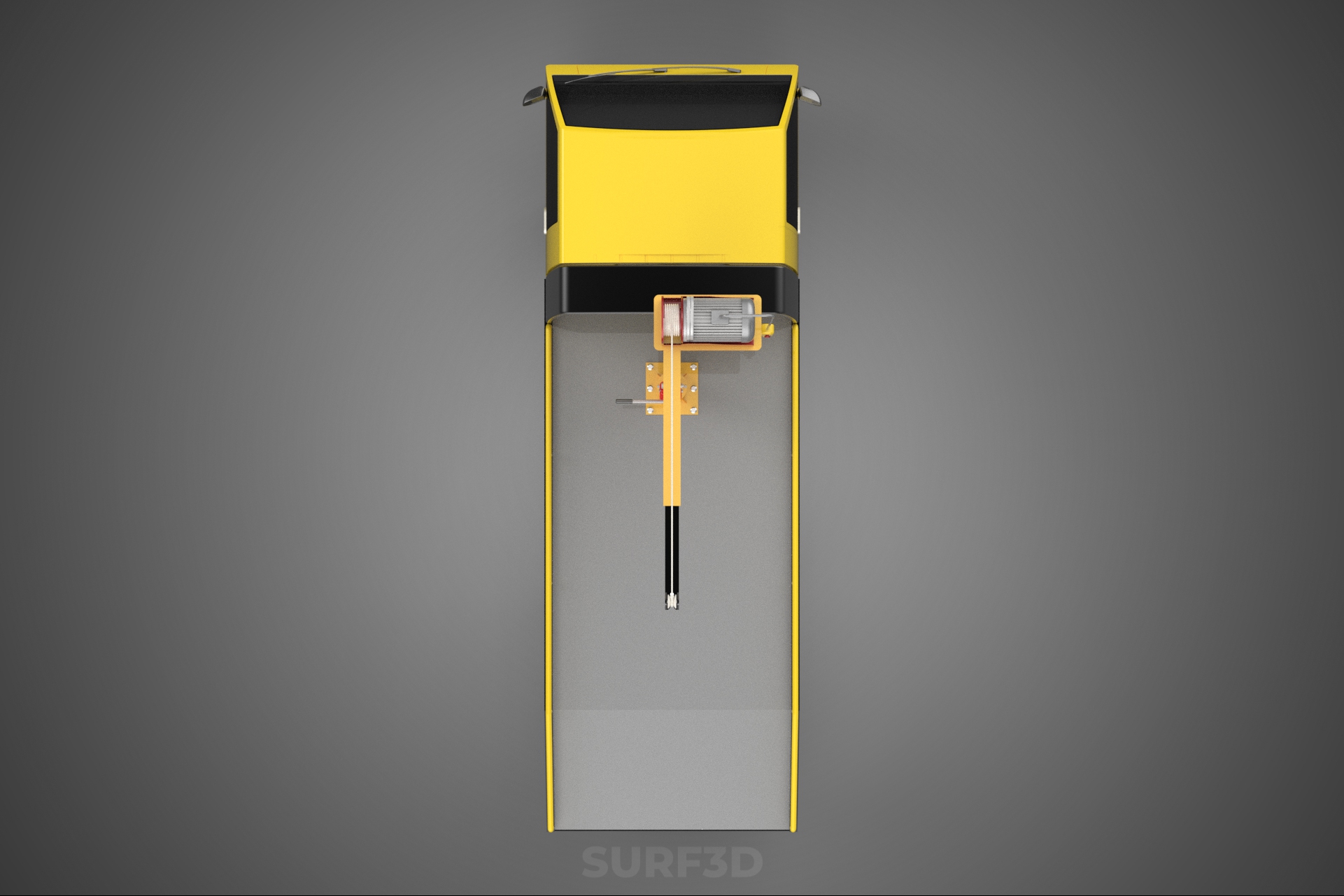
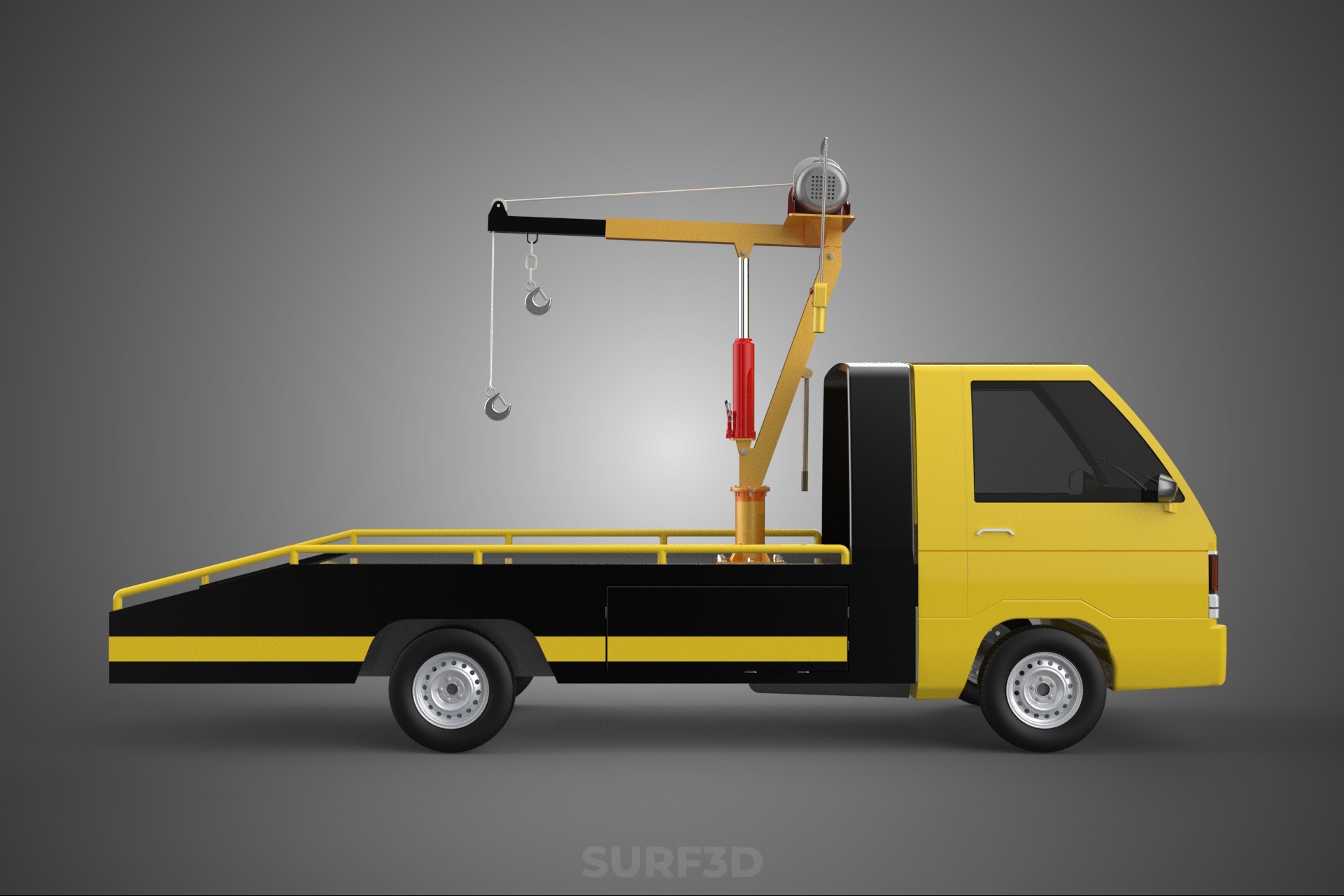
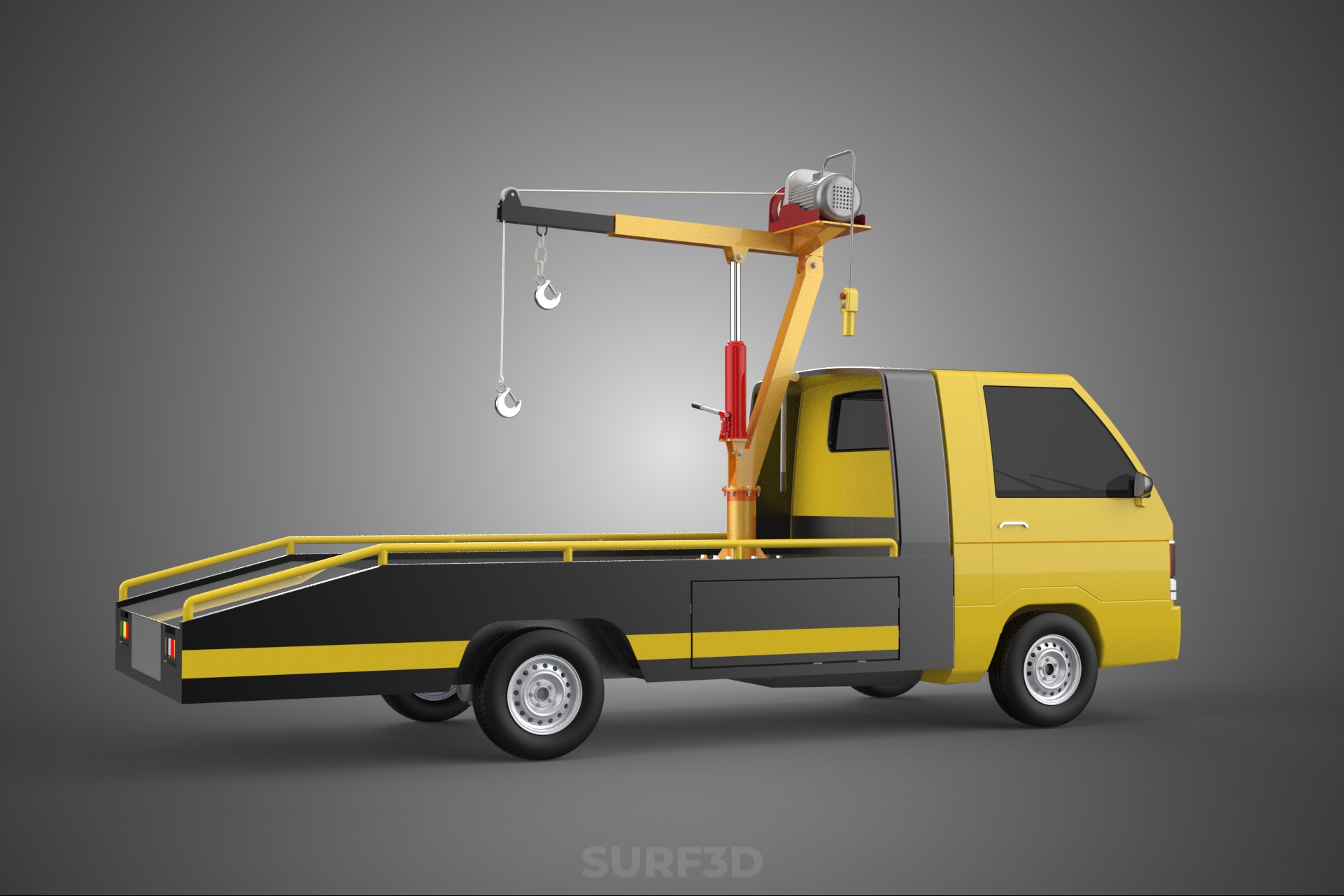
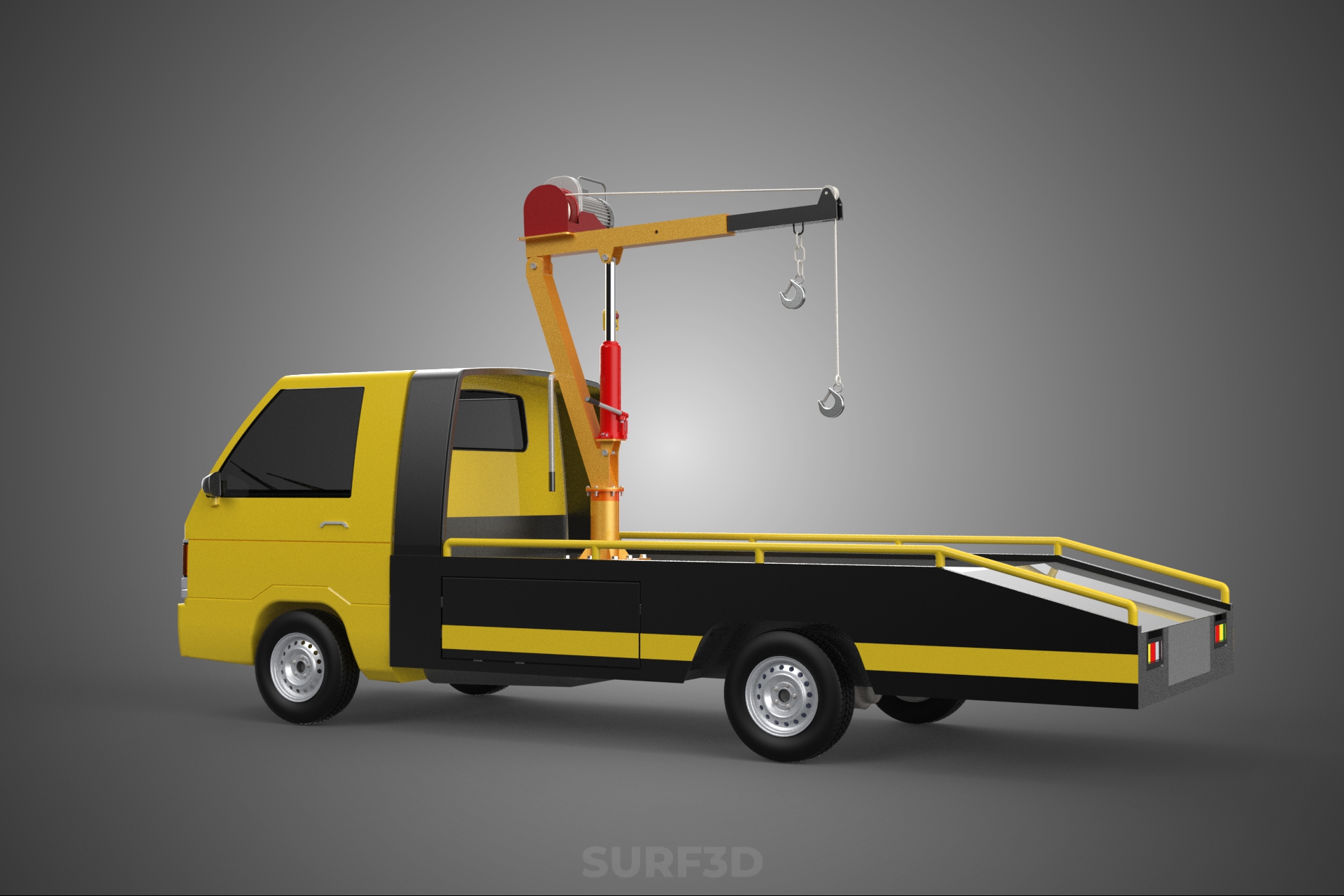
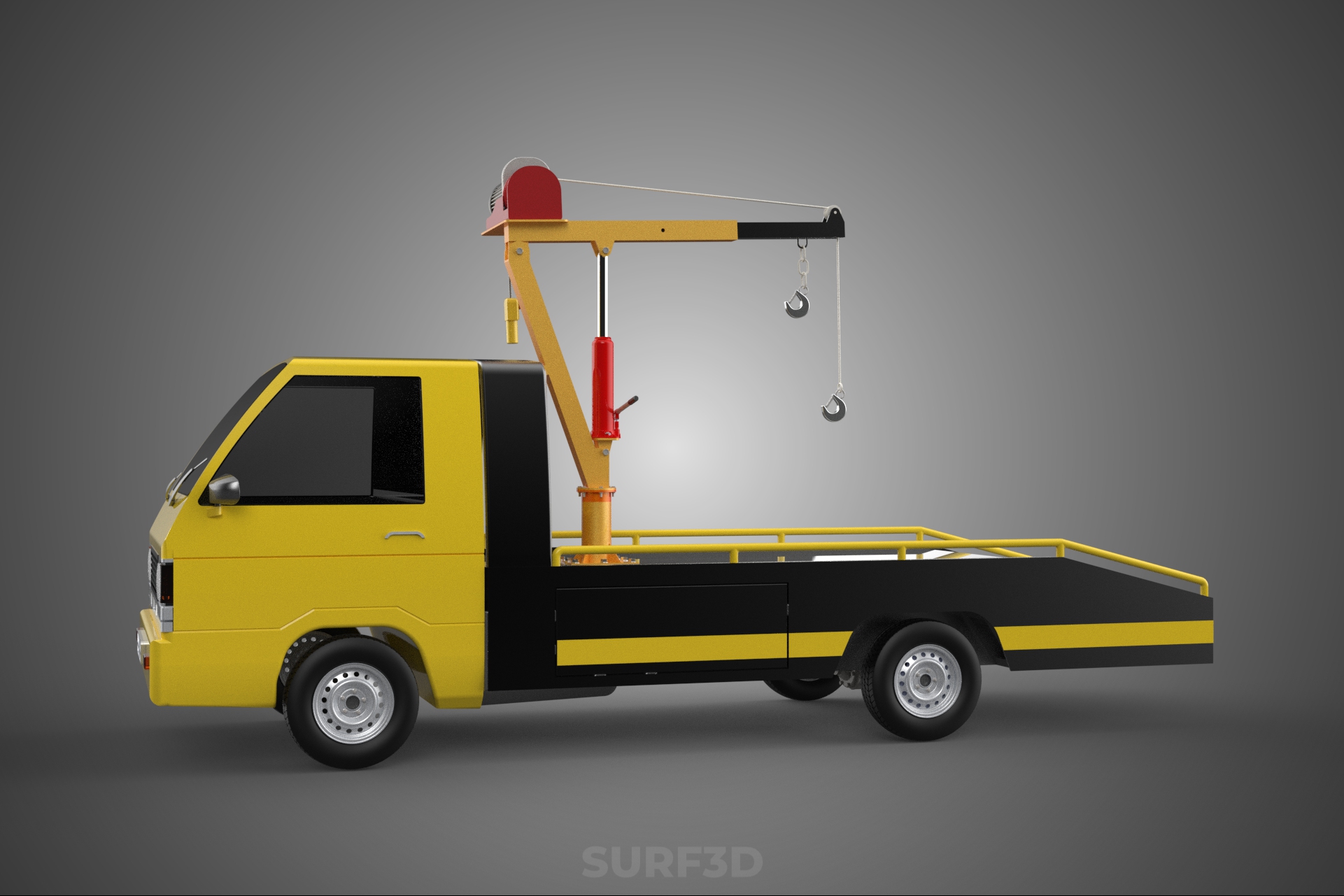
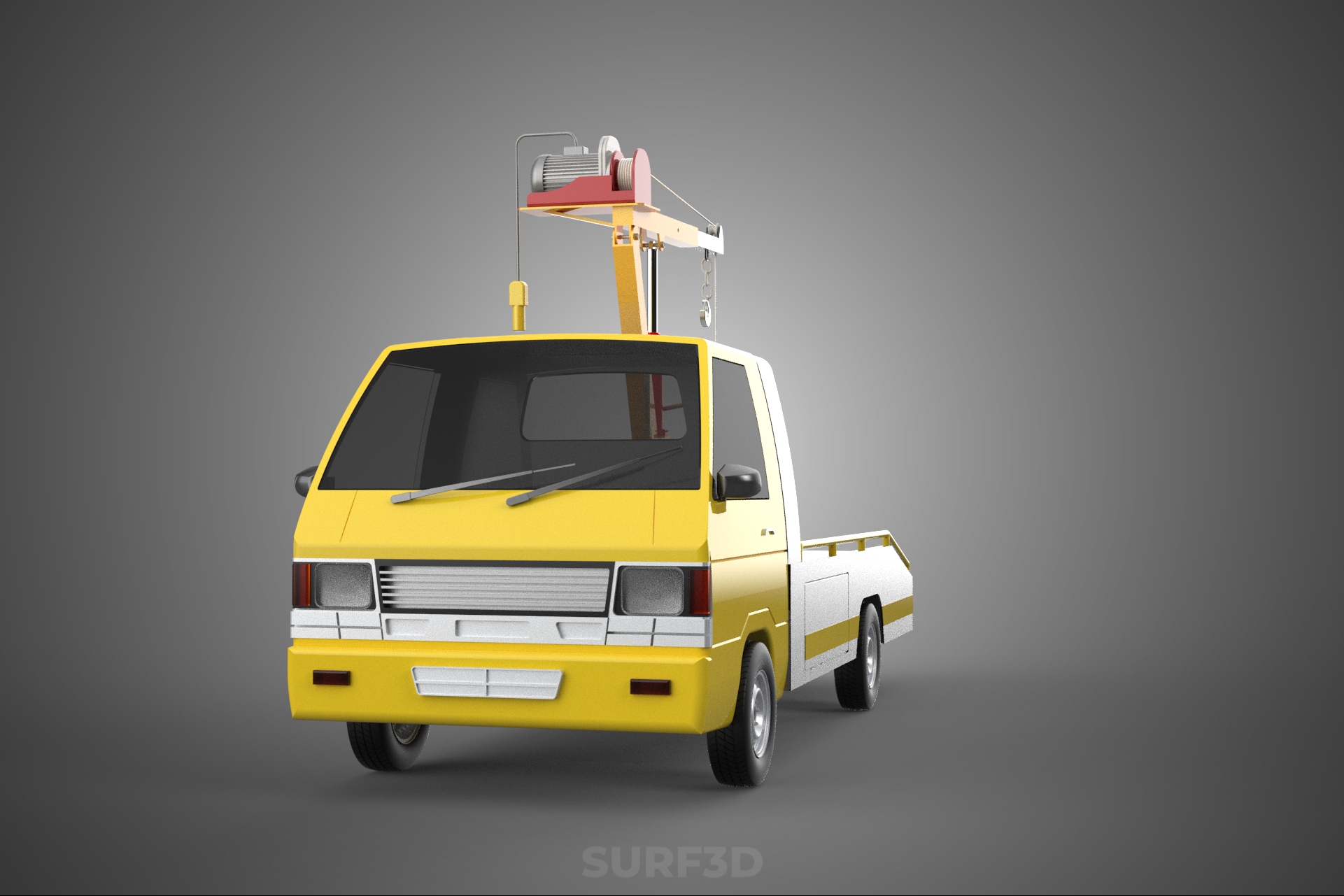
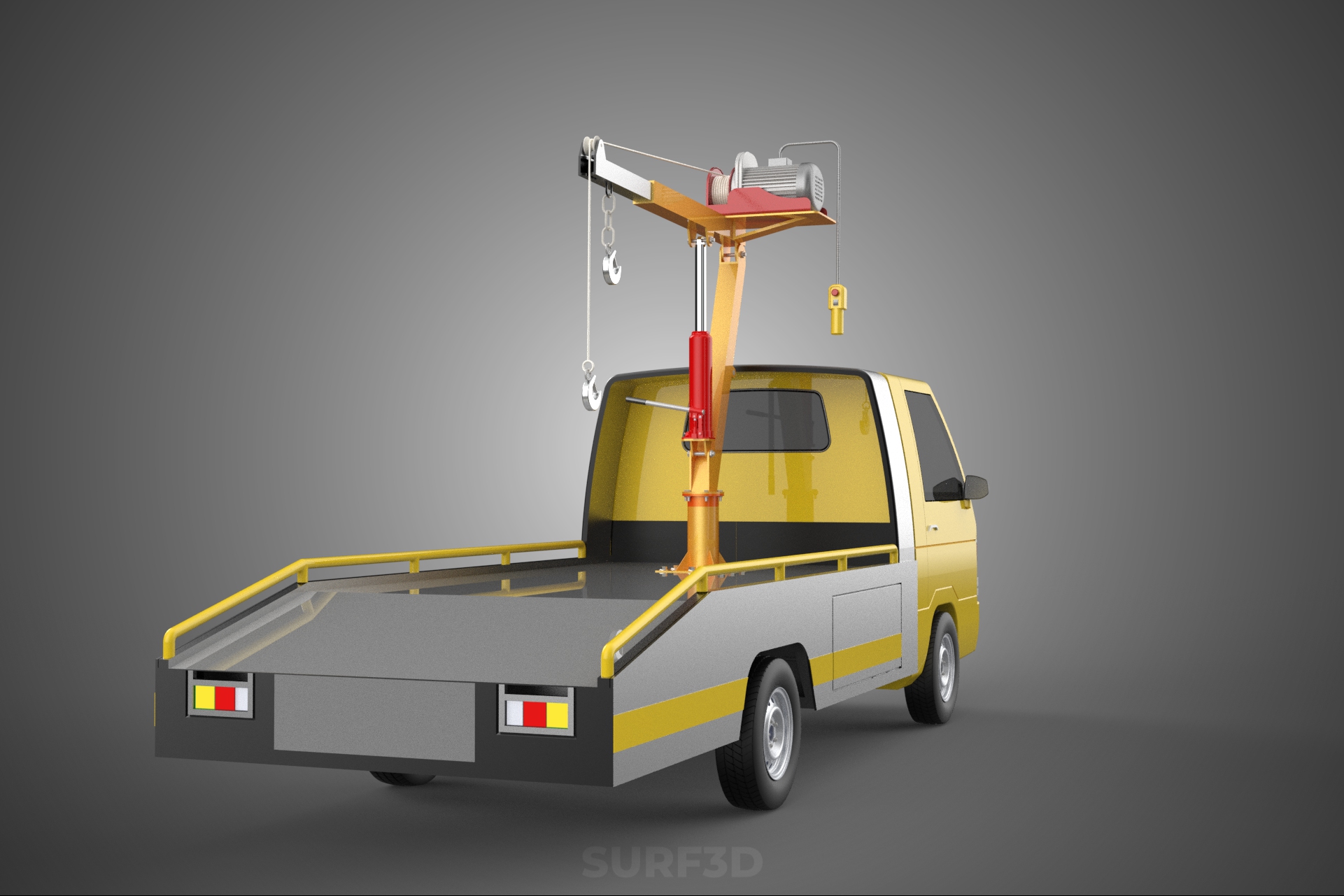
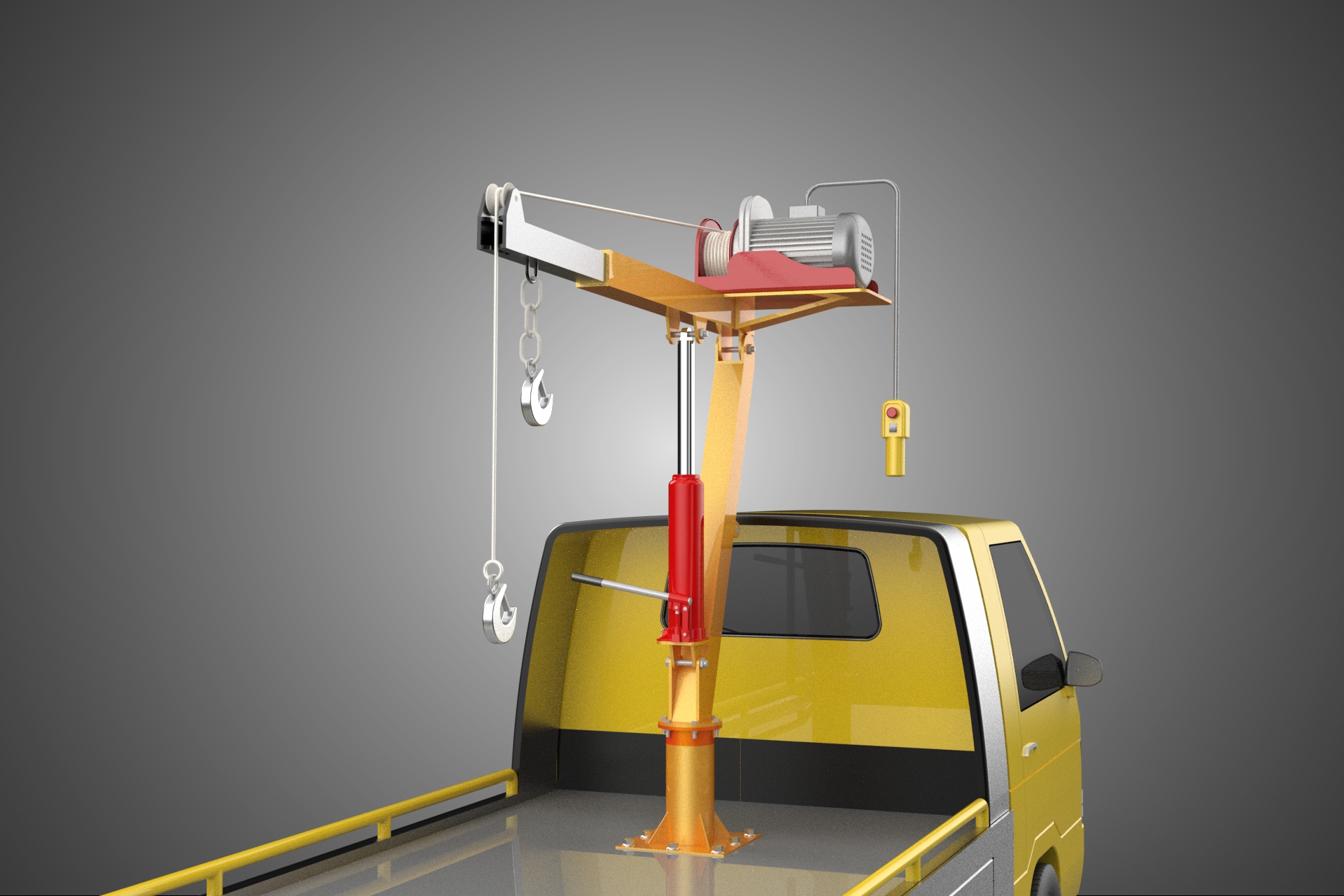
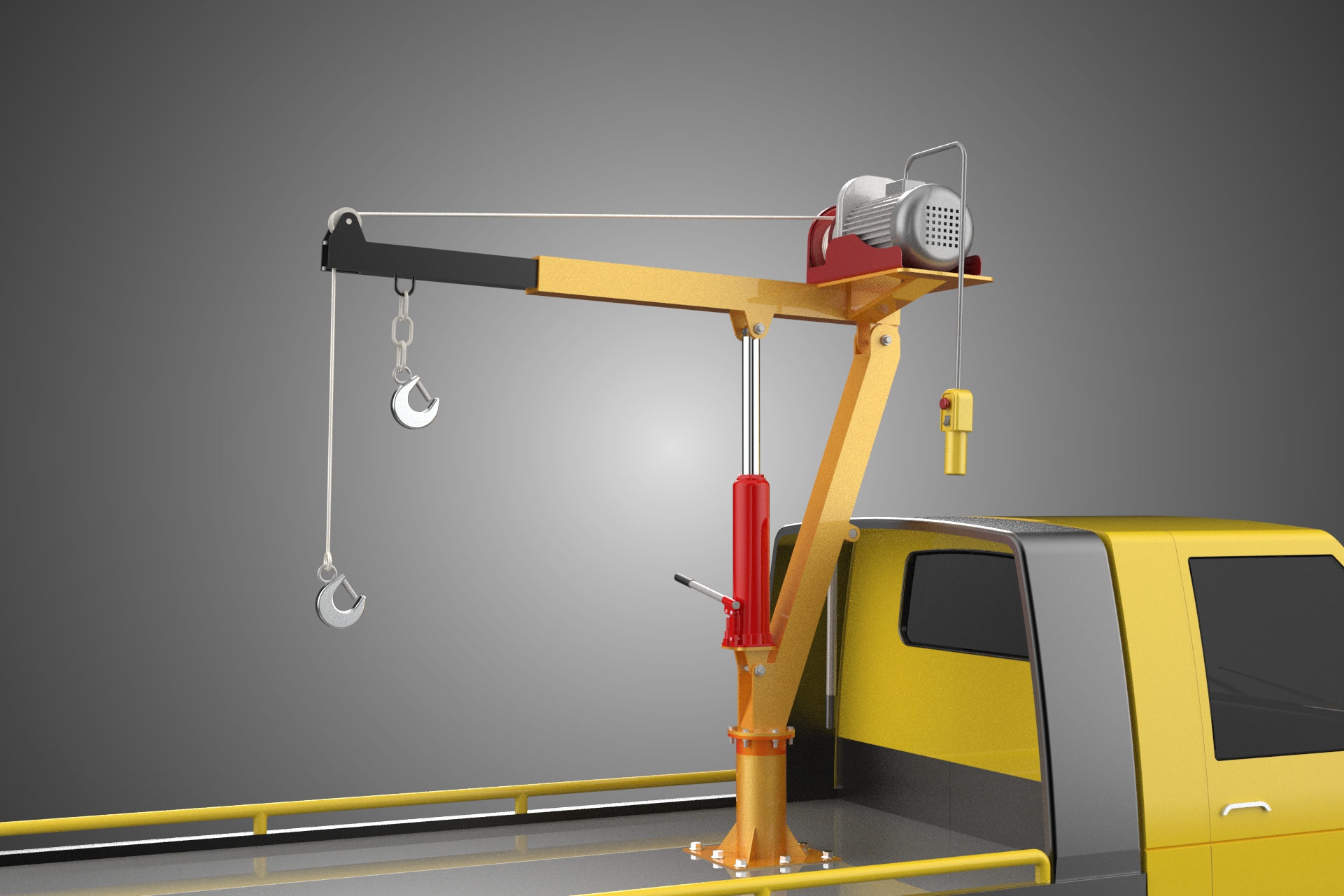
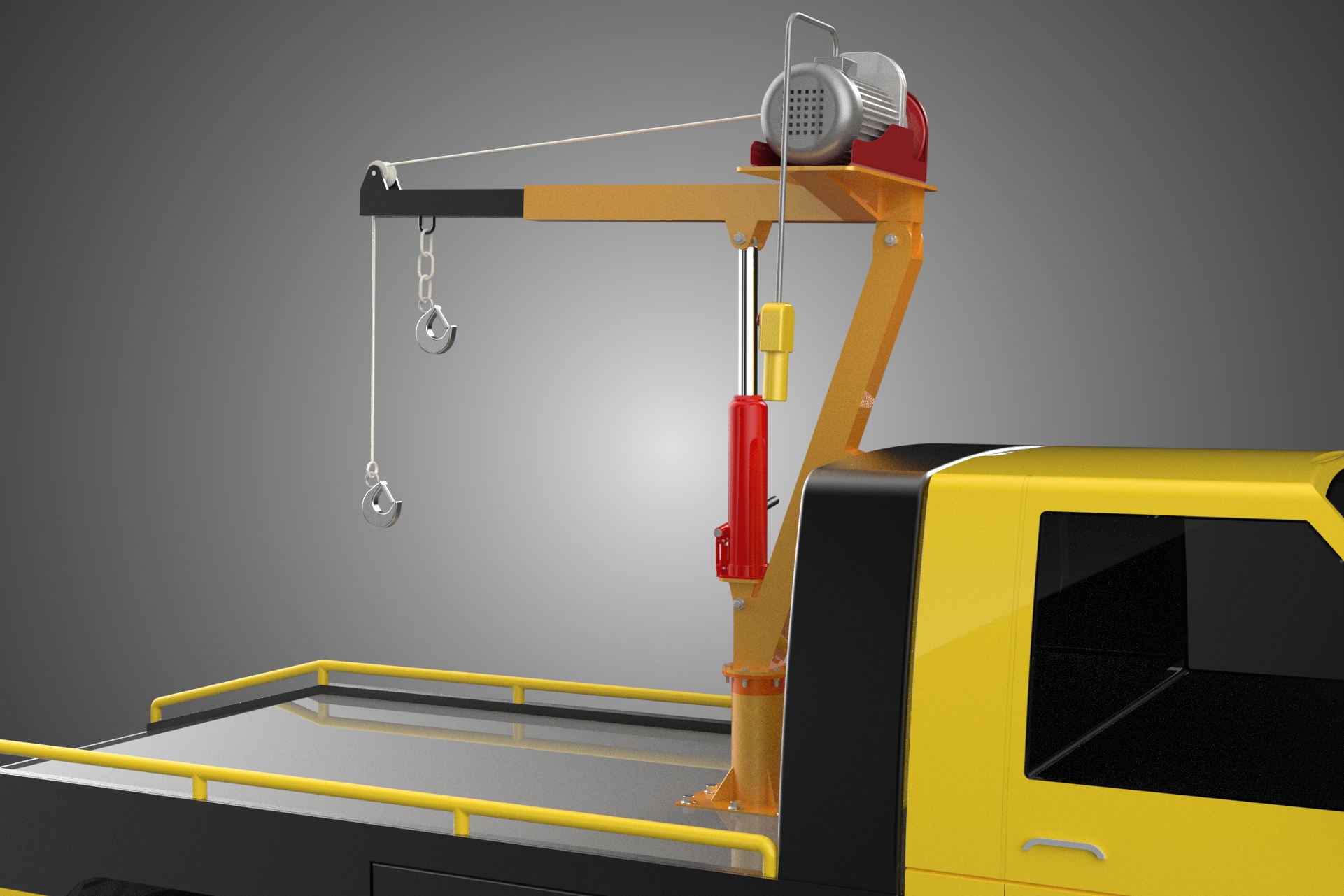
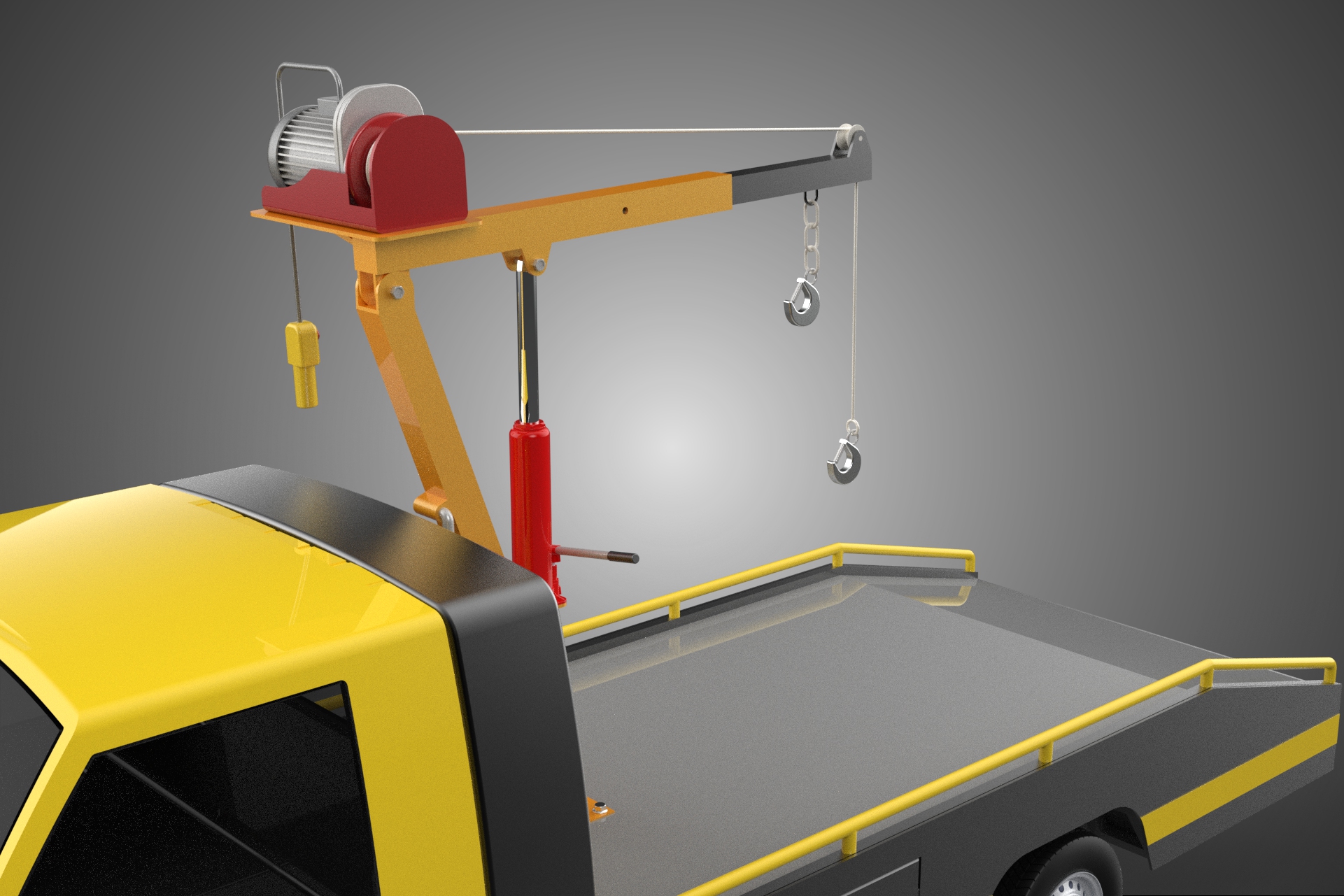
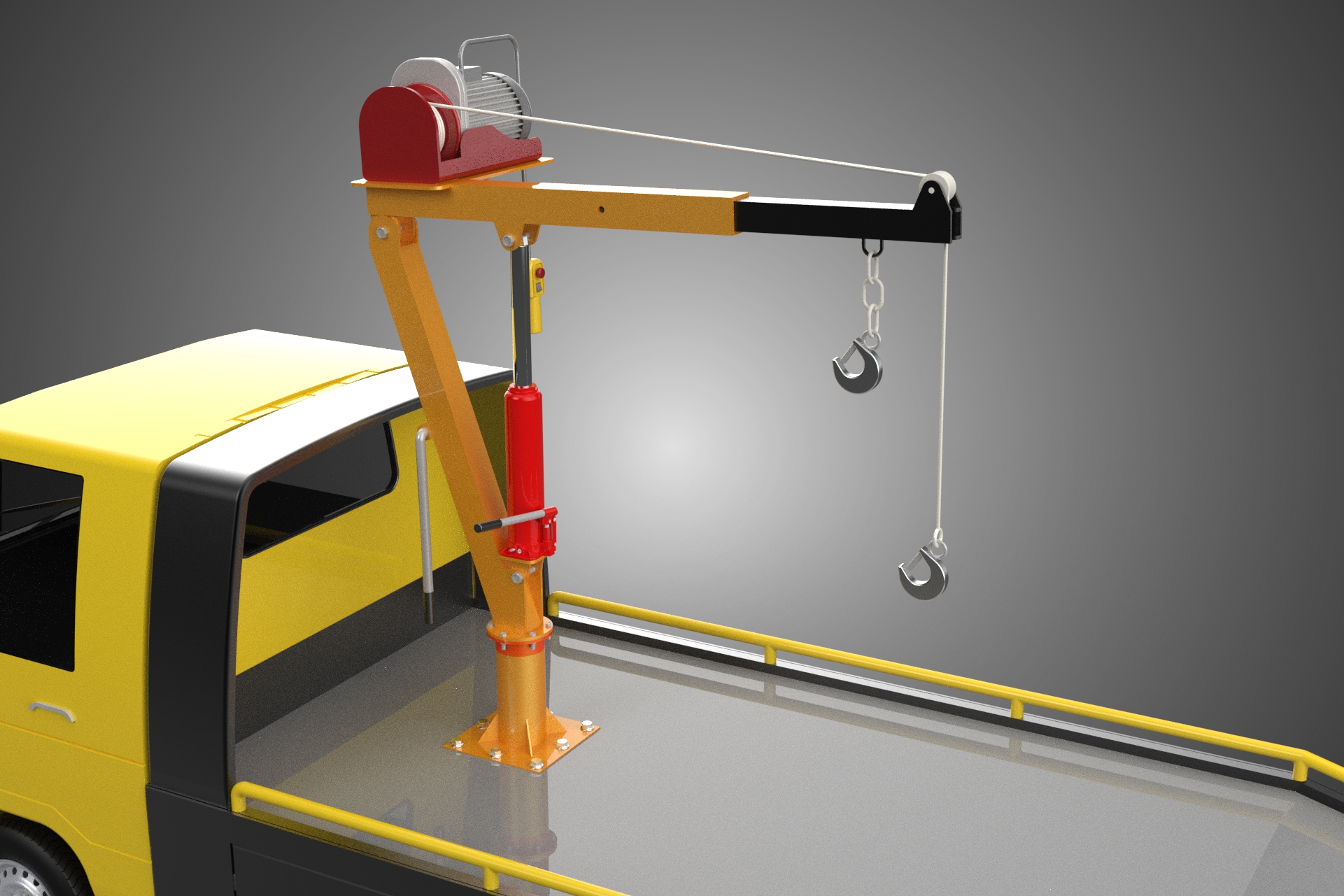
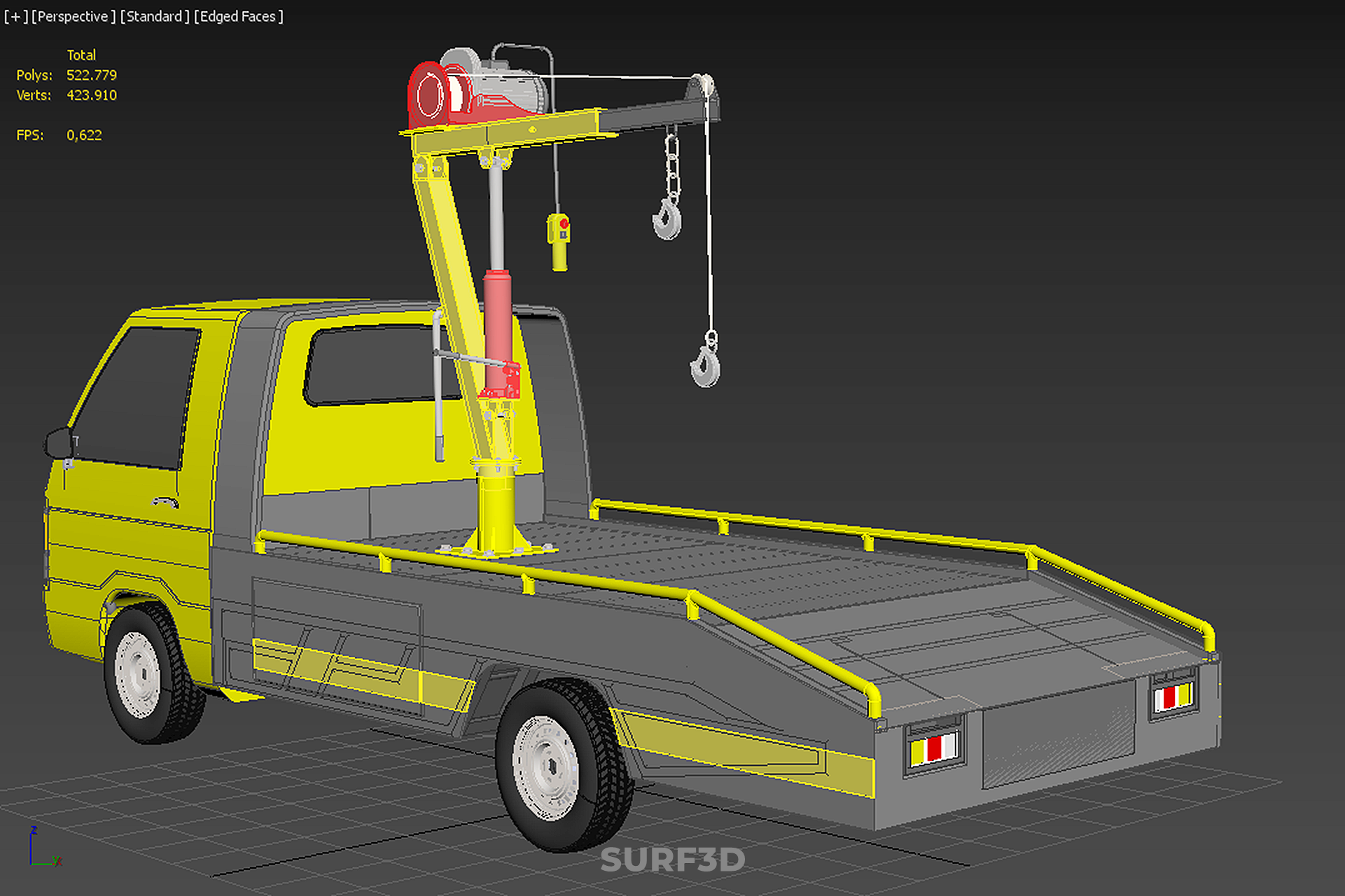
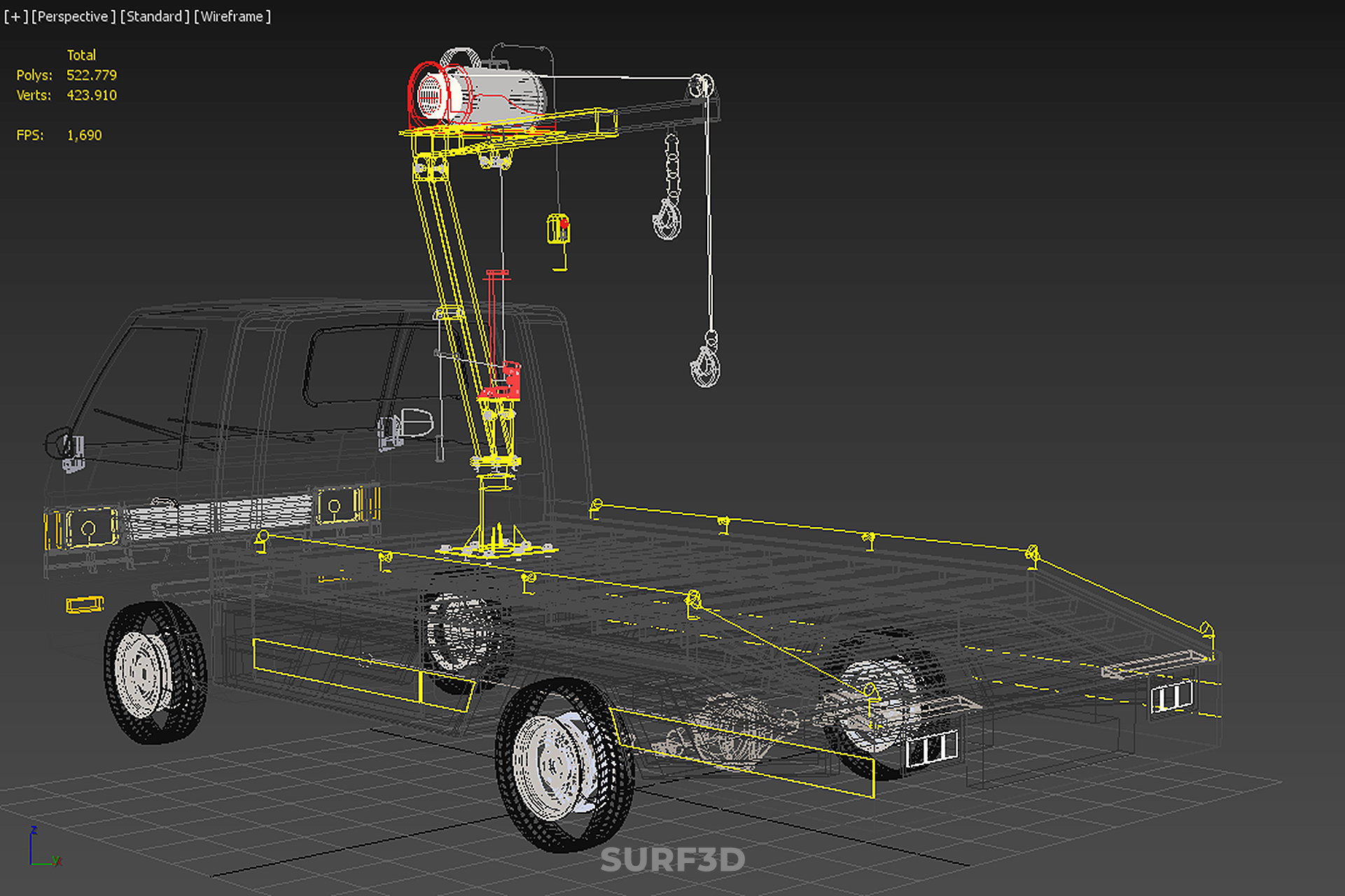
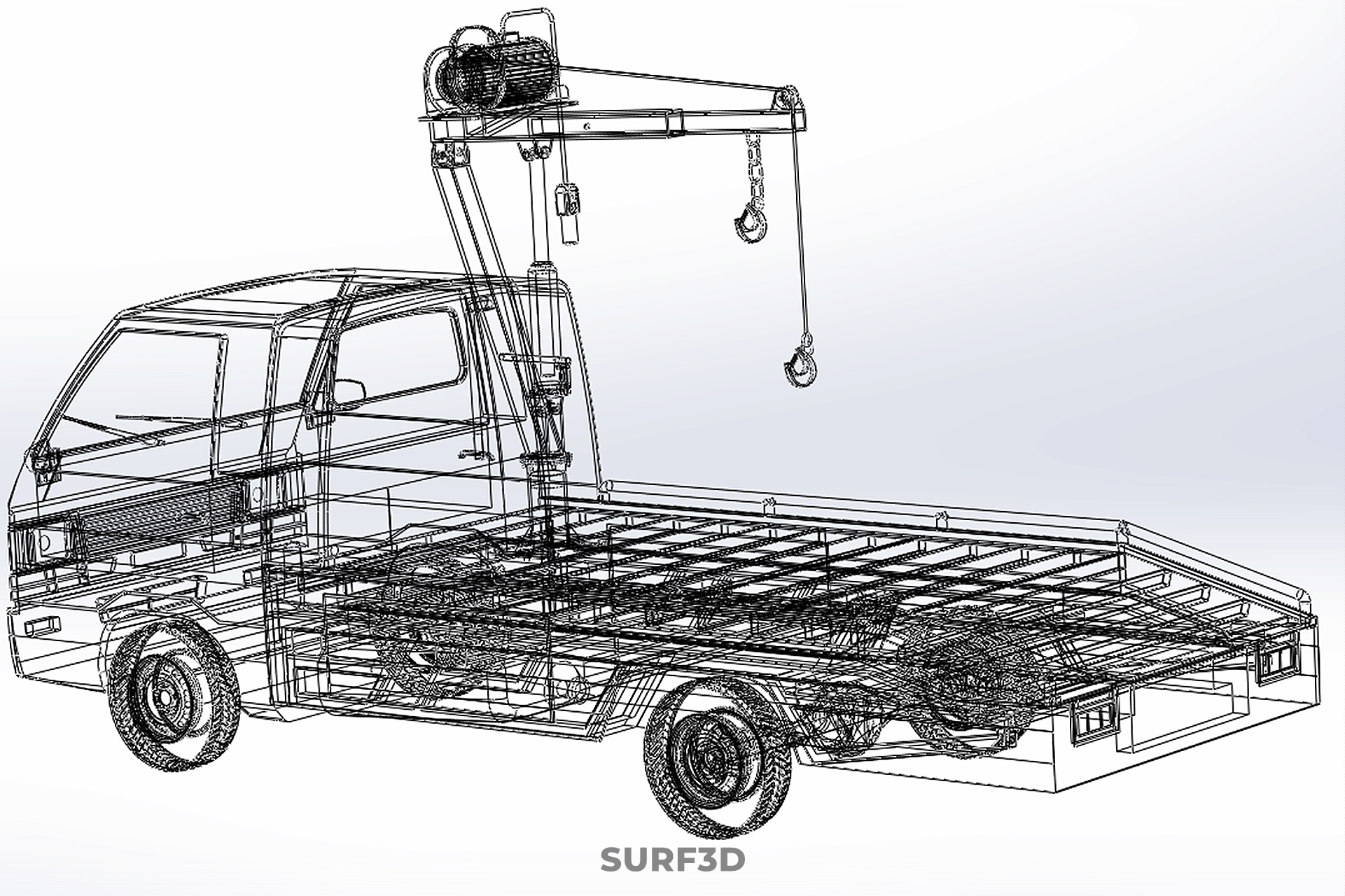
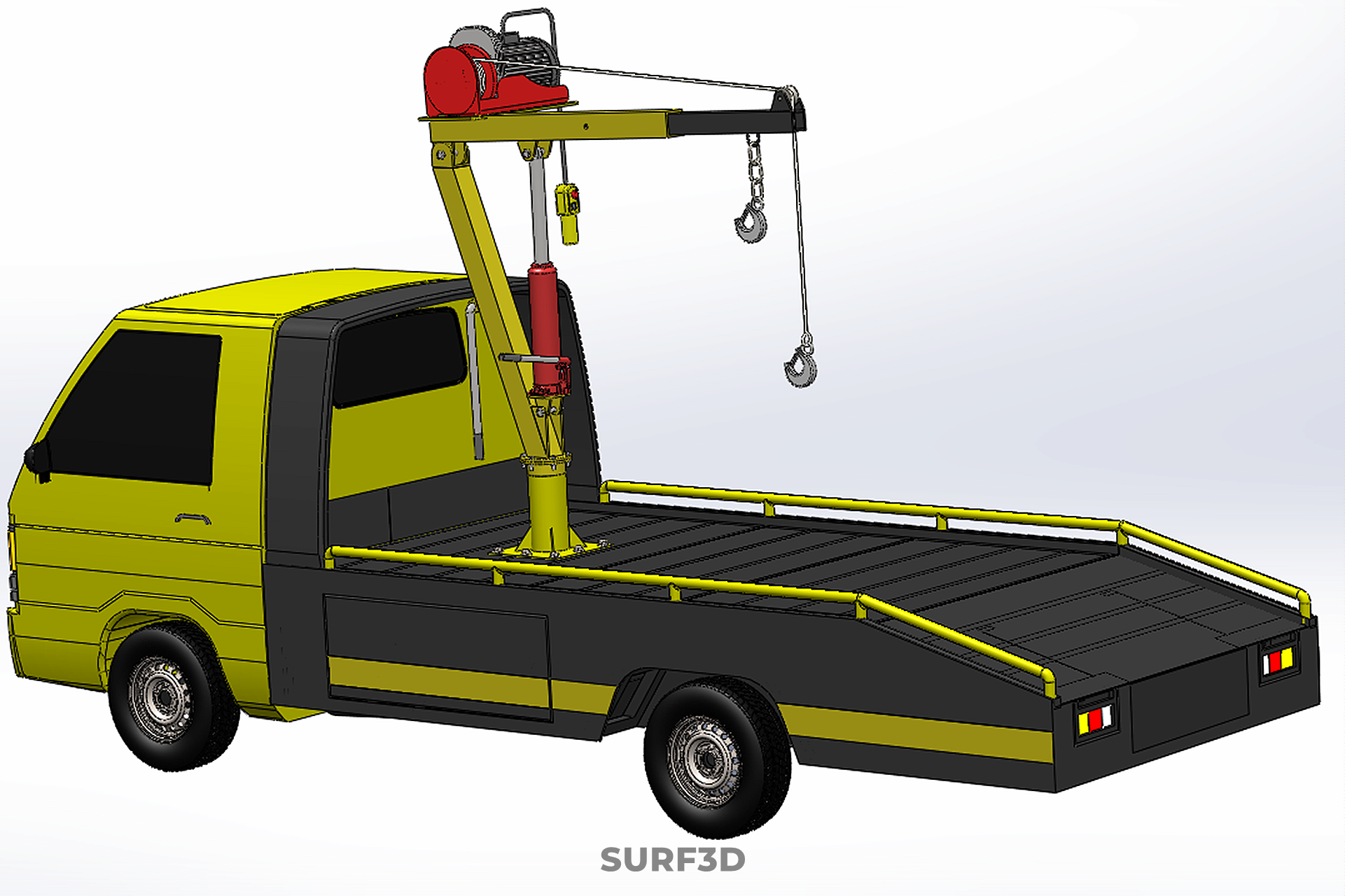
An “Electric Winch Hoist at Hydraulic Crane on a Truck Pickup to Lift the Car Vehicle” describes a specialized mobile lifting and recovery system. This integrated apparatus combines the mobility of a pickup truck, the reach and power of a hydraulic crane, and the direct pulling capability of an electric winch hoist, specifically engineered for the precise lifting, positioning, and recovery of automobiles or similar light to medium-weight loads.
### System Overview
This configuration is a versatile and compact solution often employed in roadside assistance, vehicle recovery, auto repair shops, light construction, and specialized transport. It represents a synergy of components, where each element contributes uniquely to the overall functionality: the pickup truck provides the mobile platform, the hydraulic crane offers structural support, extendable reach, and positional control, and the electric winch hoist supplies the primary pulling and vertical lifting force via its cable system.
### Core Components and Functionality
1. Pickup Truck (Base Platform):
* Function: Serves as the mobile base and power source for the entire system. Its robust chassis is modified to accommodate the significant weight and stresses imposed by the crane and lifted loads.
* Characteristics: Typically a light to medium-duty pickup truck, often with reinforced suspension, heavy-duty axles, and a flatbed or service body. Crucially, it is equipped with outriggers or stabilizers that extend hydraulically or manually to broaden the vehicle’s footprint and prevent tipping during lifting operations.
* Power Supply: The truck’s engine often drives a Power Take-Off (PTO) unit, which in turn powers the hydraulic pump for the crane. The truck’s electrical system (usually 12V or 24V DC) provides the necessary power for the electric winch hoist.
2. Hydraulic Crane (Boom Loader/Service Crane):
* Function: Provides the structural framework, extendable reach, and precise positional manipulation for the lifting operation. It is mounted directly onto the truck’s chassis, often behind the cab or at the rear.
* Characteristics: Generally a small to medium-sized crane, typically of the articulating (knuckle boom) or telescopic boom type. Articulating cranes offer greater maneuverability in confined spaces, while telescopic cranes provide longer reach. These cranes are operated hydraulically, allowing for smooth and controlled extension, elevation, and slewing (rotation).
* Integration Point: The crane’s boom or base serves as the mounting point for the electric winch hoist, directing its lifting line to the load.
3. Electric Winch Hoist:
* Function: This is the primary device for pulling and lifting the car vehicle. It provides the direct tensile force required to pull the vehicle horizontally, drag it from a ditch, or lift it vertically using the crane’s boom as a support and guide.
* Characteristics: Consists of an electric motor, a reduction gearbox, and a rotating drum onto which a wire rope (steel cable) or synthetic line is spooled. It is powered by the truck’s electrical system. The term “hoist” implies it is specifically designed for lifting, often with a braking mechanism to hold the load securely.
* Integration with Crane: The winch is mounted on or at the hydraulic crane. This integration means the winch cable extends from the crane’s boom tip or alongside it, allowing the crane’s hydraulic movements to precisely position the winch line for optimal lifting angles and reach. This synergy allows the system to lift a car either by direct vertical pull or by winching it onto the truck bed or other platform.
### Operational Principles
The operational sequence typically involves:
1. Positioning and Stabilization: The pickup truck is driven to the site, and its outriggers are deployed to establish a stable base, preventing the vehicle from tipping during load manipulation.
2. Crane Deployment: The hydraulic crane’s boom is extended and positioned over or adjacent to the car vehicle to be lifted.
3. Winch Engagement: The electric winch hoist’s cable is unspooled and securely attached to the car’s designated lifting points (e.g., chassis frame, axles, or recovery points), often utilizing specialized chains, slings, or lifting frames for secure attachment.
4. Lifting/Recovery: The electric winch is activated to pull the car. Concurrently, the hydraulic crane’s boom is adjusted (elevated, extended, or slewed) to guide the car, lift it clear of obstacles, and ultimately position it onto the truck bed, a recovery trailer, or into a specific workshop location. The winch provides the direct lifting/pulling power, while the crane provides the height, reach, and directional control.
### Applications
* Vehicle Recovery: Retrieving disabled, crashed, or stuck cars from ditches, embankments, or inaccessible locations.
* Roadside Assistance: Providing light-duty towing and recovery services for breakdowns or minor incidents.
* Workshop Operations: Lifting engines, transmissions, or entire car bodies for repair, restoration, or placement onto specialized stands.
* Logistics and Transport: Loading and unloading vehicles onto trailers or transport platforms where traditional ramps are not feasible or safe.
* Specialized Hauling: Moving non-operable vehicles or equipment within industrial yards or construction sites.
### Advantages and Limitations
Advantages:
* Mobility and Versatility: Highly maneuverable compared to larger recovery vehicles, capable of accessing tighter spaces.
* Cost-Effectiveness: Generally a more economical solution for lighter lifting tasks compared to dedicated heavy-duty tow trucks or large mobile cranes.
* Self-Contained: Operates independently of external power sources, relying solely on the truck’s systems.
* Precision Control: The combination of hydraulic crane movements and the electric winch’s controlled pulling allows for very precise positioning of loads.
Limitations and Considerations:
* Lifting Capacity: Restricted by the truck’s chassis rating, the crane’s maximum lifting capacity, and the winch’s pull strength. It is primarily suited for light to medium-duty vehicles, typically passenger cars and small SUVs.
* Stability Requirements: Absolute reliance on correctly deployed outriggers to maintain stability and prevent tip-over, especially when lifting loads at maximum reach.
* Operator Skill: Requires trained and certified operators to ensure safe and efficient operation, understanding load dynamics, rigging techniques, and operational limits.
* Regulatory Compliance: Adherence to local and national regulations regarding vehicle weight, dimensions, load securement, and lifting equipment safety standards is paramount.
### Safety Protocols
Operation of such a system demands strict adherence to safety protocols, including: pre-operational checks of all components (hoses, cables, rigging, hydraulics), accurate assessment of load weight and center of gravity, maintaining clear safety zones around the operational area, utilizing appropriate rigging for secure attachment, and effective communication between team members.
KEYWORDS: Electric winch, hydraulic crane, pickup truck, vehicle lift, car recovery, mobile crane, service crane, boom loader, hoist, automobile lifting, roadside assistance, vehicle transport, light-duty crane, articulating crane, telescopic crane, outriggers, PTO, recovery vehicle, material handling, automotive repair, lifting equipment, mobile hoist, utility truck, crane truck, car pulling, vehicle loading, heavy-duty pickup, vehicle extraction, specialized transport, garage equipment.